This guide explains how to evaluate a Poly Mailer for product protection, shipping efficiency, sustainability, and operational performance. Poly Mailers are lightweight polyethylene shipping envelopes commonly used for apparel, soft goods, documents, and selected e-commerce orders. Their suitability depends on material thickness, closure design, dimensions, puncture resistance, storage conditions, carrier requirements, and the availability of appropriate recycling systems.
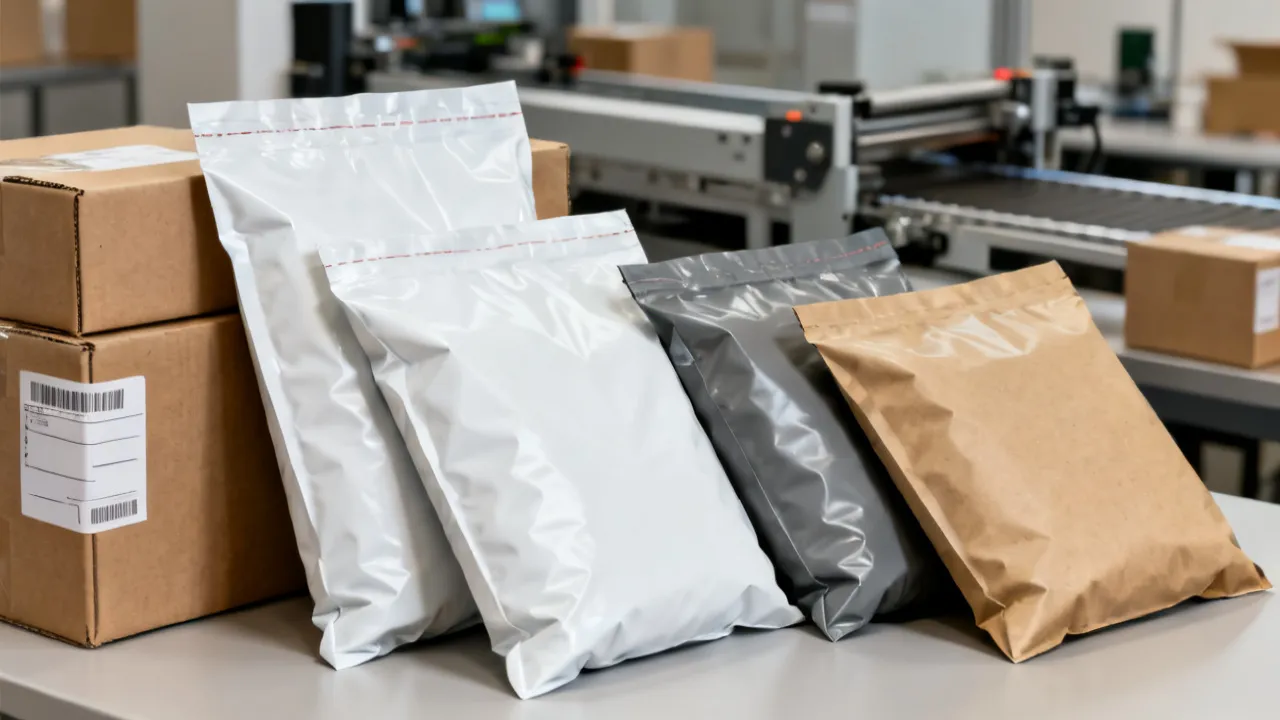
Packaging decisions influence far more than the appearance of an online order. They affect product protection, warehouse productivity, transportation weight, storage requirements, customer perception, return handling, and the practical management of packaging waste. For businesses shipping clothing, textiles, accessories, books, documents, and other non-fragile products, a Poly Mailer can provide a compact and efficient alternative to a corrugated shipping box.
A Poly Mailer is generally a flexible envelope made from polyethylene film. It usually includes a pressure-sensitive adhesive strip, a flap, and a smooth surface suitable for shipping labels. Some models include bubble padding, tamper-evident construction, tear strips, double-seal features, recycled content, or custom printing. The term describes a broad product category rather than a single specification, so two mailers with the same external dimensions may perform very differently in transit.
From an industry perspective, the important purchasing decision is not simply selecting the lowest unit price. The correct evaluation considers the complete packaging system: the product being shipped, the fulfillment process, the expected distribution environment, the carrier’s handling requirements, the likely return rate, and the disposal options available to the recipient. A mailer that saves material but causes product damage, repacking, customer complaints, or returns may create higher total costs than a more robust design.
Packaging also influences the speed and consistency of fulfillment. A well-selected mailer can reduce the number of components needed at a packing station and make it easier for employees to follow a repeatable process. A poorly selected mailer can create frequent exceptions: products may not fit, closures may fail, labels may wrinkle, and packers may need to use extra tape or substitute a box. These exceptions interrupt workflow and make it difficult to measure true packaging costs.
Key conclusion: Choose a Poly Mailer when the product is flexible or already protected, does not require rigid support, and can tolerate the compression and handling conditions associated with parcel distribution. Use a box or a more protective format when the item is fragile, sharp-edged, moisture-sensitive, unusually heavy, or dependent on dimensional stability.
Poly Mailers are shipping envelopes manufactured primarily from polyethylene film. Polyethylene is widely used in packaging because it can be produced in flexible forms, sealed effectively, and engineered for different levels of strength and thickness. The film may be opaque, translucent, printed, colored, recycled, or designed for specialized functions.
The basic construction typically includes a main envelope body and an adhesive closure. The adhesive strip allows the sender to seal the package without tape or additional equipment. Some models feature a second adhesive strip, which enables customers to return products in the original packaging. Others incorporate perforated tear strips that support convenient opening while reducing the need for scissors or knives.
Not every Poly Mailer provides the same level of protection. A standard film mailer protects against surface dirt, light moisture exposure, and routine abrasion, but it does not offer the rigid crush resistance of a corrugated box. A padded mailer may provide additional cushioning through an internal bubble layer, although it remains less structurally rigid than a box with suitable interior protection.
Manufacturers may describe products using terms such as “lightweight,” “tamper-evident,” “recycled,” “recyclable,” or “water-resistant.” These descriptions should be examined carefully. “Water-resistant” does not mean waterproof under every condition, and “recyclable” may refer to the material’s technical recyclability rather than the availability of a collection and processing system in a particular area.
The film’s appearance can also vary. Opaque mailers provide privacy for garments and personal items, while translucent versions may allow warehouse staff to identify contents more easily. White or light-colored surfaces can provide a clean area for labels and branding. Dark-colored mailers may offer stronger visual impact but can make certain printed information less readable. The choice should be based on operational requirements as well as presentation.
Understanding the main formats makes product selection more precise. Each type serves a different combination of protection, presentation, security, and operational requirements.
| Type | Typical Construction | Suitable Applications | Main Consideration |
|---|---|---|---|
| Standard Poly Mailer | Single-layer polyethylene film with an adhesive flap | Apparel, textiles, soft accessories, documents, and non-fragile items | Limited cushioning and structural support |
| Padded Poly Mailer | Polyethylene outer film with an internal cushioning layer | Small accessories, books, cosmetics in suitable containers, and moderately sensitive products | More protective but usually thicker and less compact |
| Recycled-Content Poly Mailer | Polyethylene film containing post-consumer or post-industrial material | Businesses seeking a packaging specification with recycled input | Confirm the percentage, source, and consistency of the recycled content |
| Recyclable Poly Mailer | Film designed for collection through an applicable recycling stream | Shipments where recipients have access to suitable film-recycling systems | End-of-life handling depends on local infrastructure and program rules |
| Return Poly Mailer | Mailer with two adhesive strips or a return-oriented closure design | Fashion, footwear accessories, subscription orders, and products with frequent returns | Additional material may be justified by reverse-logistics efficiency |
| Tamper-Evident Poly Mailer | Sealed construction that shows visible evidence of opening | Documents, branded goods, and products requiring greater package integrity | Security features do not replace appropriate product protection |
| Custom-Printed Poly Mailer | Printed film featuring branding, instructions, or campaign artwork | Retail presentation, promotional shipments, and brand recognition | Printing affects minimum order quantities, lead times, and inventory planning |
Standard mailers are usually the most economical option for routine shipments. Padded versions should be reserved for products where minor impacts are a genuine concern. Return mailers may be particularly valuable in fashion and direct-to-consumer retail, where a simple resealing process can improve the customer experience and reduce the use of additional return packaging.
A flexible mailer generally weighs less than a comparably sized corrugated box. This can help businesses manage transportation charges when carrier pricing is influenced by actual weight, dimensional weight, or both. The result depends on the product, mailer size, and shipping service, so the effect should be verified through the company’s own shipment profile rather than assumed.
Reducing package weight can be especially useful when a product is already close to a carrier’s pricing threshold. Even a modest reduction may influence the cost of high-volume shipments. However, the mailer should not be made so thin that damage increases. A small material saving is rarely worthwhile if it leads to replacement shipments or dissatisfied customers.
Poly Mailers arrive flat and can be stored in a relatively compact area. A fulfillment center may place different sizes in organized bins close to packing stations. This can be useful for small operations, seasonal sellers, and warehouses where floor space is limited. A box inventory, by contrast, may require larger shelving areas and more room for assembly.
Storage areas should protect the film from excessive heat, sharp objects, dust, and prolonged ultraviolet exposure. Bundles should be arranged so that employees can identify sizes quickly. When several dimensions have similar appearances, large labels or color coding can reduce picking mistakes.
For appropriately sized products, a mailer can simplify the packing sequence. The operator inserts the item, removes the release liner, folds the flap, and presses the closure. This reduces the number of separate packing components and can support consistent workflows. Efficiency is highest when mailers are supplied in clearly labeled sizes and when staff receive simple packing instructions.
Faster packing can have a substantial effect in a high-volume operation. Eliminating box assembly, tape cutting, and void-fill selection can reduce repetitive handling. The actual improvement should still be measured, because an incorrectly sized mailer may take longer to use than a standard box.
Polyethylene film does not absorb water in the same manner as paper-based packaging. This provides a useful barrier against light rain, condensation, and surface contamination during ordinary parcel handling. The protection has limits. Open seams, damaged film, inadequate seals, and prolonged exposure to water can still affect the shipment.
Products that are highly sensitive to humidity may require an internal barrier or a more specialized package. Books, paper goods, and fabric products may benefit from a protective inner sleeve if the shipping route is exposed to unusual moisture. The mailer should be viewed as one part of the protection system rather than a complete moisture-control solution in every application.
The flexible body can conform to clothing and other soft products, reducing unused space. A smaller external profile may help prevent excessive movement inside the package. The mailer should not be stretched excessively, however. Overfilling can place stress on seams and closures, increasing the likelihood of tearing during transportation.
Flexibility can also reduce the need for void fill. A folded garment or textile item usually remains relatively stable inside a properly sized mailer. In contrast, a rigid item may shift within the package and place pressure on a single corner. The product’s movement and contact points should therefore be considered during testing.
Custom-printed mailers can create a recognizable delivery experience. A restrained design may communicate brand identity while preserving label readability. Companies should keep important shipping information visually clear and avoid placing artwork where it interferes with barcodes, addresses, or carrier markings.
Branding can be particularly effective for companies whose products are shared on social media or whose customers value an attractive unboxing experience. It should not, however, encourage excessive secondary packaging. A simple printed mailer can provide brand recognition without adding unnecessary inserts, tissue, or decorative components.
The main limitation of a Poly Mailer is its modest structural protection. Film can resist abrasion and routine handling, but it cannot be expected to prevent crushing, bending, or impact damage in the same way as a rigid package. A product that can break, dent, deform, or lose its retail presentation may require a box or internal reinforcement.
Sharp corners and protruding components present another concern. A product may be lightweight but still unsuitable if it has edges that can pierce the film. In such cases, an inner sleeve, edge protector, tissue wrap, or rigid insert may be necessary. The goal is to prevent the product from becoming a source of package failure.
Overfilling creates both operational and quality problems. When the closure flap barely reaches the adhesive area, the seal may have insufficient contact. When the film is stretched around a bulky product, stress may concentrate at the corners. A practical sizing rule is to allow enough room for insertion and sealing without leaving excessive empty space.
Another issue concerns label adhesion. Dust, wrinkles, surface curvature, and low-quality adhesive labels can reduce barcode readability. Labels should be applied to a relatively flat area, and the mailer should be sealed before labeling when the packing process could otherwise change the surface shape.
Flexible packaging can also be difficult to stack in certain warehouse and carrier environments. Unlike boxes, mailers do not create a stable column when placed under compression. This is usually not a concern for individual parcel delivery, but businesses sending large consolidated shipments should consider how mailers will be stored and transported before final dispatch.
Finally, environmental claims require careful interpretation. A Poly Mailer may contain recycled material, be technically recyclable, or be accepted by a specific collection program. These are distinct statements. Packaging teams should avoid presenting broad environmental claims without confirming the material specification and the relevant disposal pathway.
Size selection should begin with the product, not the catalog. Measure the item in its prepared shipping condition, including tissue paper, protective sleeves, documentation, or any inner packaging. Then compare the measurements with the mailer’s usable internal dimensions rather than only its external dimensions.
Businesses often benefit from maintaining a small range of standard sizes rather than offering a separate mailer for every product. Too many sizes can complicate inventory control, while too few can produce waste or poor fit. The range should reflect actual order data and should be reviewed when product dimensions or shipping patterns change.
One useful approach is to create a packaging matrix. Each product or product group can be assigned a preferred mailer size, a backup size, and an exception format. This allows packers to make quick decisions without repeatedly measuring products. The matrix should include photographs or examples for items with unusual shapes.
| Packaging Question | Why It Matters |
|---|---|
| Does the item fit without forced compression? | Excessive compression may stress seams and damage the product. |
| Is there enough flap area for a secure seal? | Insufficient adhesive contact can lead to package opening. |
| Can a label be placed flat? | Wrinkles and curved surfaces may interfere with scanning. |
| Will the product puncture the film? | Edges and hard components can create tears during handling. |
| Is the internal space excessive? | Unnecessary material and loose contents can reduce efficiency. |
Thickness is commonly expressed in mils or microns, depending on the supplier and market. A thicker film is not automatically the best option, because performance also depends on resin quality, film structure, seam construction, closure design, and the shape of the shipped item.
For lightweight textiles, a thinner standard mailer may be adequate. Heavier apparel bundles, products with rigid inserts, or shipments exposed to more demanding handling may justify a stronger film. Padded construction can improve cushioning, but it adds material and may not address every type of risk. For example, internal padding may reduce minor impact but does not necessarily prevent a hard object from piercing the outer film.
Procurement teams should request technical specifications that explain thickness, dimensions, tensile performance where available, seal characteristics, recycled content, and storage recommendations. Samples should be tested under realistic conditions. A simple evaluation may include packing representative products, applying labels, stacking packages, opening and resealing return versions, and examining the film after handling.
Packaging tests should reflect the actual distribution environment. A package shipped locally through a controlled delivery network may face different stresses from one moving through multiple sorting facilities. Testing does not need to imitate every possible event, but it should consider compression, abrasion, vibration, corner stress, and changes in temperature or humidity relevant to the shipping route.
Performance should be evaluated with both empty and filled samples. An empty mailer may appear strong, while a filled mailer may develop stress at the seams because of the product’s shape. Testing several product sizes is particularly important for apparel companies, subscription businesses, and retailers that regularly combine multiple items in one order.
The adhesive closure is a functional component rather than a minor convenience. A good closure should provide consistent adhesion across the intended storage and handling conditions. The adhesive area must remain clean, and the release liner should be easy for the packer to remove without damaging the flap.
Single-strip closures are suitable for many outgoing shipments. Dual-strip designs are useful when the customer may need to return the item. The second strip can simplify reverse logistics, but it should be evaluated against the company’s return process. If customers routinely use a different return package or return rates are low, the added feature may not provide sufficient operational value.
Tamper-evident mailers are designed to show visible damage or opening when the seal is disturbed. They can support package integrity, but they do not prevent all forms of tampering. Security-sensitive shipments may require additional controls, such as restricted access, documented handoffs, or specialized packaging.
Closure performance may decline when the mailer is stored in unsuitable conditions. High heat, contamination, and prolonged exposure to dust can affect adhesive behavior. Suppliers should provide storage guidance, and warehouse teams should rotate stock in a manner that avoids unnecessary aging.
Packers should press firmly across the entire adhesive area after removing the release liner. A closure that is touched only at the center may not bond properly at the edges. Instructions should also explain that tape should not be used as a substitute for an incorrectly sized mailer unless the company’s packaging standard explicitly allows that practice.
Sustainability assessment should cover the entire packaging life cycle rather than focus on one attribute. Relevant questions include how much material is used, whether the mailer protects the product effectively, whether it contains recycled content, whether it can enter an established collection system, and whether recipients understand the disposal instructions.
Reducing material can be beneficial when it does not increase damage rates. A lighter mailer that causes frequent product loss is not an efficient solution. Conversely, using a substantially heavier format for a soft, durable item may create unnecessary material consumption. The appropriate balance is determined by product risk and measured performance.
Polyethylene film recycling is highly dependent on local collection and processing arrangements. In some regions, flexible plastic packaging may be accepted through dedicated drop-off programs, while ordinary curbside systems may exclude it. Businesses should therefore use disposal language that matches the destination market and avoid implying universal acceptance.
Packaging labels should distinguish between material composition and disposal instructions. If a mailer contains recycled content, the percentage and type may be documented in supplier specifications. If it is intended for a particular recycling stream, the company should confirm the program’s requirements, including cleanliness, separation from labels or other components, and preparation before drop-off.
Organizations making environmental claims should consult recognized standards, local regulations, and official guidance. In the United States, the Federal Trade Commission’s environmental marketing guidance is relevant to the presentation of broad green claims. Other jurisdictions may impose additional requirements. Certification marks should be used only when the product and supplier documentation support them.
Material reduction may also come from right-sizing. A mailer that is too large consumes more film and may require additional handling, while a mailer that is too small can fail or require repacking. Right-sizing should therefore be considered both a sustainability measure and an operational control.
These terms should not be treated as interchangeable:
When comparing suppliers, request documentation for recycled content claims, material composition, applicable certifications, and disposal recommendations. A transparent supplier should be able to explain what the claim means and where it applies. This is more useful than relying on a vague symbol or marketing phrase.
Businesses should also consider whether additional components affect the disposal route. A paper label, adhesive residue, padded interior, tear strip, or mixed-material construction may influence whether a mailer is accepted by a particular program. The more complex the package, the more important it becomes to provide accurate instructions and avoid unsupported claims.
A Poly Mailer must be compatible with the shipping service used by the business. Carrier rules can differ by country, service level, automated sorting system, and package category. Before adopting a new format, verify the required address area, barcode readability, maximum dimensions, weight limits, closure integrity, and restrictions on certain contents.
Flexible packages may pass through automated systems differently from rigid boxes. A properly sealed mailer should not have loose flaps, exposed adhesive, or protruding objects. Labels should remain attached and readable throughout handling. If a carrier requires additional documentation, the mailer must provide a stable location for those documents or labels.
International shipments create additional considerations. Customs declarations, commercial invoices, product descriptions, and country-of-origin information may need to be accessible and legible. The mailer itself does not determine customs compliance, but its surface and closure should support the required documents without compromising the package.
Businesses should monitor delivery exceptions and package damage after changing packaging. A pilot shipment can reveal issues that do not appear during internal packing tests. Useful measures include damage reports, repacking requests, returns attributable to presentation or protection, barcode scanning issues, and customer service contacts related to packaging.
Some carriers apply dimensional rules to flexible packages based on their maximum measured dimensions. Others may require the mailer to be sufficiently sealed to prevent it from catching on sorting equipment. These details should be confirmed before large-scale adoption, particularly when shipments pass through automated hubs.
A reliable workflow reduces variation between packers and helps preserve package quality. The following sequence is appropriate for many standard mailer applications:
Standardized work instructions are especially valuable when temporary staff or seasonal teams participate in fulfillment. Visual examples can show acceptable and unacceptable packing conditions without relying solely on written explanations. Training should cover what to do when the selected mailer is too small, the product has a sharp edge, or the closure cannot be sealed properly.
Packing stations should be arranged so that the most frequently used sizes are within easy reach. A separate area for damaged or rejected mailers prevents defective stock from returning to active inventory. If the operation uses scanning or weighing equipment, the workflow should place these steps consistently after sealing and labeling.
| Inspection Area | Acceptable Condition | Corrective Action |
|---|---|---|
| Film | No visible holes, severe wrinkles, or contamination | Remove damaged packaging from the packing line |
| Product fit | Item fits without excessive force or unnecessary empty space | Change size or add suitable internal protection |
| Seal | Flap is fully closed with adhesive contact across the intended area | Repack if the seal is incomplete |
| Label | Address and barcode are flat, visible, and securely attached | Reposition or replace the label |
| Edges | No sharp component is pressing directly against the film | Wrap, reposition, or select another package type |
| Presentation | Package is clean and appropriate for delivery | Replace visibly damaged or soiled mailers |
Quality control should occur at more than one point. Incoming inspection can identify defects in a supplier shipment, while packing-line inspection can catch fit and closure problems. Periodic finished-package audits can reveal training gaps or changes in product configuration. The purpose is not to inspect every shipment manually forever, but to establish a process that detects recurring issues early.
Packaging comparisons should be based on application rather than general preference. A Poly Mailer is often effective for soft products, while a corrugated box is more appropriate for rigid or fragile goods. Paper mailers may appeal to companies seeking a fiber-based format, but their moisture and tear performance can vary. Padded envelopes provide cushioning but may complicate recycling when they combine different materials.
| Packaging Format | Strengths | Limitations | Best-Fit Products |
|---|---|---|---|
| Poly Mailer | Lightweight, flexible, compact, moisture-resistant surface | Limited rigidity and cushioning | Clothing, textiles, soft accessories, and non-fragile goods |
| Corrugated Box | Structural support, stackability, and broad protection options | More storage volume and material use in many applications | Fragile, rigid, heavy, or shape-sensitive products |
| Paper Mailer | Fiber-based construction and a familiar paper appearance | Performance varies with moisture, seams, and paper grade | Light products and shipments suited to paper-based packaging |
| Padded Envelope | Additional cushioning in a flexible format | May contain multiple materials and require specific disposal handling | Small items needing moderate impact protection |
| Rigid Mailer | Helps prevent bending and preserves flat contents | Less flexible and often more expensive to store | Photographs, certificates, prints, and other bend-sensitive items |
A mixed packaging program is often more efficient than choosing one universal format. For example, a retailer may use standard mailers for shirts, padded mailers for small accessories, rigid mailers for art prints, and corrugated boxes for shoes or fragile goods. Product segmentation helps each format perform the task for which it was designed.
The purchase price per mailer is only one part of the financial analysis. A useful cost model includes packaging material, storage space, labor, labels, sealing time, shipping charges, damage, returns, customer service, and disposal-related requirements. A lower-priced product may not be economical if it increases packing time or failure rates.
For example, a business can compare the following scenarios:
Each scenario should be tested with representative orders. Record the material cost, average packing time, shipping weight, dimensional profile, damage observations, and return outcomes. The objective is not to make every shipment identical but to identify the appropriate packaging route for each product group.
Supplier quotations should specify dimensions, thickness, closure type, printing requirements, minimum order quantities, production lead time, freight terms, sample policy, and quality tolerances. Price comparisons are meaningful only when the specifications are equivalent. A quotation for a thinner single-strip mailer should not be compared directly with a thicker dual-strip or padded version.
Labor is often overlooked. If one mailer requires careful folding, reinforcement, or additional tape while another can be sealed in seconds, the difference may outweigh a small unit-price variation. Similarly, a return mailer may cost more initially but reduce the time required to issue return instructions or provide replacement packaging.
A dependable supplier should provide clear technical information and consistent production quality. Procurement teams can ask for material declarations, product drawings, sample packs, test information, and documentation supporting recycled-content or recyclability claims. The supplier’s ability to maintain dimensional consistency is important because variable sizing can disrupt automated or standardized packing processes.
Evaluate supplier performance across several areas:
| Evaluation Category | Questions to Ask |
|---|---|
| Product specification | Are dimensions, film thickness, closure design, and tolerance clearly documented? |
| Quality consistency | How are film defects, seal failures, and dimensional variation monitored? |
| Material claims | Can the supplier substantiate recycled content and disposal statements? |
| Supply continuity | What are the lead times, production capacities, and contingency arrangements? |
| Customization | What are the printing limitations, setup requirements, and minimum order quantities? |
| Commercial terms | Are pricing, freight, payment, and replacement conditions stated clearly? |
| Technical support | Can the supplier assist with testing, sizing, and application guidance? |
It is prudent to approve a supplier through samples and a controlled trial rather than relying solely on a catalog description. The trial should include ordinary orders and challenging but realistic examples, such as thicker garment bundles, products with corners, and packages requiring return handling.
Supply continuity deserves special attention for businesses with seasonal demand. A supplier may provide an attractive price but have long lead times during peak periods. Companies should understand reorder points, production schedules, backup suppliers, and the consequences of substituting a different size or film specification at short notice.
Custom printing can turn a plain shipping envelope into a recognizable touchpoint. Businesses may print a logo, color pattern, handling instruction, return guidance, or a short brand message. The design should remain functional. Large uninterrupted areas are useful for labels, while excessive ink coverage may affect appearance if the surface becomes scuffed.
Artwork should be reviewed for contrast, legibility, and compatibility with automated label scanning. Important information should not be placed where it may be covered by the shipping label. If packages are shipped internationally, brand messaging should be reviewed for language clarity and cultural appropriateness in the destination market.
Custom packaging also creates inventory risk. A design tied to a limited campaign may become obsolete, while a good design may need to remain suitable as the company expands into new product categories. Before ordering, estimate usage over the production lead time and consider whether the design will remain accurate for the expected period.
Businesses should also consider whether printed graphics affect the customer’s ability to reuse the mailer. A clear return area, visible second adhesive strip, and simple opening instruction may provide more value than a heavily decorated surface. Good design balances brand recognition with handling and reuse.
Store Poly Mailers in a clean, dry area away from direct sunlight and heat sources. Keep cartons or bundles on shelving rather than directly on the floor where possible. Do not place heavy objects on top of mailers, as prolonged pressure can create folds that complicate packing and label application.
Inventory should be organized by size, format, and material specification. Similar-looking sizes can be difficult to distinguish during busy fulfillment periods, so clear labels and physical separation are helpful. A first-in, first-out approach can reduce extended storage, particularly for products with adhesive closures or printed surfaces.
Warehouse staff should handle mailers with clean hands and avoid placing them near cutting tools or exposed metal edges. A small puncture may not be visible until the package is filled. Periodic checks of stored stock can identify damage caused by shelving, pallets, moisture, or pests before the material reaches the packing line.
Inventory records should distinguish between standard, padded, return, and custom-printed mailers. Mixing these categories can lead to inaccurate reorder calculations. For custom products, businesses should maintain enough stock to cover production lead time while avoiding excessive quantities that could become obsolete after a rebrand or product change.
A Poly Mailer is generally appropriate when the following conditions are met:
A different package should be considered when the product is breakable, highly sensitive to crushing, prone to puncturing film, unusually heavy for the mailer format, or subject to regulatory packaging requirements. The decision should be documented in packing instructions so that staff do not substitute formats inconsistently.
Liquid products require particular caution. Even if the primary container is secure, a leak can affect labels, adjacent packages, and carrier equipment. A sealed inner bag, absorbent material, or rigid container may be required depending on the contents and applicable rules. The outer mailer alone should not be expected to contain every possible leak.
Group products by physical characteristics rather than by marketing category alone. Useful categories include soft and flexible, rigid but durable, fragile, liquid-containing, sharp-edged, high-value, and return-sensitive. The same retail category may include products requiring different shipping formats.
Decide whether the primary objective is weight reduction, packing speed, moisture resistance, presentation, return convenience, or a combination of factors. A clearly defined objective makes it easier to compare suppliers and avoid selecting features that do not support the operational need.
Document the required dimensions, film construction, closure type, color, print coverage, label area, recycled-content target if applicable, and expected order volume. Include acceptable tolerances and inspection criteria. A precise specification reduces ambiguity when requesting quotations.
Pack representative orders with each candidate product. Examine the mailer immediately after sealing and again after simulated handling. Test the label area, adhesive closure, corners, seams, and product presentation. Record observations in a standardized form.
Use the selected mailer for a limited group of orders or one product segment. Monitor packing time, package condition, carrier feedback, customer comments, returns, and any damage. A pilot provides practical evidence before a large inventory commitment.
Once the format performs adequately, issue a packaging standard that identifies the approved mailer, product categories, size rules, sealing method, labeling position, and exceptions. Keep the standard accessible at every packing station.
Packaging performance should be reviewed periodically. Product changes, new carriers, seasonal weather, increased order volume, or a change in return policy may alter the suitability of the existing mailer. Continuous review helps prevent small issues from becoming recurring operational costs.
Implementation should include communication between procurement, warehouse operations, customer service, sustainability teams, and finance. Procurement may focus on price and availability, while customer service may identify recurring complaints about torn packaging or difficult returns. Combining these perspectives produces a more complete evaluation.
Objective indicators make packaging decisions more reliable. Businesses can monitor:
These indicators should be interpreted together. A reduction in material cost accompanied by higher damage rates is not necessarily an improvement. Likewise, a slightly heavier mailer may be justified if it lowers product loss and reduces return-related handling. The best decision is based on total performance rather than one isolated measure.
Data should be reviewed by product group whenever possible. Overall averages can hide a problem affecting only one item category. For example, the average damage rate may appear acceptable even though a particular accessory consistently punctures standard mailers. Product-level reporting makes it easier to select a targeted improvement rather than changing every package unnecessarily.
Packaging regulations vary by jurisdiction and may address labeling, extended producer responsibility, waste management, recycled content, chemical composition, or environmental marketing. Companies selling across multiple markets should review the rules applicable to each destination rather than applying one statement globally.
Environmental communication should be specific and qualified. Statements such as “contains recycled polyethylene” are more informative when accompanied by a documented percentage or material description. A statement about recyclability should identify the applicable collection context when that context is necessary for accurate consumer understanding.
Businesses should retain supplier declarations, certificates, test records, and artwork approvals. Documentation supports internal audits and helps ensure that marketing language matches the actual product. When requirements are uncertain, consult the relevant regulator, packaging authority, or qualified compliance professional.
Regulatory review should take place before printed mailers are produced. Correcting an inaccurate disposal statement after thousands of units have been manufactured can be costly. Artwork approval should therefore involve both marketing and compliance personnel, especially when the mailer will be distributed across different countries or regions.
From an industry expert’s perspective, the most effective packaging program is selective rather than uniform. A company should not force every product into a Poly Mailer simply because the format is lightweight. Nor should it use a box for every order when a flexible mailer would protect the item adequately.
The practical approach is to establish packaging families. Standard mailers can serve soft goods, padded versions can address moderate sensitivity, and boxes can cover fragile or shape-dependent products. This approach reduces unnecessary material while preserving an appropriate level of protection.
Another important principle is to test the complete shipment, not only the empty packaging. Film strength, closure quality, and dimensions are meaningful, but the product’s shape and the packer’s method determine how those characteristics perform in real use. A packaging specification should therefore include product examples and packing instructions.
Finally, environmental improvement should be measured through verified changes. Reducing package size, increasing recycled content, improving reuse in returns, and providing accurate disposal guidance can each contribute to a more responsible system. None should be presented as a universal solution without considering the local infrastructure and product requirements.
A strong packaging program also allows for exceptions. Seasonal products, promotional bundles, unusually large orders, and replacement shipments may not fit the normal packaging matrix. Employees should know when to stop and request an alternative rather than forcing an unsuitable mailer into service.
Soft, flexible, and non-fragile products are usually the strongest candidates. Common examples include clothing, towels, scarves, fabric accessories, soft household goods, and selected documents. The item should not contain exposed edges or components that can puncture the film. Products that require rigid support or impact protection generally need another format or additional internal packaging.
Polyethylene film provides resistance to surface moisture, which can help during ordinary exposure to light rain or damp handling conditions. It should not be treated as a guarantee against prolonged water exposure, immersion, leaking seams, or a damaged closure. Products with strict moisture-control requirements may need an inner barrier and a package designed for that specific risk.
No. The material composition and local collection system determine practical recyclability. Many mailers are made from polyethylene film, but the relevant recycling pathway may not be available through ordinary household collection. Businesses should confirm the product specification and provide disposal information that reflects the recipient’s likely local program.
Recycled content describes material used in the mailer that originated from recovered and reprocessed material. Recyclable packaging describes the possibility of collecting and processing the mailer into another material or product. A mailer can contain recycled content without being accepted by a particular local collection program, and a recyclable mailer may contain little or no recycled content.
It is better only when the additional cushioning addresses a genuine product risk. A padded mailer may suit small items that could be affected by minor impacts, but it does not provide the rigid support of a box. It also uses more material and may have different disposal requirements. Select the format according to the product’s vulnerability and the expected handling environment.
Measure the product in its prepared shipping condition and compare those measurements with the mailer’s usable internal dimensions. The item should fit without forced stretching, while the flap should have adequate adhesive contact. Excessive empty space can increase material use and movement, whereas an undersized mailer may fail at the seams or closure.
Yes. A return-oriented mailer may include a second adhesive strip or a design that supports resealing. This can simplify the customer’s return process. Before selecting this feature, assess the company’s return volume, product condition requirements, and the likelihood that customers will use the original package.
Use the correct size, protect sharp edges, avoid excessive filling, and verify the film and seam specifications. Packing staff should not force bulky products into a narrow envelope. Regular inspection of stored stock and finished packages can also identify defects before dispatch.
They can work with many shipping systems when properly sealed, labeled, and prepared. Compatibility depends on the carrier, sorting equipment, package dimensions, and service requirements. Businesses should confirm current carrier guidance and conduct a pilot to identify scanning, jamming, or handling issues.
A useful quotation should identify dimensions, film thickness or construction, closure type, color, printing details, recycled-content information where applicable, minimum order quantity, lead time, freight terms, quality tolerances, and replacement conditions. Samples and supporting documentation should be requested before approval.
Keep the design recognizable but functional. Reserve a clear, flat area for the shipping label and barcode. Use readable contrast, avoid artwork that resembles carrier markings, and review the design for all destination markets. Before production, confirm print durability and whether the chosen ink and surface finish meet the intended handling conditions.
It can replace a box for products that do not need rigid protection, cushioning, or shape preservation. It should not replace a box when the contents are fragile, heavy in relation to the mailer, sharp-edged, or vulnerable to compression. A product-based packaging matrix is more reliable than a single format for every order.
Do not dispatch a mailer with a visible hole, compromised seam, contaminated adhesive area, or closure that cannot seal properly. Repack the order using an approved format and remove the damaged material from the packing station. Recording recurring defects can help identify a supplier or storage problem.
Not necessarily. Thickness is one factor among several, including film quality, seam strength, closure design, product shape, and the presence of internal protection. A thicker mailer may still fail if a sharp product edge presses against one point. Select thickness according to tested performance rather than appearance alone.
They may be suitable for books that are durable and not especially vulnerable to bending, provided that the mailer is correctly sized and the corners are protected. Books that must remain flat, have delicate covers, or are valuable collectible editions may be better suited to a rigid mailer or box.
A Poly Mailer is a practical shipping format when its flexibility, weight, moisture resistance, and compact storage align with the needs of the product and fulfillment operation. The strongest purchasing decision begins with product classification, accurate sizing, realistic testing, and a clear understanding of carrier requirements.
Businesses should compare specifications rather than product names, evaluate total cost rather than unit price, and distinguish carefully between recycled content, recyclability, and compostability. Supplier documentation, sample testing, warehouse controls, and performance monitoring provide the foundation for a dependable packaging program.
Used selectively, the Poly Mailer can support efficient e-commerce fulfillment without compromising product protection. Its value comes from matching the right construction to the right shipment—not from treating one packaging format as suitable for every order.
The most reliable long-term strategy is to maintain a documented packaging matrix, train fulfillment staff, review performance data, and update specifications when products, carriers, or environmental requirements change. With that approach, businesses can use Poly Mailers where they provide a genuine operational advantage while reserving more protective formats for shipments that need them.
Striking the Perfect Balance: Navigating Premiums and Out-of-Pocket Expenses in Senior Insurance Plans

Explore the Tranquil Bliss of Idyllic Rural Retreats

How to Make Lasting Memories at Disneyland Attractions

Affordable Phones and Plans for Seniors

Affordable Full Mouth Dental Implants Near You

Unlock the Top Kept Secrets to Finding Your Ideal Dentist for Flawless Dental Implant Results!

Discovering Springdale Estates

Unveiling RS Sul Telecom Services

The Guide to Car Trading


Discovering the Jade Boot's Mystique
Delve into the fascinating world of the jade boot, an exquisite cultural artifact celebrated for its beauty and historical significance. The jade boot, crafted from beautiful jade stone, is more than just a piece of art; it serves as a bridge to rich traditions and history. This article explores its origin, cultural importance, and the intricate craftsmanship involved in its creation.

The Fascinating World of Jade Boots
Jade boots are uniquely crafted sculptures that showcase artistic mastery and cultural heritage through detailed craftsmanship. These intricate pieces are often prized for their aesthetic appeal and symbolic significance in various cultures. Understanding their history and production offers insight into an art form that has thrived across generations.

Discovering the Elegance of Jade Boot
The jade boot is a renowned piece of artistry in cultural heritage, symbolizing elegance and history. Originating from ancient traditions, these exquisite artifacts represent a blend of artisan craftsmanship and historical value, making them highly sought after by collectors and historians alike. This article delves into the significance, craftsmanship, and modern relevance of jade boots, offering insights from experts in the field.
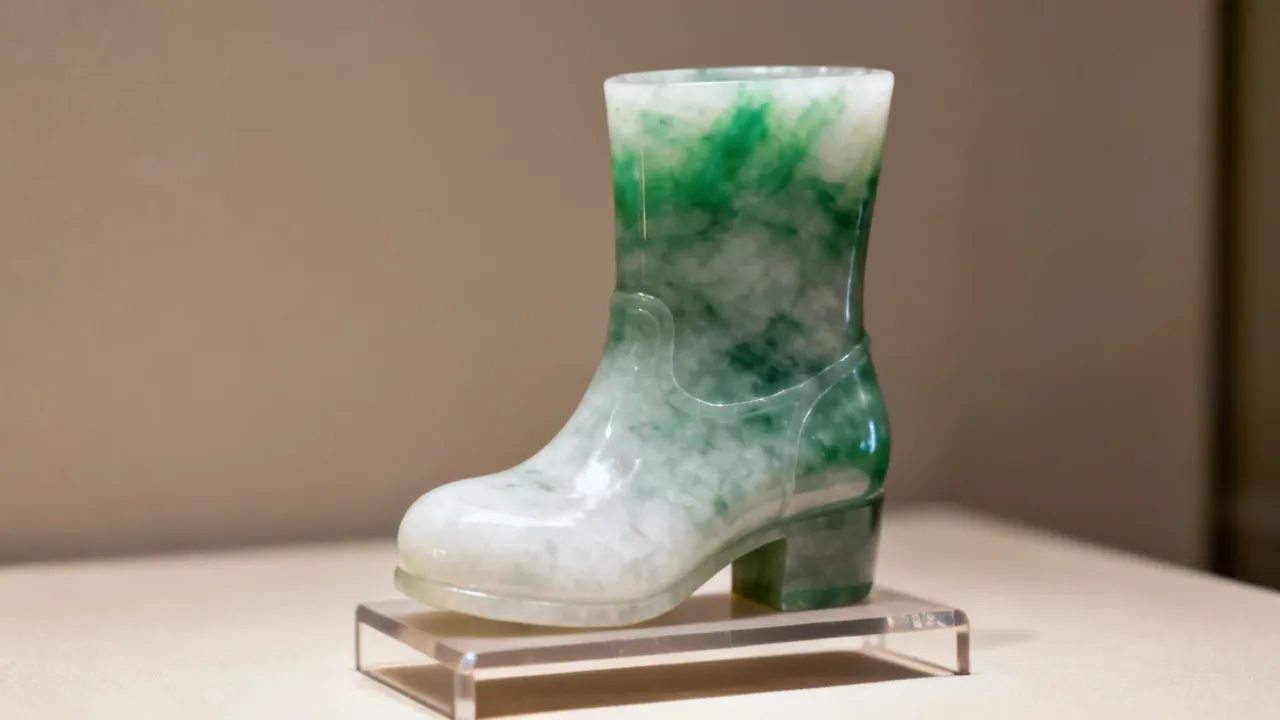
Unveiling the Enigma of Jade Boots
Jade Boots, intricately carved artifacts from ancient civilizations, captivate with their intricate beauty and cultural significance. Traditionally crafted from jade, a mineral highly valued in many cultures for its durability and beauty, these boots serve both ceremonial and status-symbol purposes. Current interest in these artifacts highlights a blend of art, history, and cultural identity.
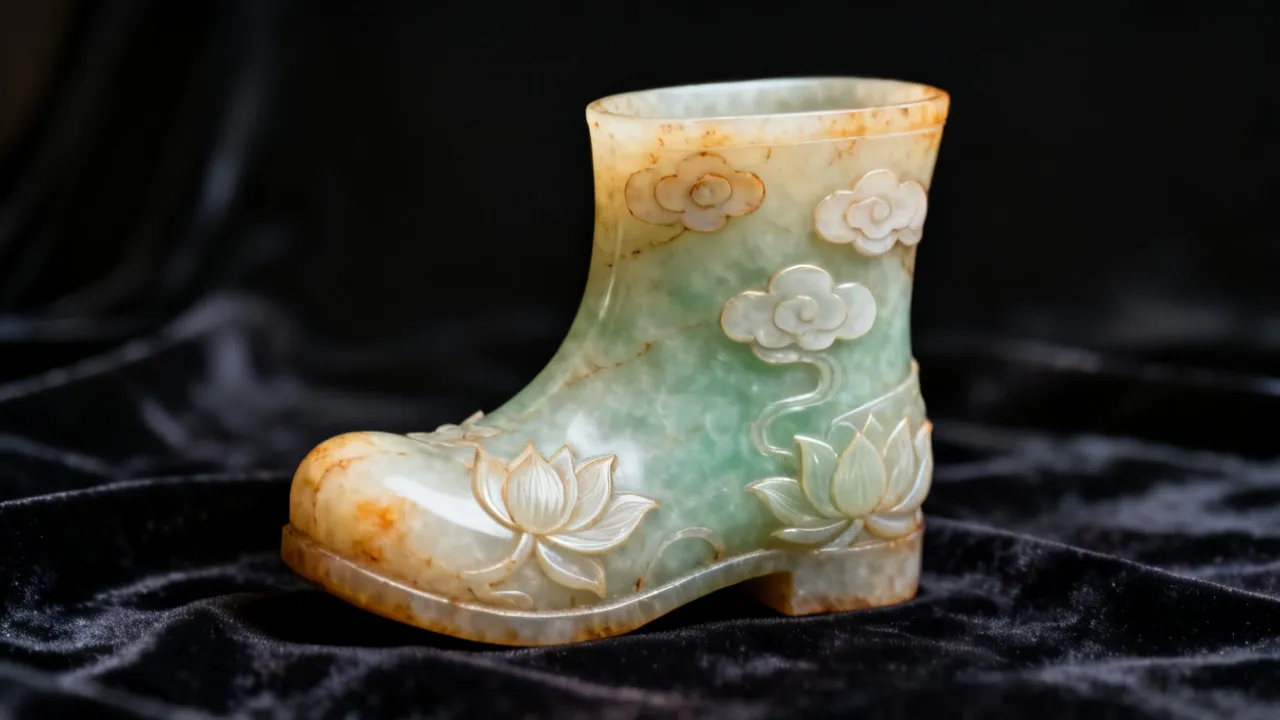
The Enigmatic Jade Boot Unveiled
The Jade Boot is an intriguing artifact that holds significant cultural and historical value in many Asian traditions. Believed to symbolize protection and power, jade has been a prized material throughout history, especially in China, where it is revered as a "stone of heaven." The Jade Boot, a specific form often found in archaeological sites, is an embodiment of ancient craftsmanship and artistry.

Discover the Allure of Jade Boots
Jade Boots, exquisite artifacts of cultural and historical significance, capture the fascination of collectors and enthusiasts worldwide. These objects, carved masterfully from jade, symbolize prosperity and status in many Asian cultures. Our exploration delves into the history, craftsmanship, and significance of jade boots, offering insightful perspectives from industry experts on their enduring appeal and market trends.