This guide explains how Fleetgenius supports smarter fleet management decisions across operations, compliance, and maintenance planning. Objectively, fleet management involves coordinating vehicles, drivers, and service workflows, while software platforms often centralize telematics, scheduling, and reporting. The article also outlines practical evaluation criteria, supplier considerations, and operational conditions to help organizations compare implementations responsibly.

Fleetgenius is commonly positioned within fleet management ecosystems as a software-enabled approach to coordinating vehicle activity, maintenance workflows, and performance visibility. If you’re assessing Fleetgenius, the very critical step is not the marketing promise—it’s validating how the platform aligns with your fleet’s operating model, data quality, and compliance obligations. A well-run implementation can reduce coordination friction between dispatch, maintenance teams, and management, while improving the reliability of decisions drawn from operational records.
In practice, fleet operations rarely fail because the “software doesn’t work.” They fail because the organization expects the software to compensate for unclear processes, missing data, inconsistent identifiers, or ungoverned reporting definitions. Therefore, a responsible evaluation treats Fleetgenius like an operational system: it should reinforce the way you already work (and improve it), but only after you confirm the preconditions required for trustworthy outputs.
This guide provides an expert-style, objective framework for assessing Fleetgenius: what it typically needs to integrate, how to scrutinize reporting and audit trails, what operational conditions must be met before you can rely on dashboards, and which supplier-related questions help you avoid avoidable implementation problems. It also expands on procurement mechanics—what “good” looks like in a pilot, how to test data quality under imperfect conditions, and how to verify security and governance in a way that operations and compliance teams can both accept.
Fleet management is a discipline that spans vehicle acquisition and lifecycle planning, day-to-day assignment and dispatch, route or task execution, driver coordination, maintenance scheduling, and regulatory compliance. Depending on industry, additional layers apply—such as safety management, fuel usage monitoring, equipment inspections, telematics handling, service-level tracking, and incident/claims workflows. Fleetgenius, like other fleet-oriented platforms, generally aims to bring these pieces into a more connected workflow so that operational leaders can act on consistent information rather than disconnected spreadsheets, late updates, or conflicting records.
Importantly, “fleet management” is not one-size-fits-all. A short-haul delivery operation may prioritize dispatch efficiency and service windows, while a field services business often emphasizes asset uptime and maintenance readiness. A utility or infrastructure operator may emphasize compliance documentation and traceability of inspections. A corporate fleet may focus on chargeback models, driver policies, and utilization reporting. Therefore, any assessment of Fleetgenius should start with your business process map: who does what, when, and based on which records?
Before you evaluate features, clarify your operational “control points.” In many organizations, fleet operations rely on control points such as: the moment a work order is created; the approval moment for maintenance expenditure; the moment a vehicle status is changed from “available” to “out of service”; the moment inspection evidence is recorded; and the moment dispatch receives confirmation that a job is complete. If Fleetgenius doesn’t match the timing and governance of these control points, you will experience rework—even if the platform looks comprehensive.
Finally, remember that “fleet management” includes human factors. Dispatch teams need a system that is fast and easy to use during high-pressure hours. Maintenance coordinators need work order workflows that fit their reality (including parts shortages, technician availability, and service sequencing). Compliance leads need evidence that can survive audits. If Fleetgenius can’t serve these different roles without forcing unnatural workarounds, adoption will suffer.
While feature sets vary by configuration and deployment scope, effective fleet management systems usually demonstrate strength in the following areas. Use these as evaluation lenses when considering Fleetgenius. Instead of asking “does it have a feature called X,” ask whether the feature behaves correctly for your fleet’s data and workflows and whether it supports governance decisions.
Dashboards are helpful only if the underlying data pipeline is reliable. Ask how Fleetgenius handles data ingestion (e.g., from telematics devices, vehicle sensors, mobile capture, ELD-like logs where relevant, or manual logs), what happens when signals are delayed or missing, and whether there are controls for data validation. If your decision-making relies on time-sensitive fields—such as location, engine runtime, mileage, service interval status, or work order completion—your evaluation must include “what the system does under imperfect conditions.”
When vendors demonstrate dashboards, they often show ideal conditions. A strong evaluation demands that you also test non-ideal scenarios. For example:
Operational visibility should support decision-making with confidence. That means the platform should provide clarity on event timestamps, data provenance (where data came from), and how the system infers status. If Fleetgenius presents “vehicle health” or “maintenance due” indicators, you should be able to trace those indicators back to the underlying service counters and work order evidence.
Maintenance isn’t just scheduling; it’s work order management, parts coordination, technician assignments (or at least work routing), service history, and evidence for compliance. A fleet platform should support structured maintenance requests, technician assignment or dispatch of tasks to maintenance partners, consistent service records, and a workflow that matches how approvals and exceptions happen in your organization.
For decision-makers, the key question is whether Fleetgenius reduces the lag between “we observed an issue” and “the work is planned and tracked.” You should also test whether the system supports the maintenance realities that create delays:
Also, evaluate whether Fleetgenius supports maintenance record integrity. If a vehicle is serviced, you should be able to reliably answer: what was done, why it was done, who requested it, who approved it, what evidence supports closure, and what data updates were applied to service counters. If the system’s maintenance module can’t preserve these elements, it may not satisfy audit and compliance expectations.
Fleet compliance often involves documentation, scheduling discipline, and traceability. Even when regulations differ by industry and jurisdiction, organizations typically need the ability to show what was checked, when it was checked, who approved it, and what evidence was retained. Compliance may also include inspection regimes, safety checks, documentation of defects and repairs, or proof of adherence to standards.
When evaluating Fleetgenius, examine whether the system maintains audit trails, supports role-based access control, and can export records in formats that match internal governance needs. Auditability should cover both data changes and workflow events. For example:
Beyond the ability to log changes, you should check whether audit trails are tamper-resistant and accessible only through appropriate roles. If compliance teams must request reports from operations manually, the platform may not deliver the governance efficiency you expect.
Operational reporting should answer managerial questions: which vehicles are underperforming, where service delays occur, which routes or job types cause predictable exceptions, and how maintenance actions correlate with uptime. A strong implementation should make it easy to generate consistent reports across business units and time periods.
When assessing reporting, focus on three dimensions:
Also, consider what happens when reports are used in decision meetings. If the platform outputs contradictory metrics (e.g., “maintenance compliance is 98%” but individual vehicle records show missing evidence), trust collapses. A strong evaluation includes cross-checks between dashboard metrics and underlying work order records.
Many fleets run on multiple systems: dispatch tools, accounting/ERP, HR systems, procurement systems, and maintenance or asset records. Fleetgenius value increases when it integrates cleanly and when data ownership is clearly defined. Evaluate integration patterns, permission models, and how changes are handled when source systems update.
Integration evaluation should not only cover technical connectivity. It must also cover governance questions:
Without these governance controls, fleets often end up with “integration drift,” where data consistency degrades over time and users revert to manual reconciliation.
Pricing for fleet platforms is commonly influenced by scope: number of vehicles or users, integrations, data sources, implementation services, and ongoing support requirements. Because published “price” can vary by package, contract structure, and deployment model, this guide does not claim a fixed figure. Instead, treat cost evaluation as a structured procurement exercise.
Request a detailed quote that separates platform licensing from onboarding, integration work, and support. If a supplier provides multiple tiers, compare them on measurable operational outcomes—such as maintenance cycle time improvements, reduced manual reconciliation, faster work order approvals, or higher audit readiness—rather than on brochure-level feature lists.
Also, ensure you understand what is included in the cost. A common hidden cost in fleet implementations is not the software itself but the effort required to achieve data readiness and process adoption. Ask about:
If you need to align internally, build a total cost of ownership (TCO) view that includes implementation effort, staff training time, hardware costs (if required), and the effort of data maintenance. This approach supports transparent decision-making and avoids budget surprises during rollout. A practical TCO model includes “people time” as a line item: the number of hours per month required from dispatch supervisors, maintenance coordinators, and IT/integration staff to maintain data quality.
Finally, compare price to expected value with guardrails. If your evaluation indicates that Fleetgenius will require substantial process redesign or repeated data cleanup, the ROI may not materialize as expected. Conversely, if your fleet already has good maintenance discipline and data governance, the platform may deliver improvements faster and more predictably.
Whether Fleetgenius is deployed directly by a vendor team or via an implementation supplier, supplier due diligence is often where projects succeed or stall. For decision-makers, the goal is to confirm capability, accountability, and operational readiness.
In procurement terms, you are evaluating the supplier’s ability to deliver a working solution—not simply to install software. Therefore, verify how they will manage project scope, how they will validate success criteria, and how they will handle issues when reality doesn’t match demo assumptions.
One of the most important supplier questions is simple: “Who owns outcomes if something goes wrong?” Ensure that responsibilities are clear for configuration, integrations, data quality, and user adoption. Ambiguity often turns into cost overruns and delayed resolution.
When fleets operate across regions “nearby,” operational nuance matters: urban traffic patterns, different customer service expectations, and local maintenance scheduling realities can influence what “good performance” looks like. For example, in denser areas, route exceptions may be more common; therefore, decision rules for reporting should accommodate those realities. Also, organizations frequently coordinate with local workshops or service partners “nearby,” which affects how maintenance workflows are executed and how service records are validated.
In many communities, fleet teams also rely on familiar operational language—drivers may describe issues using practical terms, while supervisors may want standardized categories. A Fleetgenius implementation should translate operational vocabulary into consistent data fields without forcing unrealistic behavior changes. Localization should include:
Also consider language and field formatting. If staff operate in multiple languages, the platform needs to handle multilingual inputs and outputs, or at least maintain standardized fields that compliance teams can interpret. This matters because inconsistent language can create ambiguous work order categories and complicate audit evidence.
Localization is not only about UI. It’s also about data. For example, the “service due” thresholds might be based on local regulatory or contractual requirements. If your evaluation assumes one standard and your operations require multiple standards across regions, dashboards may become misleading.
The following comparison is designed to help you benchmark Fleetgenius assessments in a procurement-ready way. It also includes conditions/requirements commonly needed to make outcomes measurable. You can use it as an evaluation worksheet during demonstrations and pilot planning.
| Evaluation Area | What to Compare | Conditions / Requirements to Confirm | Why It Matters for Fleet Decisions |
|---|---|---|---|
| Data Sources & Quality | Telematics vs manual logs; mapping to vehicle IDs; data correction workflows | Clear definitions for “active vehicle,” “service due,” and event timestamps; documented handling for missing data | Prevents dashboards from becoming unreliable decision tools |
| Maintenance Workflow Fit | Work orders, service history capture, parts/service sequencing, technician tracking | Ability to import or reconcile existing maintenance records; roles defined for request/approval | Improves uptime planning and traceability |
| Compliance & Audit Trail | Audit logs, export formats, role-based access, retention policy approach | Evidence capture for inspections; access controls aligned to governance policies | Reduces risk during internal audits and regulatory reviews |
| Reporting & Operational KPIs | Standard reports vs configurable reports; KPI definitions; drill-down capabilities | Confirm KPI formulas and data lineage; ensure reports reflect your maintenance/dispatch model | Makes management decisions consistent and comparable |
| Integration & Interoperability | APIs, file imports, ERP/HR/dispatch connectivity, identity matching | Integration responsibility matrix; testing plan; change control for schema updates | Reduces manual rework and conflicting records |
| Implementation & Training | Phased onboarding; training tracks for dispatch, maintenance, and management | Written adoption plan; training materials; success criteria per rollout phase | Improves adoption and reduces operational disruption |
| Support & Service Levels | Escalation paths; response times; change requests | Support coverage clarity; incident classification; uptime expectations | Protects day-to-day operations from avoidable downtime |
Use this sequence to structure evaluation and avoid common rollout pitfalls. The key is to reduce uncertainty early and to convert “demo success” into “pilot evidence.” A low-risk evaluation is not only about limiting the fleet scope—it’s also about controlling variables such as data quality and workflow readiness.
Fleet management software is part of a broader trend toward digitizing operational workflows. In the transportation and logistics sector, telematics and fleet digitization are widely discussed by industry bodies, and the value proposition typically centers on improved visibility, maintenance discipline, and safety management. Because exact figures vary by region, fleet composition, and maturity level, this article avoids unverified claims and instead references established sources that discuss industry dynamics and technology adoption.
For background on logistics digitization and operational performance themes, readers may consult materials from recognized authorities such as:
These sources do not endorse specific vendors; they provide context for why fleets invest in visibility, safety, and process improvement. The very prudent way to judge Fleetgenius remains a structured evaluation against your own operational evidence. In other words, even if industry reports suggest digitization trends, your own pilot data should determine whether Fleetgenius achieves your targeted improvements.
One reason responsible sourcing matters is that fleet operations are affected by constraints that vary widely: labor availability, maintenance outsourcing models, telematics coverage, regulatory environment, and data governance maturity. A platform can be “good” in a generalized sense but may not match your specific constraints. Evaluation should therefore be grounded in operational outcomes.
Before deployment, a supplier should provide clear documentation that reduces uncertainty. Documentation is not a formality; it is a mechanism to ensure accountability, reduce misunderstandings, and speed resolution when issues arise.
Additionally, documentation should address “how changes are handled.” If you add a new maintenance type, a new workshop partner, or a new data source, the system configuration may change. The partner should provide a change management process—how modifications are approved, tested, and deployed with minimal operational risk.
Even the strongest fleet platform can underperform if rollout conditions are weak. The very frequently encountered issues include:
Another common pitfall is underestimating the time required to clean and normalize data. Vehicle records often contain inconsistent identifiers, varying units (miles vs kilometers), outdated asset tags, and incomplete maintenance histories. If the platform can’t correct these inconsistencies or if the partner doesn’t support structured correction, the system will produce misleading outputs.
Also watch for “shadow systems.” Even if Fleetgenius is deployed, teams might keep spreadsheets, email-based work orders, or separate logs that duplicate data. Shadow systems may hide adoption problems until later. A low-risk evaluation measures adoption behavior and not only dashboard views.
Fleetgenius is typically used to support fleet-related operational management, such as coordinating vehicle activity, organizing maintenance workflows, and consolidating reporting so that fleet leaders can make informed decisions based on consistent records. In evaluation terms, the question you should also ask is: which operational decisions will depend on Fleetgenius outputs (dispatch decisions, maintenance prioritization, compliance reporting, or performance KPIs)? That will determine what data quality and audit controls you need.
Compare on operational fit: data sources, maintenance workflow capability, reporting definitions, auditability, integration approach, and implementation support. Request demonstrations using your own scenarios rather than relying on generic feature lists. A strong comparison also includes evaluating the supplier’s ability to deliver integrations and to support a pilot with measurable acceptance criteria.
Many fleets use telematics devices for automated data, but some platforms can support hybrid models that include manual or scheduled data capture. The correct approach depends on your operational requirements and data governance needs—confirm specifics during evaluation. If telematics coverage is inconsistent, ensure the platform can handle missing or stale data without misleading users. Confirm whether manual data capture can be validated and audited.
Ask for a detailed quote that separates licensing scope, onboarding services, integration effort, training, and ongoing support. Then compare total cost of ownership (TCO), including staff time and data maintenance effort. Also verify which costs change based on scale (additional vehicles, additional users, additional integrations, or extra support tickets) so you can forecast operational expenditure over time.
Implementation methodology, responsibilities, data mapping support, training plan, support model, security posture documentation, and escalation procedures are typically the very decision-relevant supplier details. You should also request the supplier’s experience with similar fleet sizes, similar maintenance workflows, and similar compliance needs so you can judge implementation risk realistically.
Validate data pipelines, confirm how missing or delayed events are handled, agree on KPI formulas, and implement role-based access and audit trails. A pilot with a representative fleet subset is a practical way to test trustworthiness. During the pilot, perform cross-checks: confirm that reported KPIs match underlying work orders and inspection evidence for a sample of vehicles.
Confirm data readiness (vehicle and maintenance records), workflow readiness (roles, approvals, and processes), reporting KPI definitions, integration testing completion, and staff training. Without these conditions, even a capable platform can produce inconsistent outcomes. Additionally, define operational “fallback procedures” for when integrations or data sources fail (e.g., manual status updates and how they are reconciled later).
Yes, but the key is to configure workflows and reporting to your local operating realities—service types, scheduling patterns, and maintenance partner routines “nearby.” Ensure your pilot includes representative units from those conditions. Also confirm whether region-specific compliance checklists and evidence capture can be configured without introducing reporting fragmentation.
Fleetgenius can be a meaningful component of modern fleet management when it’s evaluated as an operational system—not just a dashboard. The very responsible approach is to validate data readiness, workflow fit, compliance auditability, reporting definitions, and supplier implementation quality. With a measured, pilot-based rollout and governance-oriented conditions, organizations can move from “interesting software” to dependable decision support.
Ultimately, the best proof is operational evidence: in a pilot, can the platform correctly reflect vehicle and maintenance status, can it support compliance evidence capture, can managers derive consistent decisions from KPIs, and can teams adopt the workflow without reverting to shadow processes? If the answer is yes—across both ideal and non-ideal conditions—you have a stronger foundation for rollout.
Conversely, if the evaluation reveals that data gaps lead to misleading dashboards, that work order workflows don’t match reality, or that audit trails cannot meet governance expectations, then it’s better to address those issues before scaling. Fleet management outcomes depend on trust and traceability as much as they depend on visibility.
This article intentionally avoids publishing a fixed “price” figure or unverifiable vendor claims. For accurate pricing and supplier arrangements, request an itemized quote and an implementation plan that reflect your fleet size, integration needs, and operational timeline. If possible, request a pilot pricing model with clearly defined deliverables and acceptance criteria so you can evaluate value and risk before committing to full rollout.
Striking the Perfect Balance: Navigating Premiums and Out-of-Pocket Expenses in Senior Insurance Plans

Explore the Tranquil Bliss of Idyllic Rural Retreats

How to Make Lasting Memories at Disneyland Attractions

4rkojvsx Technology: Industry Insights and Buying Guide

Affordable Phones and Plans for Seniors

Affordable Full Mouth Dental Implants Near You

Unlock the Top Kept Secrets to Finding Your Ideal Dentist for Flawless Dental Implant Results!

Discovering Springdale Estates

Unveiling RS Sul Telecom Services

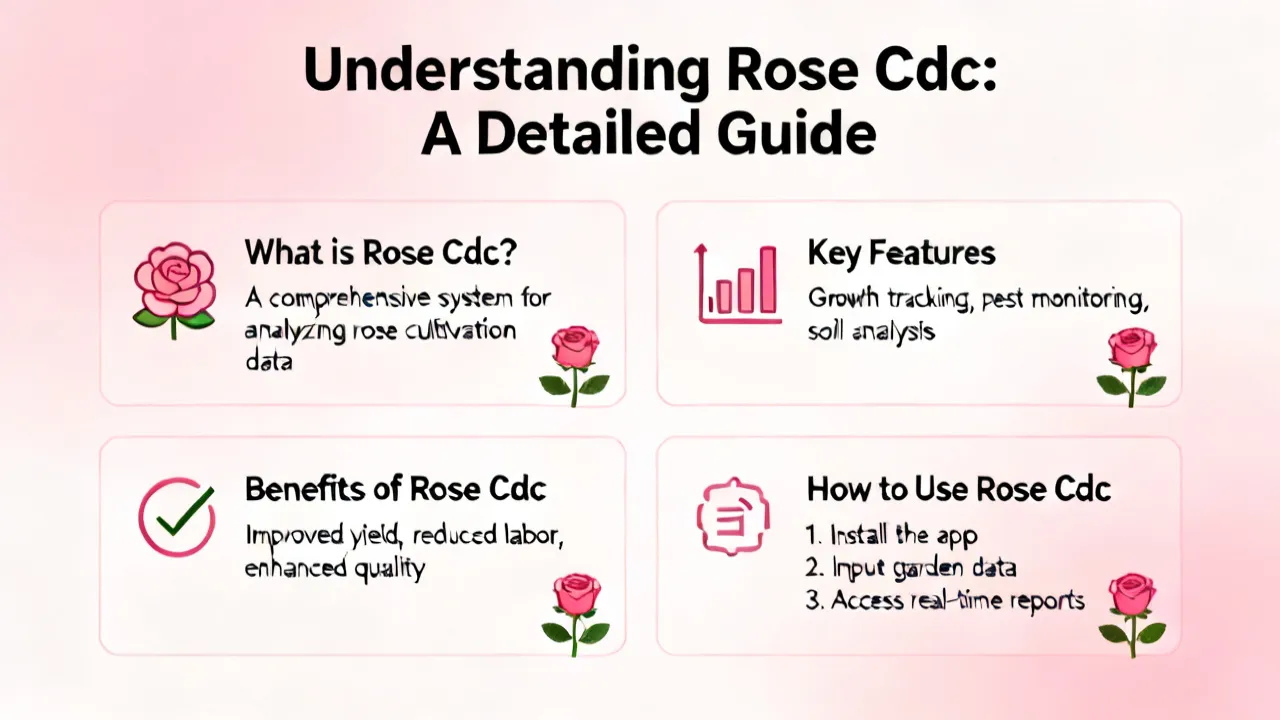
Understanding Rose Cdc: A Comprehensive Guide
This article provides an in-depth exploration of Rose Cdc, a term rapidly gaining attention in specific industries. Our discussion delves into the significance and application of Rose Cdc, its potential impact on various sectors, and expert insights into its future developments. This comprehensive analysis is designed to inform readers about the multifaceted aspects of Rose Cdc, its current applications, and potential advancements.

Understanding Compliance and AML Strategies
This article delves into the intricate realm of Compliance and Anti-Money Laundering (AML) strategies, highlighting their significance in the corporate world. Compliance AML refers to the organizational adherence to legal standards and regulations to deter financial crimes, ensuring transparent and ethical financial practices. This comprehensive guide examines these strategies' complexities and their pivotal role in safeguarding economic integrity.

Mastering Inbound B2B Strategies
The foundation of successful B2B strategies often lies in the effective implementation of inbound marketing techniques. In today's globally connected business environment, inbound B2B strategies have become critical for companies seeking to engage target audiences, optimize lead generation, and establish long-lasting partnerships. Understanding these strategies is essential for companies aiming to thrive in competitive markets.

Exploring B2B MBA Opportunities
Dive into the dynamic world of B2B MBA programs, designed for professionals seeking to enhance their strategic and management skills in a business-to-business context. This comprehensive guide discusses the significance of B2B MBAs in today's market, highlighting how these programs equip leaders with the expertise to navigate complex B2B relationships and drive business success.

Understanding Whitewater Regenerative Blowers
Whitewater Regenerative Blowers are essential in various industrial applications for their efficiency in moving air and gases. These blowers are known for their durability and ability to operate continuously, making them a preferred choice for industries ranging from wastewater treatment to aquaculture. This article explores their features, benefits, and applications, offering readers a comprehensive understanding of their importance in modern industry.

Mastering Employee Retention Strategies
Employee retention has become a critical aspect of organizational success, particularly in the dynamic landscape of 2020. As businesses strive to maintain a stable and productive workforce, understanding effective retention strategies is essential. This article delves into key methods for enhancing employee satisfaction and retention, offering a comprehensive guide for HR professionals and business leaders alike.
