This guide explains Commercial Electric Car Charging Points Installation—from planning and grid checks to safe hardware selection, supplier evaluation, and practical cost drivers. It objectively outlines what matters for owners and fleet managers, including standards, site readiness, and commissioning. The discussion is designed to help you compare solutions without guesswork, focusing on reliable procurement and compliance.
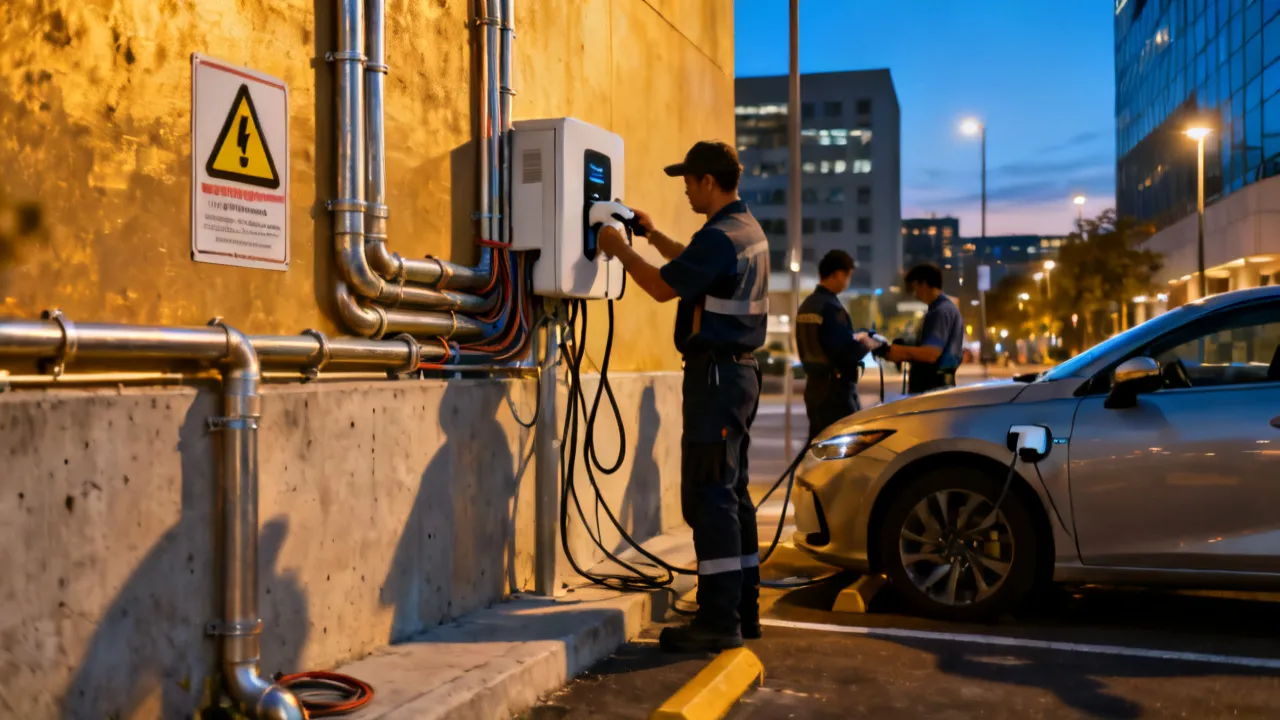
Commercial Electric Car Charging Points Installation is not simply a matter of “mounting a charger.” For businesses, the outcomes they care about—safety, uptime, predictable commissioning times, acceptable total cost of ownership, and a user experience that supports the site’s commercial goals—depend on structured planning from start to finish. In practical terms, the most reliable projects are delivered as a sequence of linked stages: site assessment and power availability checks, equipment selection based on real usage patterns, civil and electrical works planned around existing constraints, coordination of grid connection or power upgrade workflows where needed, and finally commissioning and acceptance testing that confirms the installation is safe and fit for purpose.
When these stages are handled methodically, companies typically see fewer disruptions during build, reduced rework (for example, changes to cable routes or enclosure positions), and smoother handover into day-to-day operations. Just as importantly, businesses avoid common pitfalls that arise when EV charging is treated like a plug-and-play commodity rather than a regulated electrical infrastructure change. In many jurisdictions, electrical work for EV charging triggers compliance obligations, inspections, and certification requirements that must be satisfied before equipment can be used.
From an industry perspective, the core challenge is variability. Unlike domestic charging where assumptions are often similar from home to home, commercial sites vary dramatically: switchgear ratings and spare capacity differ, cable routes and existing underground services differ, landlord or campus restrictions differ, and even the permitting pathway can be different between sites depending on ownership, tenancy structure, and local authority processes. That variability is precisely why experienced installers and credible suppliers usually emphasize design-led delivery rather than one-size-fits-all deployment.
Planning also includes operational thinking. In commercial environments, chargers may be used by employees, customers, guests, or fleets. Each group has different expectations. For example, a workplace charger used during core office hours generally requires stable operation through predictable dwell times, and it must be accessible without disrupting daily traffic. A retail forecourt or hotel environment often involves higher turnover, more intense peak demand windows, and a more visible “customer-facing” experience. Fleet depots may require consistent performance and predictable service response, with reporting and maintenance procedures that support broader fleet operations.
In short, commercial charging is an integration project: EV hardware meets electrical infrastructure meets civil works meets compliance and operational processes. The more thoroughly that integration is planned up front, the more likely the project is to deliver reliable charging without unexpected cost escalation or delayed commissioning.
Commercial charging projects typically involve one or more high-use charging locations such as business parks, retail forecourts, office car parks, warehouses and logistics yards, hotels, public-facing workplaces, and fleet depots. In many cases, multiple bays are installed together as part of a coordinated infrastructure change. Sometimes chargers are installed as a first phase, with provision and planning for future expansion. Other times, the aim is rapid deployment across a site that needs charging now rather than later.
The “commercial” aspect often changes requirements compared to home charging. The chargers are expected to operate at higher utilization rates, potentially with multiple vehicles charging concurrently. That means the electrical design needs to accommodate sustained loads and safe operation during peak demand. It also means cable management and mechanical protection must be robust, because commercial sites typically experience higher footfall and vehicle movement around the installation area. Additionally, access control is more complex. Businesses may need RFID-based authorization, app-based access, booking workflows, or fleet-integrated user management. Uptime and maintenance become more important too, because a non-functioning charger can directly impact customer satisfaction, employee benefit uptake, revenue models, and operational planning.
Common components in a professional setup include:
In other words, commercial EV charging is typically a system design. The physical charger is the visible part, but the reliable charging experience depends on the entire chain: electrical supply quality, protection and cable routing, controller behavior (including load management), and the operational processes that manage faults and maintenance.
When businesses plan Commercial Electric Car Charging Points Installation, the decision drivers typically fall into several interconnected categories. Rather than asking only “what charger should we buy?”, organizations benefit from framing the problem as three sets of requirements: (1) electrical capability and safety, (2) user experience and operational control, and (3) lifecycle considerations such as maintenance, spares availability, and software support.
In practice, these categories influence each other. For example, choosing a higher-power charging strategy can increase electrical upgrade requirements. Selecting network-connected chargers may improve maintenance efficiency but might introduce subscription or operational contract considerations. Similarly, choosing a specific user authorization method (RFID vs app vs booking system) influences installation details and commissioning scope because it may require additional configuration or integration work.
Key decision factors commonly include:
Operational fit can be the difference between a “technically installed” system and a “commercially successful” system. For instance, a charger that charges reliably but is difficult to access or lacks clear payment instructions may underperform in adoption even if the electrical engineering is sound. Conversely, a charger that is physically well placed and easy to use but lacks proper load management may cause intermittent outages or trigger safety protections during peak demand—again hurting commercial outcomes.
Pricing for Commercial Electric Car Charging Points Installation varies widely depending on the project scope, number of units, charger power, complexity of cabling routes, and site constraints that affect civil and electrical work. Instead of relying on simplistic “per charger” estimates, experienced providers typically build a cost model around identifiable cost elements, because EV charging projects involve both visible and hidden works. The biggest cost surprises usually come from underestimated power upgrades, unplanned civil scope, and ambiguous responsibilities around access, permits, and inspections.
While exact numbers vary by region and by site conditions, very common cost components include:
As a budgeting approach, business owners benefit from comparing quotes line-by-line. Two proposals might present the same number of chargers and similar charger power, but differ in cable length allowances, assumptions about whether a power upgrade is required, civil restoration scope, warranty terms, and how commissioning and certification are packaged. Those differences can significantly change effective cost and risk.
It also helps to clarify what is included in commissioning. For example, does the quote include end-to-end testing of billing and metering workflows? Does it include validation of load management behavior under realistic scenarios? Does it include remote monitoring setup and admin account configuration? Clarifying these points early reduces disputes after installation.
Finally, consider lifecycle cost. A lower-capital-cost option might have higher downtime risk if service response or spare parts access are weaker. Alternatively, a higher upfront cost might include robust load management and better remote diagnostics, lowering operational interruption and service callouts. For businesses, total cost of ownership often matters as much as the initial installation budget.
Successful Commercial Electric Car Charging Points Installation depends on supplier reliability and delivery competence, not only on charger hardware performance. Even top-tier hardware can fail commercially if installation quality is poor, documentation is incomplete, or service processes are unclear. A credible supplier should demonstrate competence in documentation, compliance support, service capability, and clear responsibility boundaries between parties (installer vs supplier vs network operator where applicable).
When evaluating suppliers, consider criteria that reflect real project risk. Charger performance matters, but so do the capabilities that ensure the charger remains operational over time.
Important evaluation criteria include:
To compare offers fairly, request comparable deliverables—same charger count, same cable route assumptions, same power rating strategy, and same testing/certification expectations. Without comparable parameters, it becomes easy for one quote to omit a major component (like assumed power upgrades or civil restoration details), making it look cheaper but leading to budget surprises later.
Additionally, evaluate the supplier’s communication practices. Commercial installations typically require coordination with site managers, landlords, facilities teams, and sometimes local authorities. A supplier that responds quickly during the planning phase is often an indicator of smoother delivery later.
Many EV charging projects do not stall because hardware is unavailable; they stall because the site is not ready for the installation pathway. For Commercial Electric Car Charging Points Installation, site readiness commonly includes physical access, civil constraints, and operational permissions. These factors determine whether installers can safely trench, route cables, mount equipment, and complete commissioning without interruption.
Site readiness commonly includes:
Addressing these factors early helps avoid late-stage changes that can affect both price and commissioning timelines. It also reduces risk of “partial completion,” where equipment is physically installed but cannot be commissioned due to unresolved approvals, missing access permissions, or outstanding power upgrade readiness.
Readiness also includes practical elements like surface marking and bay identification. If chargers are installed into a site that lacks clear bay numbering or signage, user experience can suffer and safety compliance may be harder to demonstrate. Planning these details early supports both operational smoothness and compliance documentation.
Professionally delivered Commercial Electric Car Charging Points Installation must prioritize safe design. That means correct selection of protective devices, appropriate segregation from non-electrical services where relevant, proper earthing and bonding, and correct cable ratings. It also includes weatherproofing and mechanical protection for outdoor components to prevent ingress and physical damage from vehicles or environmental exposure.
Safety is not only about preventing shocks. It also includes ensuring the installation will behave predictably under fault conditions. EV charging installations must be designed to protect users, installers, the building’s electrical infrastructure, and the chargers themselves. That includes ensuring protective measures will operate appropriately and that fault states do not cause cascading issues across the site electrical system.
Just as importantly, commissioning should be treated as a structured acceptance process rather than a brief functional check. A sound commissioning process typically includes verifying correct wiring and terminations, checking protective measures, testing insulation resistance where required, confirming signage and labeling, and validating that the charge point operates correctly under expected conditions.
For compliance and top practice, installers typically work to applicable electrical standards and local regulatory requirements. In the UK context (commonly referenced in industry discussions), references are often made to wiring and safety rules and to official guidance on EV charging equipment. For general top-practice context, industry sources frequently cite recognized bodies such as the Institution of Engineering and Technology (IET) and the International Electrotechnical Commission (IEC) for relevant equipment safety concepts.
It’s helpful for businesses to understand what “safe design” means in practice. For example, the location of isolation devices and the specification of protective circuit breakers affect both safety and serviceability. Proper cable containment affects durability and reduces the chance of cable damage during routine site activities. Correct earthing and bonding protects not only against shock hazards but also against equipment malfunction under transient conditions.
Finally, consider the user environment. Commercial sites include pedestrians, cyclists, staff, vehicles, and possibly deliveries or industrial activity. A well-designed installation anticipates where people will stand, how cables will be routed to avoid trip hazards, and how the charger enclosure and mounting will resist impacts. Mechanical robustness and cable routing planning are part of safety, not an afterthought.
Commercial EV charging demand can be spiky. Multiple vehicles may arrive simultaneously after work, at shift changes, after events, or during peak customer windows. If the charging loads exceed what a site can safely support, the electrical system may trip protective devices, chargers may enter fault states, or the installation may deliver inconsistent performance. The result is an unreliable charging experience and potential compliance issues if the system is repeatedly pushed beyond its designed capacity.
Experienced providers often recommend load management approaches so the system can allocate available power to multiple chargers efficiently. Load management strategies can include:
Load management can reduce the need for costly electrical upgrades. However, suitability depends on charger features, the communication/control architecture, and the overall electrical design. Not all sites benefit equally from load management. For example, a site that consistently experiences low average utilization but occasional peak bursts may be ideal for dynamic load balancing. Another site that requires guaranteed high throughput at peak times may need either a different charger mix (e.g., fewer high power chargers) or additional electrical capacity.
Capacity planning also includes considering future growth. Businesses often install a first phase and later expand. A well-designed infrastructure plan might include extra spare circuit capacity, space in switchgear, or architectural decisions that allow additional chargers to be added without redesigning the entire electrical system.
Businesses should also consider how capacity planning interacts with user experience. If load management significantly reduces charging power during peak times, the system might deliver sessions that are “technically successful” but commercially disappointing if vehicles do not charge enough before they need to move. Therefore, load management parameters should reflect real dwell times and operational priorities.
Commissioning is where many quality gaps become visible. For a strong Commercial Electric Car Charging Points Installation, acceptance should be treated as an evidence-based process, not just a moment when the charger “turns on.” A robust acceptance process usually includes:
When commissioning is thorough, the handover reduces disputes later. It also simplifies service because the “as installed” state is documented clearly. If a fault occurs months later, accurate records of wiring, identification labeling, and configuration settings speed troubleshooting.
Good commissioning also includes verifying that the installation will behave safely under the operating envelope it is designed for. For instance, if the site has load management, ensure the system properly balances power across multiple chargers and that it fails gracefully if communications temporarily drop (depending on design).
Businesses can ask installers to demonstrate acceptance steps. This improves confidence and ensures expectations are aligned. If a quote states “commissioning included,” that should translate into real test steps and formal documentation—not just a basic power-on check.
The sections below provide a structured supplement to the main discussion. It is intended to be used alongside quotes and technical surveys so you can compare proposals consistently. EV charging projects often go wrong when stakeholders compare headline figures but not the underlying assumptions. This table helps you capture the supplementary requirements that significantly influence cost, schedule, and risk.
| Area | What to Compare | Common Conditions / Requirements | Why It Affects Outcome |
|---|---|---|---|
| Site survey & design | Does the supplier include load assessment, cable route review, and placement layout? | Access to switchgear, confirmation of parking bay geometry, and confirmation of future works constraints. | Prevents hidden scope changes that increase cost and delay commissioning. |
| Power upgrade assumptions | Is there an allowance for switchgear upgrades or new circuits if required? | Existing distribution capacity, meter arrangements, and utility coordination where applicable. | Power constraints are often the biggest driver of total project budget. |
| Charger specification | Connector type, power rating, weather rating, and whether metering/network features are included. | Defined user expectations (fleet vs public), dwell time requirements, and billing needs. | Ensures the chargers match the business model, not just physical installation. |
| Civil & cabling scope | Cable route distance assumptions and containment method (ducting/trenching/trays). | Pavement type, existing buried services, and any landscaping restoration obligations. | Changes to civil scope often translate into schedule slippage and extra restoration costs. |
| Safety compliance & certification | What testing and documentation are included at acceptance? | Local regulatory requirements, inspection arrangements, and labeling/signage standards. | Impacts risk, insurance alignment, and future troubleshooting. |
| Software & monitoring | Remote monitoring features, reporting, and admin workflows. | Network availability, integration expectations, and whether subscriptions are time-bound. | Determines operational efficiency after installation and affects ongoing budgets. |
| Warranty and service | Warranty duration, service response commitments, and spare parts policy. | Defined maintenance responsibilities and access for technicians. | Reduces downtime risk and supports predictable total lifecycle cost. |
Beyond the table, businesses should also compare contract responsibilities around unusual events. For example, what happens if the utility demands a redesign due to a service capacity issue? What if unforeseen buried utilities are discovered during trenching? A transparent commercial agreement clarifies how additional costs are handled and who decides on mitigation steps.
For readers who want to ground planning decisions in credible guidance, the following organizations are commonly referenced for electrical safety principles, charger equipment standards, and interoperability concepts:
Where you operate, align supplier documentation with local regulation and applicable wiring standards. In practice, the installer and charger supplier typically reference relevant standards in documentation, but the business should still verify what is required and that the documentation is provided at handover.
Below is a practical, step-by-step workflow that aligns closely with how professional teams execute Commercial Electric Car Charging Points Installation. This sequence is not “bureaucracy for its own sake”; it is the structure needed to reduce risk and to ensure the final system works safely and reliably in real operation.
This step-by-step workflow helps ensure that the final installation is not only “installed,” but also ready for the day-to-day reality of commercial operations. It also creates a defensible evidence trail for compliance and for future service troubleshooting.
Even strong proposals can drift if conditions are unclear at quotation stage. Clarifying the following items can prevent scope creep, avoid schedule impacts, and reduce the likelihood of disputes during commissioning and handover.
When those details are clarified early, suppliers can price the project accurately and plan resources effectively. When details are left vague, suppliers may price with conservative assumptions, or they may price optimistically and then request cost changes later after discovery of real site constraints.
Q1: How do I estimate the budget for Commercial Electric Car Charging Points Installation?
Very reliable quotes break cost into survey/design, electrical capacity and power works, civil/cabling, charger hardware, commissioning, and certification. Request line-item assumptions for cable distances and whether a power upgrade is included, because power works often dominate total cost.
Q2: Is it better to install fewer high-power chargers or more lower-power chargers?
It depends on dwell time, expected usage, and peak demand. Higher power can improve turnaround but may require greater electrical capacity. Load management and a charger mix strategy can often be optimized to fit real operational patterns, such as office parking versus retail turnover.
Q3: What’s usually the biggest cause of schedule delays?
Schedule delays commonly come from underestimated electrical upgrade needs, delayed approvals/inspections, or unexpected civil constraints such as buried services, pavement restrictions, or limited working access. Network or software provisioning can also delay go-live if not planned early.
Q4: Do I need network connectivity for every commercial charger?
Not always for basic charging, but network features are valuable for remote monitoring, fault diagnostics, and reporting. Whether you need it depends on your billing model, fleet management approach, and desired service strategy. For sites that require transparency and uptime reporting, connectivity often becomes important.
Q5: What documentation should I receive at the end of installation?
Expect electrical certification/testing documentation, as-built drawings or records (where applicable), commissioning reports, and a maintenance/inspection guidance pack. If metering or billing is included, you should also receive configuration and reporting guidance so your operations team can interpret charging session data.
Q6: How do I compare suppliers fairly?
Compare proposals using consistent parameters: charger type and rating, included civil works assumptions, power upgrade assumptions, commissioning/testing scope, warranty duration, and service terms. If one quote excludes a likely power upgrade, it may look cheaper but could become more expensive overall due to change requests.
Q7: Can existing electrical infrastructure be reused?
Often yes, but only after a proper capacity assessment. Reuse may be possible for cabling routes or distribution circuits, but protective devices and switchgear capacity must meet safety requirements for the added EV loads. Reuse is not “automatic” and should be validated.
Q8: What maintenance is typically required after Commercial Electric Car Charging Points Installation?
Routine inspections, periodic checks of connectors/enclosures, and attention to fault indicators are typical. The exact schedule depends on environmental conditions and the manufacturer’s guidance. A service plan helps clarify how faults are triaged and resolved and what response levels are available.
Q9: Who should manage charger faults—our team or the installer?
In many commercial setups, the installer or service provider triages faults remotely first (if connectivity is available) and then provides technician support. The exact responsibility should be spelled out in the service agreement so that operational teams know what to do when a charger fails and who to contact.
Q10: Can we install chargers in phases to reduce upfront cost?
Yes, phased installation is common. However, the initial phase should be designed with the expansion in mind—especially regarding electrical capacity, switchgear space, and cable route planning—so that future phases do not require expensive rework.
Many businesses operate in dense urban or mixed-use areas where parking access, pedestrian flow, and existing underground services demand careful planning. In these “nearby” settings, good installers treat logistics as part of engineering. That means protecting surfaces, planning cable routes around existing constraints, managing working hours to avoid disruption, and coordinating with site managers to ensure safe vehicle and pedestrian movement during installation.
Even without naming a specific city, the principle is consistent: your local environment—whether a roadside commercial strip, a campus with shared utilities, or an industrial park with complex service corridors—shapes the installation complexity. Top providers factor these realities into design and scheduling from day one instead of trying to handle them as “surprises” after installation begins.
For example, a commercial site near busy roads might require stronger traffic management planning and stricter working windows. A logistics yard might have heavy vehicle movement requiring cable containment designed for impact resistance and careful scheduling to avoid interference with operational deliveries. A multi-tenant building might require landlord coordination and documentation that clearly defines responsibilities for electrical tie-ins and maintenance access. In each case, the installation approach should be adapted to the actual conditions.
Additionally, “nearby” can refer to the practical reality of maintenance. Sites that are geographically distributed may require more efficient service routing and spare parts logistics. Suppliers with established service networks may provide better coverage and faster response, which can be a competitive advantage for businesses that rely on uninterrupted charging operations.
The growth of EV adoption and the electrification of fleets has increased attention on charging reliability, safety, and serviceability. While the exact pace varies by region, reputable industry bodies consistently emphasize that charging infrastructure should be planned as a system—integrating electrical capacity, expected usage patterns, user experience design, and good maintenance practices.
As charging networks become more extensive, commercial owners increasingly value features like remote monitoring, session reporting, and predictable service workflows. These features help businesses manage utilization, plan maintenance, and demonstrate accountability to internal stakeholders or customers. When chargers are installed with these operational needs in mind, they often deliver more than just “energy delivery.” They become a managed service element within the broader business infrastructure.
For background on EV and charging infrastructure trends, you can consult reputable research and policy reporting from organizations such as the International Energy Agency (IEA) and established energy agencies that publish assessments of charging network deployment dynamics. These sources often discuss how policy, grid planning, and charging infrastructure scaling interact—highlighting why early design and capacity planning matters for commercial rollouts.
In addition, commercial demand patterns influence how charging systems evolve. As workplace charging becomes more common, and as businesses adopt mixed mobility strategies, the focus is increasingly shifting toward smart charging solutions that manage capacity and provide reporting. This includes load balancing, dynamic power allocation, and improved fault diagnostics.
Commercial Electric Car Charging Points Installation succeeds when it is treated as engineering delivery rather than a standalone equipment purchase. The best projects start with a site survey and power capacity assessment, align charger selection to operational needs and user journeys, evaluate suppliers based on service capability and documentation quality (not only hardware specifications), and confirm safety compliance through robust commissioning and acceptance.
To move forward confidently, it helps to define your business objectives and expected usage patterns before requesting installation quotes. Then, ask suppliers to provide comparable scope details: survey/design inclusions, assumptions around cable routes and civil work, clarity on power upgrade scope, commissioning testing steps, certification documentation, and the structure of warranty and ongoing service support.
If you want, share the approximate number of chargers you plan for, whether they’re AC or DC, and your site constraints (for example, switchroom distance, cable routing challenges, and whether power upgrades might be needed). With that information, you can develop a requirements checklist that you can send to installers to obtain truly comparable, line-item quotes.
Striking the Perfect Balance: Navigating Premiums and Out-of-Pocket Expenses in Senior Insurance Plans

Explore the Tranquil Bliss of Idyllic Rural Retreats

How to Make Lasting Memories at Disneyland Attractions

Affordable Phones and Plans for Seniors

Affordable Full Mouth Dental Implants Near You

Unlock the Top Kept Secrets to Finding Your Ideal Dentist for Flawless Dental Implant Results!

Discovering Springdale Estates

The Guide to Car Trading

Affordable Cell Phones Without Plans

The Rise of Electric Automobiles
Electric automobiles represent a significant shift in the automotive industry, focusing on sustainability and innovation. These vehicles utilize electric propulsion systems, as opposed to traditional internal combustion engines, offering benefits such as reduced emissions and enhanced efficiency. As technology advances, electric automobiles are becoming increasingly appealing to consumers and are seen as a critical element in the global push towards greener transportation solutions.
The Rise of Electric Automobiles
Electric automobiles are becoming increasingly integral to the automotive industry, representing a shift towards more sustainable transportation solutions. These vehicles, powered by electric motors instead of internal combustion engines, offer numerous advantages such as reduced emissions and lower operating costs. This comprehensive guide explores the various aspects of electric automobiles, including their technology, market trends, and future outlook.

Understanding Electric Automobiles Today
Electric automobiles represent a transformative shift in the automotive industry, offering a sustainable alternative to traditional vehicles. With advances in battery technology and global commitments to reducing carbon emissions, electric cars are poised to dominate future transportation. This article explores key aspects of electric automobiles, including their technology, market trends, and consumer considerations.

The Rise of Electric Automobiles
Electric automobiles are revolutionizing the transportation industry, gaining traction for their environmental and economic benefits. As technology advances, electric vehicles (EVs) are becoming increasingly accessible and efficient, contributing to reduced carbon emissions and promoting sustainable energy usage. This article explores the current landscape, challenges, and future potential of electric automobiles.

Revolutionizing Transport with Electric Automobiles
Electric automobiles are at the forefront of a transformative shift in transportation as they redefine efficiency and sustainability standards. Driven by the need to reduce emissions and embrace renewable energy, electric vehicles (EVs) have rapidly evolved, offering consumers an eco-friendly alternative to traditional gasoline-powered cars. This comprehensive guide explores the key features, benefits, and industry insights related to electric automobiles.
Navigating the Awd Phev Landscape
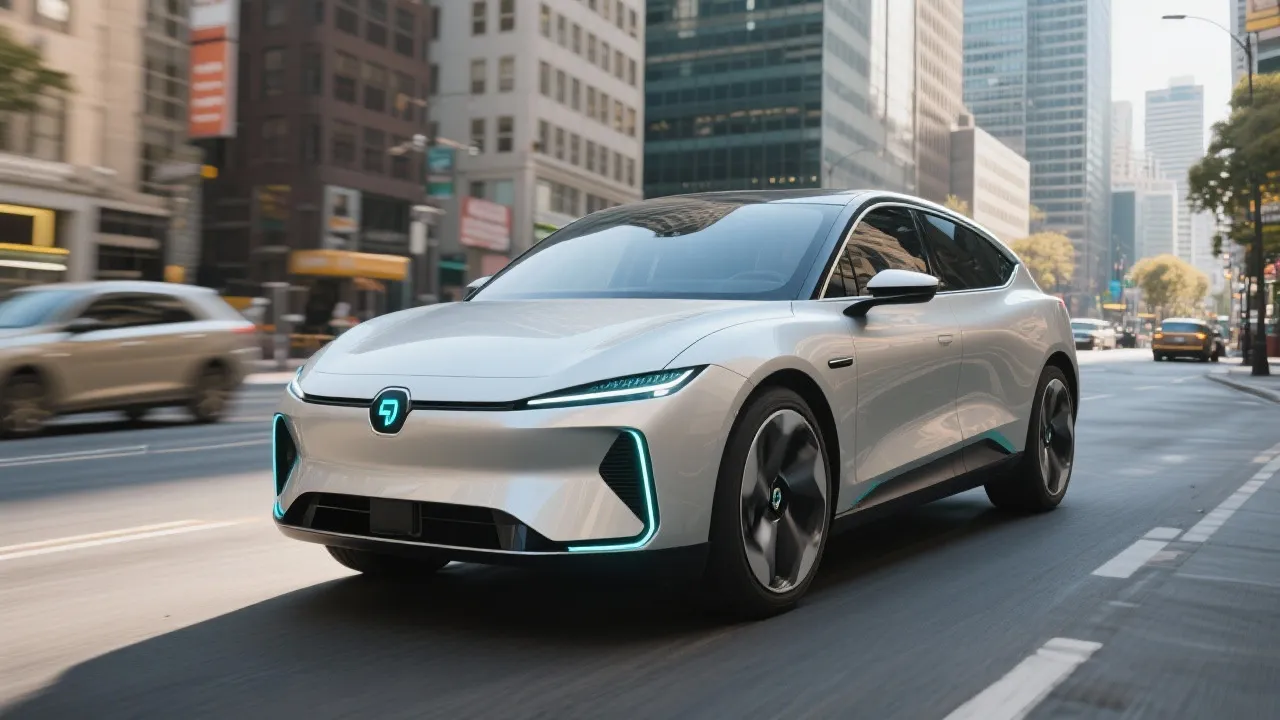
This guide explores the AWD PHEV market and its impact on modern transportation. Platform Hybrid Electric Vehicles (PHEVs) with All-Wheel Drive (AWD) are evolving rapidly and offer a sustainable alternative to traditional vehicles by combining electric and gas power for efficiency and adaptability. As demand rises, this article analyzes the technological innovations and adoption trends.
