This guide explains how 4ps Kotler supports practical, evidence-based marketing planning by structuring decisions across product, price, place, and promotion. It outlines objective background context on Kotler’s framework and its role in aligning customer needs with execution, supplier realities, and channel choices—helping teams build coherent strategies, not disconnected tactics.

When teams feel their campaigns “don’t quite connect,” the root cause is often a planning gap: decisions about the offering are made in one room, pricing in another, channels somewhere else, and promotion yet elsewhere. A practical way to restore coherence is to apply 4ps Kotler—a structured marketing approach that frames strategy around Product, Price, Place, and Promotion. By treating these four elements as a single system, organizations can evaluate trade-offs more clearly, document assumptions, and improve execution consistency across the customer journey.
In other words, 4ps Kotler helps you stop treating marketing like a sequence of disconnected tasks. Instead, it forces a shared understanding of what you promise, what it costs, how customers access it, and why customers should care now. If any of those pieces is out of sync, customers may still see your message—but they may not believe it, act on it, or return after the purchase.
This is particularly important for modern teams where the marketing engine spans many disciplines: product management, commercial strategy, procurement, sales, customer success, operations, and performance marketing. Even when each function performs well individually, the customer experience can still break if the “story” is inconsistent. The 4ps model provides a common map to coordinate that story.
The 4ps Kotler model is widely associated with marketing scholar and practitioner Philip Kotler. Objectively, its value is not that it “predicts the future,” but that it provides a common language for organizing marketing choices. In practice, the framework helps teams ask the same fundamental questions: What are we offering and why does it matter to customers (Product)? What does it cost and how is value communicated (Price)? Where and how will customers access the offering (Place)? How will we create awareness and preference (Promotion)?
Because each “P” affects the others, the model supports more rational planning. For example, selecting a premium product design without adjusting price and promotion typically creates friction; similarly, choosing a narrow distribution network without coordinating promotion can leave demand unserved. A coherent marketing mix ensures that when customers engage at any step—seeing an ad, searching online, receiving a quote, requesting a demo, purchasing, onboarding, or receiving support—the message and experience match.
There is also a practical governance benefit to 4ps. Teams can use the framework to avoid “tribal knowledge” and undocumented assumptions. When decisions are written down under Product, Price, Place, and Promotion, it becomes easier to review performance, identify where things went wrong, and make improvements without starting over from scratch.
Finally, 4ps is useful because it naturally encourages cross-functional collaboration. Many modern companies have specialized roles, but customers experience outcomes holistically. 4ps gives cross-functional partners a shared structure to align their work around customer value and commercial results.
From an industry expert’s perspective, the very frequent strategic mistake is treating Product as a list of features rather than a bundle of outcomes. Using 4ps Kotler, teams should clarify:
Even when a product looks “complete,” inconsistencies can appear later: a strong product promise with fragile fulfillment signals can harm trust. Therefore, product planning should incorporate supplier realities early.
To apply Product well, teams should also define the job-to-be-done in practical terms—what the customer is trying to accomplish, what “success” looks like, and what it means to fail. This helps prevent vague value propositions like “innovative,” “premium,” or “cutting-edge” without concrete proof.
Another common pitfall is designing Product around internal capabilities rather than external value. A team might know it can build a complex feature set, but the customer may only care about a narrower outcome. Translating features into outcomes is not just a marketing task; it requires product discipline and a clear understanding of customer priorities.
In B2B environments especially, the Product layer must include implementation pathways: training requirements, integrations, data migration, hardware needs, or service requirements. If those are overlooked, Promotion may generate leads that are difficult to close because customers quickly realize the “real” total solution requires more time or effort than expected.
In subscription or ongoing services, Product includes the rhythm of ongoing value delivery: update frequency, roadmap communication, support response times, and measurable performance improvements over time. Customers do not just buy the first version; they buy reliability and continued progression.
It’s not enough to say the product delivers a benefit—marketing needs proof points that are credible and repeatable. Under 4ps Kotler, Product informs Promotion, but Promotion cannot responsibly “invent” proof. Teams should develop a structured proof toolkit, which can include:
These proof points should be organized so sales and marketing can reuse them across the funnel. Doing so prevents “feature drift,” where different teams emphasize different aspects of the Product without a consistent narrative.
For example, one team may describe the Product as fastest to deploy, while another emphasizes the lowest operating cost. If those claims are not aligned or if proof for both is not available, customers may receive conflicting impressions. Over time, this can lead to longer sales cycles, more objections, and lower conversion despite steady traffic from Promotion.
In 4ps Kotler, Price is not simply a number—it is part of the customer’s economic decision. Pricing should reflect:
When teams say “we need a lower price,” they often skip an equally important question: lower prices may increase demand, but they can also strain inventory, supplier schedules, and customer support. A coherent 4ps Kotler implementation tests whether the pricing strategy aligns with operational capacity and promotional promises.
To implement Price effectively, organizations should treat pricing as a system with multiple components:
These elements interact with Product. If you package multiple outcomes at once, the price must reflect those bundled benefits and the cost-to-deliver. If you offer a guarantee, you must price enough margin and design operational readiness for edge cases.
A subtle but frequent issue is that pricing calculations assume one distribution reality, while marketing and sales operate under another. For example, pricing may be built assuming direct sales and controlled logistics. But if Promotion pushes through resellers or marketplaces, the customer may expect different delivery speeds, warranties, or return handling.
In 4ps terms, this means Price must consider Place economics. A distribution channel that requires different margins, reverse logistics, or customer service pathways changes cost-to-serve and therefore affects what a “profitable price” means.
Similarly, if Place is designed for fast fulfillment (e.g., warehouses close to customers), the organization might justify a premium price—but only if Promotion communicates delivery benefits credibly and if operations truly meet the promises. Otherwise, the premium becomes a liability.
Place concerns access—how customers discover, evaluate, and purchase your offering. Under 4ps Kotler, this includes:
Importantly, if you promote heavily but distribution is weak, customers may still churn after a disappointing buying experience. Place and Promotion must therefore reinforce each other.
Place is also where marketing hypotheses meet operational truth. Customers may respond to a strong ad, but if checkout is slow, inventory is inconsistent, or deliveries frequently miss expectations, conversion rates drop and refunds increase—damaging not only revenue but also brand trust.
When selecting Place channels, teams should evaluate both customer experience and channel economics. Key questions include:
In B2C markets, Place can be as simple as “where shoppers expect to find you.” But even there, Place includes the full path: search availability, product listing accuracy, delivery reliability, and post-purchase support. In B2B markets, Place often includes solution discovery and evaluation pathways: whether customers expect purchasing via procurement systems, approved vendor lists, reseller quotes, or self-serve portals.
In many organizations, the Place dimension is where hidden friction occurs. For example, teams may design a Promotion campaign targeting a narrow audience in a specific region, but then rely on a distributor that does not have local inventory or that cannot provide the promised delivery timelines. The result is a “promise-to-reality gap,” which can reduce conversion and increase customer dissatisfaction.
In 4ps Kotler, Promotion covers how you inform and persuade customers. High-performing promotion is typically coordinated across:
Promotion should also reflect what Product and Price can actually deliver. Overselling benefits or implying availability beyond supply can create reputational damage. An evidence-first approach—grounded in customer feedback and operational constraints—reduces this risk.
Promotion frequently fails when it is treated like a “top of funnel only” exercise. In a 4ps system, Promotion must extend into the post-click stage and align with how customers will experience the offering. This includes:
Customers do not evaluate your business only by the ad or the homepage. They evaluate it by whether the full journey meets expectations. Promotion is therefore tightly linked to Place and Product.
To operationalize Promotion under 4ps, teams can build a “message-to-offer alignment” workflow. This workflow ensures each promotional claim maps to a product feature or service element and is supported by proof. A practical way to do this is to create a claim inventory, such as:
This prevents common issues like misleading “best in class” messaging without appropriate benchmarks, or “limited-time discounts” that are not supported by inventory, lead times, or contractual terms.
In modern digital campaigns, teams can strengthen Promotion alignment with measurement discipline. For example, if Promotion attracts high traffic but low conversion, that pattern may indicate a mismatch between message and offer or between claim and buying friction. In 4ps terms, that mismatch could originate in Product (unclear outcomes), Price (unexpected total cost), or Place (checkout friction, availability gaps).
Strategic marketing planning often fails when supplier details and price inputs are treated as back-office concerns. Under 4ps Kotler, suppliers and costs become part of the “system” because they influence what you can deliver and how reliably.
Consider a practical alignment logic:
From a governance perspective, this is where organizations build confidence: they document assumptions, define responsible owners, and ensure that the marketing plan can be executed sustainably.
In many businesses, the customer experience is determined by supply reliability. A customer may be attracted by Promotion and convinced by Product messaging, but if the product arrives late, is out of stock, or varies in quality, the “truth” of the experience becomes the brand. Therefore, supplier integration is not just a cost-management exercise—it is part of marketing integrity.
One of the most damaging marketing problems is the promise-to-reality gap. It can take many forms:
By integrating supplier details into the 4ps system, teams can identify where constraints exist and adjust earlier—before the campaign goes live or before customers experience the mismatch.
For example, if supplier lead times are long, a team might plan promotions around a product launch date that later slips. With 4ps integration, you can either revise the Product launch scope, adjust Promotion timing, redesign pricing incentives to match delivery reality, or choose a Place channel that has buffer inventory. Each decision has trade-offs, but the key improvement is that the organization is making those trade-offs knowingly rather than discovering them through customer complaints.
Marketing frameworks like 4ps Kotler are top understood as organizing tools rather than rigid formulas. In many organizations, teams use the 4Ps model at three levels:
This approach is particularly relevant when companies have multiple product lines, channel partners, or complex fulfillment. The 4Ps model provides clarity in cross-functional conversations, which improves decision quality.
In practice, the 4ps model can serve as a checklist for alignment—but it works best as a diagnostic tool. When performance is poor, teams can use the 4ps lens to ask: Is the issue in the offering (Product)? Is it in the economics (Price)? Is it in access and convenience (Place)? Or is it in messaging and persuasion (Promotion)?
That diagnostic capability is valuable because marketing problems often look similar on the outside. Low conversion rates, for example, can come from many sources: poor targeting, weak messaging, pricing mismatch, or an operational checkout friction. The 4ps lens helps narrow the likely causes and prioritize fixes.
Although 4ps predates many contemporary digital tactics, it remains relevant because it addresses the structural questions customers still ask. Modern marketing adds new channels, but customers continue to evaluate: what is it, what does it cost, where do I get it, and what makes me believe it’s worth my attention?
Digital changes the implementation, not the underlying alignment needs. For example:
In omnichannel environments, “Place” becomes more complex. A customer may discover your product on social media, compare it on a website, purchase via an app, and request support through email. A coherent 4ps system helps ensure these touchpoints are consistent in claims, pricing, availability, and post-purchase expectations.
| Approach | Top for | What you assess | Typical output | Conditions/requirements |
|---|---|---|---|---|
| 4Ps-only planning | Early-stage positioning or single-product launches | Product fit, price points, channel availability, promotional messaging | A concise marketing mix plan | Clear target segment; documented assumptions about cost and supply |
| 4Ps + supplier input integration | Manufacturing, procurement-heavy categories, or seasonal supply constraints | Lead times, unit costs, quality thresholds, and service capability | Coordinated plan with operational guardrails | Procurement and logistics participation; defined service-level expectations |
| 4Ps + channel diagnostics | Omnichannel operations and partner ecosystems | Channel economics, inventory visibility, reseller incentives, customer access | Channel-by-channel execution brief | Accurate channel performance data; agreed partner rules and margins |
| 4Ps + measurement and iterative review | Ongoing campaigns where you need continuous improvement | Message-to-conversion mapping, pricing responsiveness, fulfillment bottlenecks | Test plan and recurring review cadence | Instrumentation for funnel tracking; approval process for changes |
Many teams complete a 4ps exercise once during planning, then revert to ad-hoc decision-making once the campaign is underway. A more durable approach is to treat 4ps Kotler as an ongoing workflow with checkpoints. Below is an expanded version of the steps that emphasizes operational alignment.
Before mapping Product, Price, Place, and Promotion, align on the customer reality that drives purchase decisions. This includes:
This step reduces the risk that Promotion targets the wrong intent or that Product is positioned for the wrong use case.
Create a map that connects:
Boundaries are critical. Transparent boundaries prevent churn and increase trust. In a 4ps system, boundaries also influence Promotion tone and Place expectations.
Once you know what outcomes matter, design pricing that matches how customers perceive value. Common practices include:
In this step, teams should also perform a “discount integrity check”: if discounts are offered, do they preserve the ability to deliver the promised experience (Place) and continue providing support (Product service layer)?
Place decisions should reflect what the customer expects at the price point. Examples:
This is where operational KPIs matter: delivery lead times, service response times, return processing times, and partner performance. Marketing should not treat these as purely operational metrics; they are part of the customer value exchange.
Promotion should be written so it is defensible. That means using credible claims and ensuring that each claim can be supported by Product proof and Place delivery reality.
A useful technique is to label every major claim with:
If conditions apply (e.g., specific integration requirements, minimum service plan thresholds, availability windows), these should be communicated clearly. Otherwise, Promotion can generate qualified demand that later becomes churn due to unmet expectations.
Marketing promises must survive contact with reality. Sales enablement, customer success onboarding scripts, and support documentation must all reflect the same 4ps story. If marketing says “easy to implement,” sales should be able to explain implementation steps and expected timeline. Support should be prepared to handle common issues implied by the promotion.
This alignment reduces friction and improves conversion rates. It also improves customer satisfaction because expectations are managed consistently.
During campaigns, measure performance in a way that helps you identify which “P” is the bottleneck. For instance:
These metrics become a diagnostic map. If leads engage but do not purchase, it may point to Price or Place friction. If purchase happens but retention is low, it may point to Product mismatch or service execution gaps.
4ps is most effective when it is used with a feedback loop. Teams should establish:
Without these loops, learning may accumulate in spreadsheets or individual memories rather than being turned into improvements.
At the end of each campaign cycle, capture:
This documentation reduces repeat mistakes and helps teams build institutional knowledge.
In addition to the points above, organizations typically need a few enabling practices to make 4ps Kotler “stick.” These practices are often less visible than the framework itself:
When these enablers are missing, teams can feel like they “did 4ps” during planning, but then the system breaks during execution because changes were made without updating the full marketing mix.
To make 4ps Kotler tangible, consider several common scenario patterns and how each misalignment points to a specific “P.” These examples show why coherence matters.
A company launches a premium version of its product with enhanced performance and service. Marketing runs promotions that emphasize big discounts and a “sale mindset,” but pricing is not structured to protect premium positioning. Customers perceive the offer as generic or “not worth the premium.” Sales teams struggle to explain why the premium version costs more.
4ps interpretation:
Fix: redesign pricing tiers and restructure Promotion messages to emphasize premium value, include proof, and ensure channel and service readiness.
A campaign drives traffic and generates leads, but checkout fails or products go out of stock. Customer support volume rises due to delivery delays, and refunds increase. Even customers who initially engage decide the brand is unreliable and do not return.
4ps interpretation:
Fix: synchronize promotional timing with inventory realities, adjust messaging to match delivery windows, and use backorder or waitlist mechanisms transparently.
A business advertises a “basic plan” that is competitively priced. Conversion is strong, but after purchase customers discover limitations in features, support hours, or required integrations. Customer success spends time handling confusion, and churn rises quickly.
4ps interpretation:
Fix: update promotional assets to show the scope, add clarity on prerequisites, create onboarding content, and align sales scripts with the true customer experience.
For a B2B solution, Product value is clear and pricing is appropriate. Yet prospects stall in evaluation because sales teams do not have updated comparison tools and onboarding steps. Teams respond slowly to requests for demos or quotes.
4ps interpretation:
Fix: improve enablement assets, standardize demo workflows, and ensure response SLAs are operationally achievable.
It refers to organizing marketing decisions into four categories—Product, Price, Place, and Promotion—so your strategy stays consistent from customer promise to fulfillment.
Not inherently. Digital channels change tactics and measurement, but the fundamental alignment problem remains: customers still evaluate what you offer, what it costs, where they can get it, and what you communicate. 4Ps remains useful as a planning structure.
In many digital organizations, the real value of 4ps is internal: it helps different teams (creative, performance marketing, pricing, product marketing, commerce operations) coordinate their choices. It can also help interpret performance data by mapping conversion funnel issues back to one of the four Ps.
Supplier lead times and unit cost volatility influence pricing margins and pricing stability. Supplier reliability also affects availability, delivery timelines, and whether certain distribution channels are feasible at the intended service level.
Supplier quality variability also affects Product service promises and can indirectly affect Promotion by influencing what claims are safe to make (e.g., warranty terms, performance guarantees, replacement policies).
Teams often plan each “P” independently. The result is a mismatch—e.g., premium promotion that implies a level of service or availability the operational chain cannot consistently provide.
Another frequent failure mode is planning 4ps once, then letting later operational changes (inventory, pricing adjustments, partner rules) occur without updating Promotion, sales enablement, and customer-facing content.
Yes. The framework is universal in structure, though the details differ. In B2B, pricing terms and service/support often matter as much as the product itself, while promotion may rely more on sales enablement and proof-based content.
In B2C, Product clarity and Place convenience (e.g., fast shipping, easy returns) often have outsized impact because customers expect fast, low-friction decisions. Still, the same alignment issues apply.
No. “Price information” includes the overall pricing approach: list price strategy, discounts, payment terms, warranty/service bundling, and total cost-to-serve considerations.
Customers also interpret “price” through perceived risk. If warranties and guarantees are unclear, customers may treat the offer as “more expensive” than the numerical price suggests.
Use metrics aligned with each “P”: conversion rates and lead quality (Promotion), availability and delivery performance (Place), customer retention and support burden (Product), and margin/discount performance (Price). Then reconcile funnel results with operational outcomes.
For best results, measure not only revenue and conversion, but also the “cost of mismatch” indicators: returns, cancellations, support ticket volume, delivery exceptions, churn after first purchase, and refund reasons tied to promised value.
Used well, 4ps Kotler is less about memorizing a model and more about building a coordinated decision system. When you integrate product outcomes, pricing logic, supplier realities, channel access, and credible promotion under one planning framework, your marketing becomes easier to execute—and easier to improve. In competitive markets, coherence often outperforms isolated creativity because customers sense when the story matches the experience.
Marketing success rarely comes from a single brilliant campaign. It comes from repeatable alignment—where Product truly delivers the value implied by Promotion, Price reflects both perceived benefits and operational reality, Place ensures customers can access and receive what was promised, and feedback loops continuously refine the mix. 4ps Kotler provides a practical structure to keep those elements connected as your organization grows, adds products, changes channels, and evolves its go-to-market approach.
Kotler’s marketing framework is broadly discussed in standard marketing literature associated with Philip Kotler, including widely cited textbook treatments of the marketing mix. For context on how marketing mix concepts are framed academically and historically, readers may refer to established marketing management texts by Kotler and related curriculum resources used in business schools.
Striking the Perfect Balance: Navigating Premiums and Out-of-Pocket Expenses in Senior Insurance Plans

Explore the Tranquil Bliss of Idyllic Rural Retreats

How to Make Lasting Memories at Disneyland Attractions

4rkojvsx Technology: Industry Insights and Buying Guide

Affordable Phones and Plans for Seniors

Affordable Full Mouth Dental Implants Near You

Unlock the Top Kept Secrets to Finding Your Ideal Dentist for Flawless Dental Implant Results!

Discovering Springdale Estates

Unveiling RS Sul Telecom Services


Exploring the Retipster Club Advantage
The Retipster Club is an invaluable resource for real estate investors, offering a plethora of insights, tools, and community support to boost investing endeavors. Aimed at helping both novice and seasoned investors, the club provides educational materials, success stories, and expert strategies tailored to the ever-evolving real estate market landscape. Dive into this analysis to understand the manifold benefits the Retipster Club offers to enhance real estate success.

Navigating the Retipster Club
This article delves into the unique offerings of the Retipster Club, a community designed for individuals interested in real estate investment, providing educational resources and networking opportunities. Discover how the club supports its members through expert advice, comprehensive guides, and a robust community platform, all tailored to foster insightful and profitable investment strategies.

Pmoc Abrava: Practical Procurement and Quality Considerations
This guide explains how to approach Pmoc Abrava procurement with a quality-first, compliance-minded process. “Pmoc Abrava” is discussed as a term used in sourcing contexts, covering typical decision factors such as specification clarity, supplier capability, documentation, and handling requirements—using an objective framework for safer purchasing, risk control, and consistent performance.
Unveiling Grunig & Hunt's PR Models
This article explores the seminal work of Grunig & Hunt in developing models of public relations. The Grunig & Hunt models, fundamental to understanding PR theory, provide insight into the strategic approaches and methodologies utilized in the field. Each model offers a distinctive perspective on communication and engagement strategies, relevant to both academic discussions and practical applications.
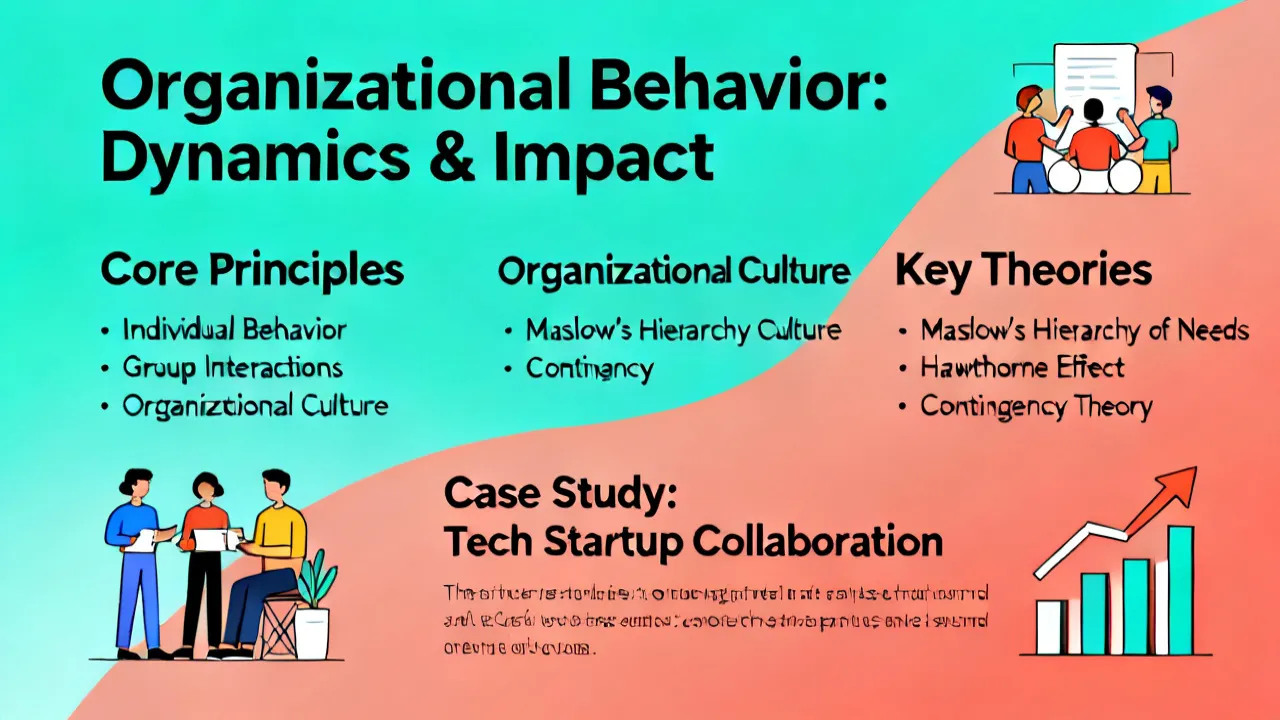
Understanding Organisational Behaviour Slideshare
This article delves into the significance of Organisational Behaviour Slideshare for both educators and professionals. Organisational Behavior is a field that examines the impact individuals, groups, and structures have on behavior within organizations, aiming to improve an organization's effectiveness. With Slideshare's platform, these insights are easily shared, promoting a collaborative learning environment.

Understanding Ltda Epp for Supplier and Compliance Decisions
Learn how “Ltda Epp” impacts supplier selection, contract structure, and compliance planning. This guide explains, in objective terms, what the label typically signals in company registration and how it can affect procurement processes, risk checks, and document readiness. It also frames practical conditions, comparison points, and decision steps to help you evaluate suppliers with clarity and consistency.
