This guide explains how Myba.com can help people evaluate qualifying government phone programs and providers that support connectivity. It reviews major Lifeline and ACP-supported options (SafeLink Wireless, Assurance Wireless, StandUp Wireless, Access Wireless, and True Wireless) and outlines eligibility, application steps, and expert considerations for choosing a wireless plan that fits household needs.
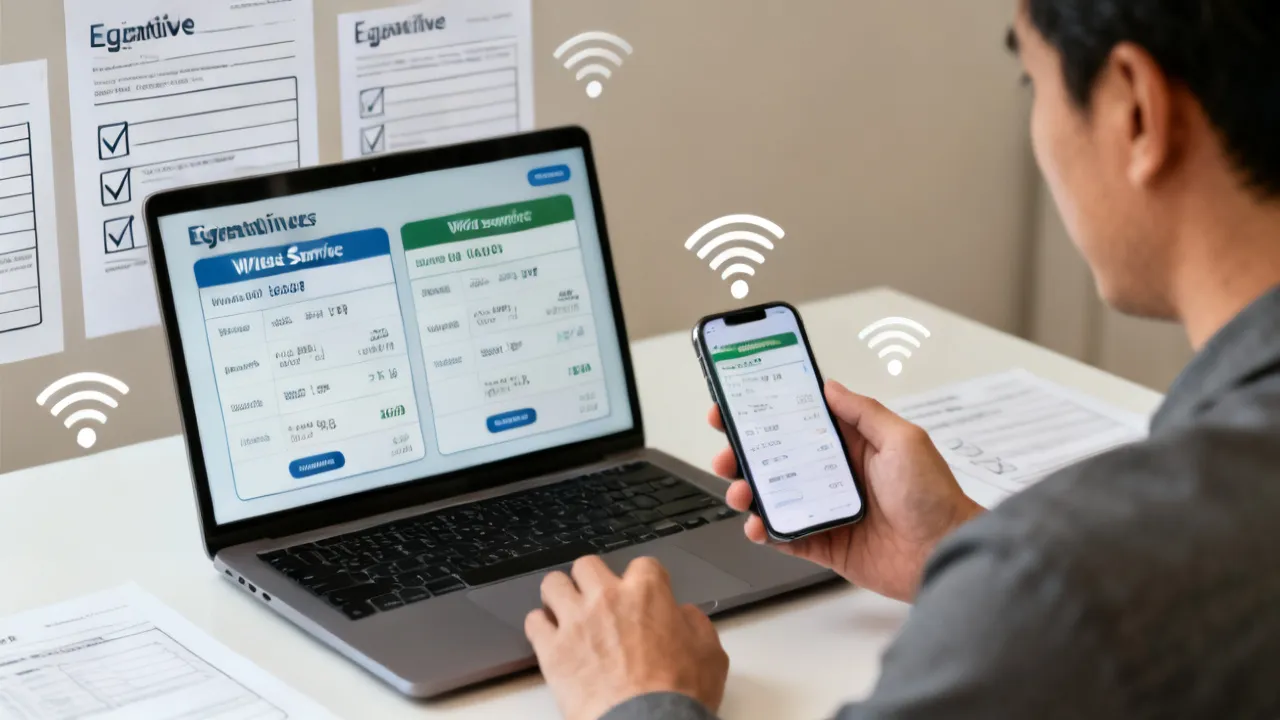
If you’re looking to reduce monthly communication costs, government-supported wireless programs are often the most practical starting point. Programs aligned with the Lifeline framework (and in some cases also blended with Affordable Connectivity Program-style affordability) can help eligible households maintain reliable access to calls, texts, and mobile data—especially when traditional plans are out of reach. This article focuses on providers commonly associated with Lifeline and ACP affordability, including SafeLink Wireless, Assurance Wireless, StandUp Wireless, Access Wireless, and True Wireless, and explains how Myba.com can fit into your research workflow.
The most important decision is not just “which provider is cheapest,” because government-supported offerings can differ by state, by eligibility category, and by the plan tier you receive. The right choice usually depends on whether you meet eligibility requirements, what services are included under your specific plan, what device path is available (a supported government device versus bring-your-own-device), and how potential paid add-ons (like device upgrades or premium data) might affect your total cost.
In other words, “top” is not a universal ranking. It’s a fit. A plan that looks good on paper might become expensive if your household needs extra data or a different phone than the one initially offered. Conversely, a provider that doesn’t advertise as many device options might still be the best option for you if your existing phone can be activated and your usage matches the included allowances.
While exact plan details vary by state and by eligibility category, many Lifeline-aligned programs follow a broadly similar structure. Eligible households typically receive a discounted wireless service plan and, in some cases, a supported device. Some programs also incorporate affordability support for broadband-like connectivity, reflecting ACP-era intent (or similar modernization efforts), but the exact benefit mix depends on the time period and your specific eligibility.
Before submitting an application, it helps to confirm the provider’s current terms and whether you want a smartphone or plan to bring your own device (BYOD). Even if two providers both advertise “unlimited talk and text,” differences in data allowances, speed limits, or post-allowance behavior can change the overall experience of the plan.
| Provider (Official Plan Website) | Services Typically Included | Possible Additional Package Costs |
|---|---|---|
| SafeLink Wireless | Discounted wireless service with voice/text and data allowances; device options may be available depending on plan | Upgrades to premium devices or extra data may carry fees |
| Assurance Wireless | Discounted wireless service with unlimited talk/text and data allowances; eligible customers may receive a supported Android device | Optional upgrades for additional high-speed data or certain add-ons may cost extra |
| StandUp Wireless | Discounted wireless service with unlimited talk/text and data plans; smartphone or BYOD options may exist | Premium phone upgrades or extra data are commonly offered for a fee |
| Access Wireless | Discounted service with voice/text and limited high-speed data; can involve Lifeline and ACP-related benefits depending on eligibility | Data boosts and device upgrades may involve charges |
| True Wireless | Discounted service with voice/data support; government-supported phones may be available if you qualify | Optional upgrades to better devices or additional data plans may require payment |
Links to official provider websites (information source for the comparison above):
source: www.safelinkwireless.com
source: www.assurancewireless.com
source: standupwireless.com
source: www.accesswireless.com
source: www.gotruewireless.com
Source note: The comparison table is based on publicly available provider descriptions and program summaries as of the reference period. For current plan availability and pricing, always confirm directly with the provider.
From an industry viewpoint, “top” in government-supported wireless isn’t a single rating system. Instead, it’s a match between your household’s needs and the real-world details of the plan. Those details usually include (1) coverage and network performance where you live and work, (2) the allowances included in your specific tier, (3) whether you need a device right now, and (4) how any add-ons could change your monthly or one-time costs.
Many households make the “brand” decision too early. They pick a provider based on a general reputation, then later discover they need a different data allowance—or they learn that a premium device upgrade costs more than expected. A more reliable strategy is to evaluate the plan in layers: eligibility → plan features → device options → add-on economics → activation and support.
When comparing providers such as SafeLink Wireless, Assurance Wireless, StandUp Wireless, Access Wireless, and True Wireless, consider these decision factors:
Additionally, keep in mind that “coverage” is not only about whether a provider serves your city on a map. Indoor coverage, building materials, and local terrain can drastically change experience. The most practical test is to ask the provider about network performance where you live or consult third-party coverage tools—then verify by using your phone after activation.
Government-supported wireless programs aim to help eligible households maintain reliable voice and data connectivity. While details can vary by provider and location, most programs align with federal and state rules for qualifying assistance and/or income-based eligibility.
“Qualify” generally means you meet eligibility criteria and you can produce verification documentation that matches your application details. For many applicants, the biggest challenge isn’t the concept—it’s the proof process. If your name, address, or documentation has inconsistencies, you may face denials or delays even if you meet the underlying requirement.
Providers referenced in this guide commonly describe eligibility requirements that may include:
Why this matters: Your documentation affects whether verification completes successfully. If you apply without the right proof, or if the proof doesn’t match your application information, you may face delays or denials even when you are genuinely eligible.
Practical tip: Before you start, gather key details: your full legal name as it appears on eligibility documents, your current address, your date of birth or identity identifiers (as requested), and the name of the assistance program you rely on. If you recently moved or changed your name, consider double-checking how that change appears across documents.
The application process generally follows a similar pattern across participating wireless providers: you submit your information and documentation, the provider (or verification partner) checks eligibility, and then you activate service. Below is a consolidated, practical workflow so you know what to expect before you submit forms.
Determine whether you qualify based on:
If you’re not sure which category you fall under, start by listing the benefits you receive. Then verify whether your program is listed as an approved eligibility option for the provider you plan to use. Some people assume that “any government benefit qualifies,” but programs vary in what is accepted.
Typical requirements include proof of identity and proof of eligibility (such as benefit program enrollment or income verification). The exact documents accepted can vary, and sometimes acceptable documents differ by state or by the category you qualify under.
Documentation often needs to be legible. If you’re uploading scans or photos, make sure the text is readable, the corners are visible, and there’s no glare. Poor-quality uploads can cause “resubmission requested” outcomes, which effectively delays activation.
Many providers allow online applications. Some workflows may ask you to confirm identity information first, then route your eligibility documents into an upload step. In some cases, you may be routed through a verification mechanism that checks eligibility automatically.
Also pay attention to application timing. If you apply late in a month and your verification takes several days, you may experience a gap between submission and service activation. While policies vary, it’s smart to plan around deadlines if you need your phone for job searches, school calls, medical appointment scheduling, or family communication.
After you submit your application, the provider (or a verification partner) checks your eligibility. If additional information is needed, responding quickly can impact activation speed.
If verification is denied, don’t panic. Review the instructions provided. Many denials are documentation or mismatch issues, not eligibility truth issues. Carefully compare the application details you entered to what’s on your documents.
Based on what’s offered under your plan, you may select a supported smartphone or enroll with your own compatible device.
If you select a government-supported device, check:
If you use BYOD, confirm device compatibility before you rely on that plan. Activation can fail if the phone isn’t compatible with the network or if it remains locked to another carrier. In some workflows, you may also need to meet conditions like being unlocked or meeting specific technical requirements.
Many plans include optional upgrades such as premium device tiers or extra data boosts. If you might need more data than the included allowance provides, evaluate upgrade costs upfront rather than assuming add-ons are always affordable or cost-neutral.
Important: even if the initial program is discounted, one-time fees or recurring premium tiers can change your monthly total. If you’re budgeting tightly, ask yourself: “Do I need this upgrade to use my phone effectively?” If yes, confirm the upgrade price. If not, decline the add-on to avoid surprises.
| Provider / Program Area | Application Conditions & Verification Approach | What You Generally Need to Provide |
|---|---|---|
| SafeLink Wireless | Online application with eligibility proof; eligibility may rely on income or program participation | Proof of eligibility (income or qualifying program participation), identity details |
| Assurance Wireless | Apply online or via eligibility verification tools; eligibility depends on income guidelines or qualifying assistance programs | Documentation supporting income or program enrollment; identity details |
| StandUp Wireless | Online application; documentation uploaded for eligibility verification | Proof of eligibility (income or qualifying program participation), required uploads |
| Access Wireless | Online form submission followed by document upload; eligibility through income guidelines or government aid programs | Eligibility documents and required identity information |
| True Wireless | Apply via website or request help; eligibility typically tied to Medicaid/SNAP or income thresholds | Program participation or income documentation; identity details |
Note: Exact documentation and verification methods can differ by state and by the category you qualify under. Always review the provider’s application instructions.
Many people approach government phone programs with a simple goal: “Which provider should I choose?” In practice, choosing involves more than picking a name. Coverage quality, plan terms, device preferences, verification timelines, customer support style, and add-on economics all matter. A platform like Myba.com can support your research workflow by helping you organize what you learn, compare key requirements, and prepare a checklist of questions to confirm with the provider.
In an objective and consumer-friendly workflow, Myba.com is most useful to:
Important: Final confirmation must always come from the official provider application page and terms. Plan availability, included services, and add-on pricing can change, and only the provider’s official materials can confirm your current options.
Research workflow example (how many applicants actually work): you might start by reviewing eligibility requirements for two or three providers, then compare the device pathways (smartphone supported vs BYOD). Next, you compare included data allowances and possible upgrade fees. Finally, you decide where you want to apply based on both your best “fit” and your likely ability to complete verification quickly.
Although plan terminology can differ, government-supported wireless services commonly include the following components. Your plan may use different names, but the functional experience is usually similar:
Because consumer needs vary, the “right” plan depends on usage. For example:
When comparing plans, pay close attention to “high-speed” vs “total” data language. Sometimes a plan may provide a larger overall amount but with slower speeds after you pass a high-speed threshold. Understanding this distinction helps you avoid frustration.
Even eligible applicants can run into issues. Here are frequent causes of application delays or problems:
Planning ahead—especially with clear documentation—reduces friction. It also reduces the emotional stress that often accompanies delayed connectivity when people rely on their phones for critical tasks.
Another subtle pitfall: assuming you can submit once and forget. Many program policies require periodic recertification or reassessment. If you later fail to complete a renewal step, you may risk losing service discounts. Knowing this ahead of time encourages you to set reminders and keep documents updated.
To choose the best plan for your household, use this checklist style approach. It’s designed to help you avoid the most common mistakes and align the plan with what you actually need from your phone.
If you use Myba.com to structure your research, you can turn this checklist into a comparison table or note-taking sheet, where each provider gets a row and you fill in the details you find.
Government-supported wireless programs aim to help eligible households maintain reliable voice and data connectivity. Services and benefits depend on eligibility category, the provider’s participation, and the plan tier you receive.
Myba.com is best used as a research and comparison resource. Applications generally must be submitted through the provider’s official channels. Always follow the provider’s instructions for submission, verification, and activation.
Many providers described in this guide offer a smartphone option for eligible customers and may also support bring-your-own-device enrollment if your phone is compatible. Your best choice depends on whether you need a handset immediately and whether your existing device can be activated.
Plans commonly include data allowances that may not be unlimited at high speeds. Many programs offer a certain amount of high-speed data, then reduce speeds after usage. Some programs allow optional data boosts or upgrades. Review your plan’s specific data terms before relying on it for heavy usage.
Many applications require identity details plus proof of eligibility—either evidence of participation in qualifying assistance programs or documentation supporting income eligibility. Exact documents depend on the provider and your eligibility category.
Rejections can occur due to insufficient documentation, verification mismatches, or eligibility mismatch. Check provider instructions for appeal/resubmission steps. Ensure your application details match your documents exactly, and re-upload clearer documents if requested.
Timelines vary depending on verification processing and whether documentation is complete and legible. If verification requires additional information, activation may be delayed. Applying with ready documents and responding quickly to follow-up requests often helps reduce delays.
In many cases, you can switch, but the process may involve canceling one plan and applying for another. If you switch frequently, you may face eligibility recertification timelines and activation processing times that can create service gaps. If switching is necessary, research each provider’s port-in or activation flow and plan a safe transition window.
Often, number retention depends on whether your new provider supports number porting and whether your phone/account information qualifies for transfer. During your research stage, confirm whether porting is supported and what information you need (for example, account number or phone line details). When possible, avoid canceling service until the port is successfully completed.
If your usage is minimal, prioritize a plan that offers the reliable talk/text component and a data allowance that supports essential services. Even if you don’t plan heavy data usage, having enough data for navigation, emergency communication apps, or appointment reminders can be valuable. However, avoid purchasing upgrades you don’t need.
Government-supported wireless plans can be a strong option for eligible households seeking dependable connectivity while keeping monthly costs down. Providers like SafeLink Wireless, Assurance Wireless, StandUp Wireless, Access Wireless, and True Wireless generally offer discounted voice/text service and data allowances, with smartphone or BYOD pathways depending on the specific plan.
Using Myba.com as a structured research tool can help you compare options, organize eligibility requirements, and prepare the information you need to complete verification smoothly. However, the official provider websites remain the final authority for eligibility rules, plan terms, device availability, and any additional costs associated with premium upgrades or extra data. Before you submit, confirm details directly with the provider to ensure you choose the plan that best fits your household’s coverage and connectivity needs.
1) The above information comes from online resources, and the data is as of October 2023.
2) This website cannot guarantee that applicants will definitely get a government affordable phone. For specific application requirements and how to obtain it, please refer to the official requirements of the provider. This website will not be updated in real time.
https://www.safelinkwireless.com
https://www.assurancewireless.com
https://standupwireless.com/
https://www.accesswireless.com
https://www.gotruewireless.com/
https://www.fcc.gov/lifeline
https://www.fcc.gov/affordable-connectivity-program
https://www.lifelinesupport.org/
Striking the Perfect Balance: Navigating Premiums and Out-of-Pocket Expenses in Senior Insurance Plans

Explore the Tranquil Bliss of Idyllic Rural Retreats

How to Make Lasting Memories at Disneyland Attractions

4rkojvsx Technology: Industry Insights and Buying Guide
Affordable Phones and Plans for Seniors

Affordable Full Mouth Dental Implants Near You

Unlock the Top Kept Secrets to Finding Your Ideal Dentist for Flawless Dental Implant Results!

Discovering Springdale Estates

Unveiling RS Sul Telecom Services

Affordable Phones and Plans for Seniors
Discover the top deals on new phones and plans tailored for seniors, including discounts on 5G technology and unsold models.
Affordable Cell Phones Without Plans
Discover affordable cell phones for sale without plans, exclusive discounts for seniors, and tailored mobile plan options in your area.

Navigating Government Phone Programs
This guide provides an expert analysis of government-supported phone programs for eligible individuals, offering insights into available providers and their services. Affordable phones are often a necessity for individuals under economic constraints, aiding in communication, job searches, and access to emergency services. The article delves into eligibility criteria, application processes, and compares popular service providers in various regions.
Unlocking the Top Cell Phone Deals
Discover unbeatable cell phone discounts, plans, and offers for seniors and iPhone enthusiasts without contracts.
Navigating Affordable Phone Offers
Discover the essential details about government-assisted phone programs aimed at providing budget-friendly devices to eligible individuals. These programs offer complementary mobile phones and services to qualified beneficiaries, ensuring connectivity at minimal expense. This guide breaks down how to access such benefits and what conditions apply.

How to Apply for a Affordable Phone
This guide provides insights on how to apply for a affordable phone through government-sponsored programs. Understanding how these programs operate and their eligibility requirements is essential. These initiatives aim to support individuals in low-income households or those enrolled in specified government assistance programs by providing basic communication tools.