This guide explains how StandUp Wireless Phones work within the federal Lifeline program, including plan features, eligibility rules, application steps, device choices, and possible additional charges. StandUp Wireless is one of several participating providers that may offer a smartphone or bring-your-own-device option to qualifying households. Availability, benefits, and documentation requirements vary by state and can change, so applicants should confirm current details with official sources.
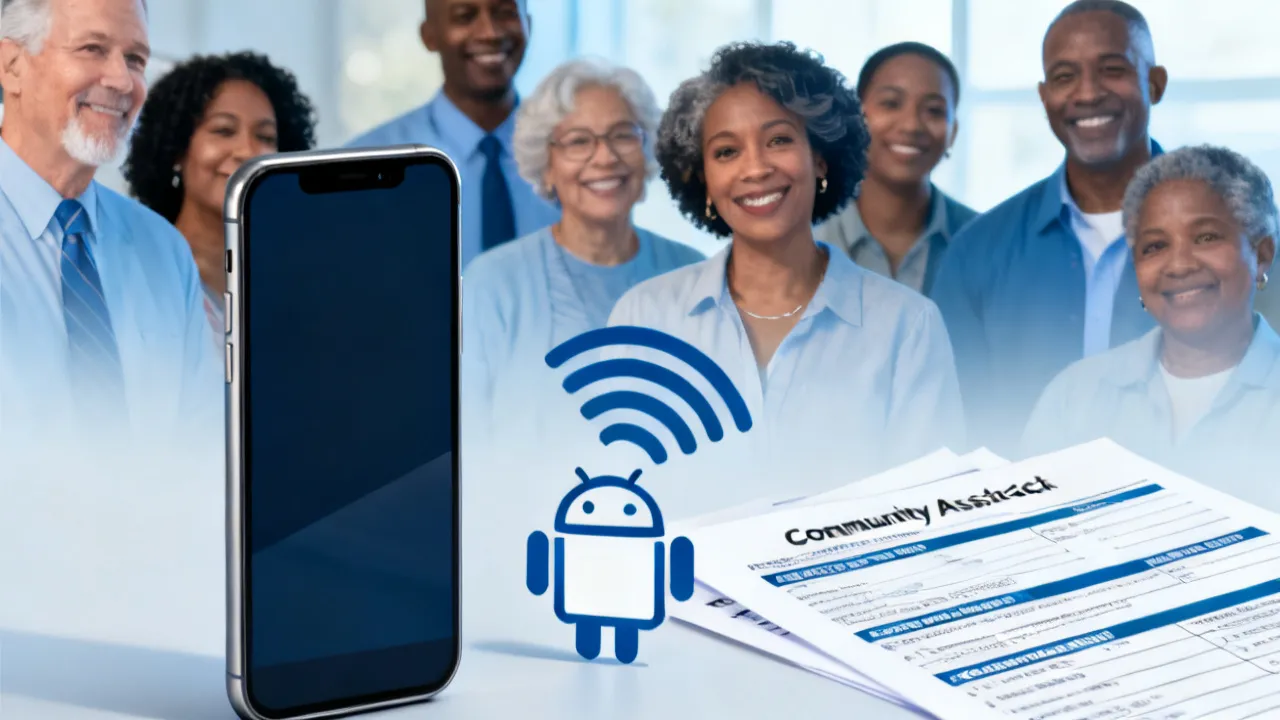
StandUp Wireless Phones are mobile devices and wireless service plans offered by StandUp Wireless to eligible consumers through government-supported connectivity programs, principally the Federal Communications Commission’s Lifeline program. Depending on the applicant’s state, eligibility status, inventory, and selected plan, the provider may offer a smartphone, a bring-your-own-device option, voice service, text messaging, and a specified amount of mobile data.
The most important point is that approval is not automatic. A household generally must meet an income requirement or participate in a qualifying public assistance program. The applicant must also complete the required verification process, provide accurate documentation when requested, and comply with one-benefit-per-household rules. A provider may decline an application if eligibility cannot be confirmed, if the household already receives a qualifying benefit through another provider, or if the submitted information is incomplete or inconsistent.
StandUp Wireless is not the only provider in this market. SafeLink Wireless, Assurance Wireless, Access Wireless, and True Wireless also advertise government-supported mobile services in selected areas. Their plans, handset inventories, enrollment processes, network arrangements, and charges can differ. Consumers should compare the official provider terms rather than relying only on advertisements, third-party articles, social-media posts, or outdated plan descriptions.
The term “government phone” is commonly used by consumers, although the government generally does not manufacture or directly distribute the handset. Instead, eligible subscribers enroll through an approved participating provider. The provider administers the wireless service, while the federal program establishes broad eligibility and compliance rules. The particular phone model, network, data allowance, and optional services are determined by the current provider offer.
Applicants should also understand that a free or discounted phone does not necessarily mean that every wireless service is free forever under every circumstance. The program benefit applies according to the approved plan and applicable rules. Premium devices, extra data, international calling, accessories, replacement equipment, taxes, shipping, or other optional services may involve charges. Reading the complete offer before accepting it is one of the best ways to avoid unexpected costs.
Lifeline is a federal benefit designed to make communication services more affordable for qualifying low-income consumers. The program may support voice or broadband connectivity, subject to federal rules and provider participation. In practice, a participating wireless company may apply a program benefit toward a service plan and, depending on its offer, provide a compatible handset or allow the customer to use an existing device.
Not every consumer receives the same product. One person may receive an entry-level Android phone, while another may use a compatible personal device. A plan available in one state may not be offered in another. Network coverage, data allowances, activation rules, device inventory, taxes, optional services, and customer-support policies also require individual confirmation.
From an industry perspective, the handset is only one part of the value proposition. A technically suitable device can still create difficulties if it has limited storage, an older operating system, restricted compatibility, a weak battery, or insufficient processing capacity. Applicants should therefore evaluate the service terms, supported network, data policy, customer-support channels, replacement rules, and device specifications in addition to the advertised phone.
Connectivity can be especially important for people who use a phone to contact employers, medical providers, schools, transportation services, government offices, landlords, family members, and emergency contacts. For that reason, the most appropriate plan is not always the one with the most attractive advertising. Coverage at the applicant’s home, workplace, school, and frequently traveled locations may matter more than the device’s camera or screen size.
The following comparison summarizes commonly advertised provider information and the provider information supplied for this guide. It is intended as a starting point rather than a guarantee of current availability. “Included services” may vary by state, plan, eligibility category, inventory, and program rules.
| Provider | Services Included in Government-Supported Plans | Possible Additional Package Costs |
|---|---|---|
| SafeLink Wireless | A smartphone or bring-your-own-device option may be available, with calling, text messaging, and data depending on the plan and state. | Premium handset upgrades or additional data may involve a charge. |
| Assurance Wireless | An Android smartphone may be offered with talk, text, and a stated data allowance. | Extra high-speed data and international calling may be optional paid features. |
| StandUp Wireless | A smartphone or bring-your-own-device option may be available, together with talk, text, and data service. | Premium device upgrades and additional data may be available for a fee. |
| Access Wireless | Plans may include voice, text, and limited high-speed data under applicable government benefits. | Data boosts and device upgrades may carry additional charges. |
| True Wireless | A government-supported phone, voice service, and data plan may be offered to qualifying customers. | Improved devices and additional data packages may cost extra. |
source: www.safelinkwireless.com
source: www.assurancewireless.com
source: standupwireless.com
source: www.accesswireless.com
source: www.gotruewireless.com
Provider comparison should take place only after confirming that the provider serves the applicant’s address. A company may participate in the program nationally while presenting different plans or devices in different states. Some providers may offer a larger data allowance in one location and a different allowance elsewhere. Inventory can also change as phones are distributed, replaced, or discontinued.
Eligibility normally follows one of two routes: household income or participation in an approved assistance program. Under the Lifeline rules described in the source material for this article, household income generally must be at or below 135% of the federal poverty guidelines. The precise dollar threshold depends on household size and the applicant’s state or territory. Because the guidelines are updated periodically, applicants should consult the current National Verifier or provider instructions before applying.
Household size is important. An applicant should count the people who live together and share income and expenses according to the program’s definitions. The calculation is not necessarily the same as the number of names on a lease or the number of people who receive mail at an address. If a household includes children, relatives, spouses, or other adults, the applicant should answer the application questions accurately rather than guessing which people qualify for the household calculation.
Applicants may also qualify through participation in an eligible public assistance program. Common examples include:
Participation in one of these programs does not remove the need for verification. The applicant may have to show that the benefit is current and belongs to the person named on the application or to an eligible member of the household. A recently expired approval notice, an incomplete benefits letter, or a document that does not identify the beneficiary may not be sufficient.
Residents of qualifying Tribal lands may have access to additional support or different eligibility pathways under applicable federal programs. Tribal eligibility is not universal merely because a person lives in a rural area or identifies as Native American. The applicant should verify whether the address and program participation meet the official definition. Tribal residents should also ask whether a separate Tribal benefit is available and how it interacts with other household benefits.
Only one Lifeline benefit is generally permitted per household. A household means people who live together and share income and expenses, rather than every individual who happens to share an address. For example, roommates who do not share financial resources may be treated differently from spouses or family members who manage expenses together. Misrepresenting household circumstances can lead to loss of benefits or other compliance problems.
The source information refers to the Affordable Connectivity Program, or ACP, and describes a higher income threshold of 200% of the federal poverty guidelines. However, the ACP was a separate federal program from Lifeline, and its status changed after the program’s funding ended. The ACP stopped accepting new applications and enrollments in February 2024, and the program ended in June 2024 according to federal announcements. Therefore, readers should not assume that an ACP-related offer remains active simply because it appears in an older article or provider page.
Lifeline continues to be the principal federal program relevant to the application information in this guide, subject to current federal rules. State programs, Tribal programs, promotional discounts, and provider-funded offers may have separate conditions. Applicants should check the Federal Communications Commission and Universal Service Administrative Company resources for current program status before submitting personal information.
Older websites may use phrases such as “ACP free phone,” “ACP tablet,” or “200% income eligibility.” Such language may describe a historical promotion rather than a current enrollment opportunity. The ending of the ACP does not mean that every low-income connectivity benefit ended, but it does mean that applicants must identify the current program instead of assuming that a previous benefit is still available.
Verification requirements vary according to the qualification route. An applicant using income eligibility may be asked for documentation showing household income. An applicant qualifying through a public assistance program may need proof of current participation. The document should identify the applicant, the relevant program or income period, and the issuing organization when required.
Possible documents can include:
Applicants should upload clear, complete images. A cropped page that omits the name, date, program, or eligibility period may be rejected. The name on the application should correspond with the documentation, subject to permitted legal-name or address explanations. Consumers should not send original documents unless the official instructions specifically require it.
Documents should be photographed in good lighting, with all four corners visible when possible. Blurry images, screenshots that cut off important information, password-protected files, and documents written in a format the verification system cannot read may delay review. If an upload fails, the applicant should use the file types and size limits identified by the official application portal.
Protecting personal information is equally important. Use the official provider website or an authorized verification portal, confirm that the web address is correct, and avoid submitting Social Security numbers, identity documents, or benefit records through an unfamiliar form. A legitimate application process should explain why information is needed and how it will be used.
Scammers may promise guaranteed approval, request an immediate payment to “unlock” a benefit, or ask for a verification code. No applicant should provide sensitive information to an unsolicited caller or social-media account merely because it uses a provider’s logo. When in doubt, close the message and begin again through the official website.
The application process can be completed in several practical stages. The exact screen names and document requirements may change, but the general sequence is as follows.
Applicants should save the confirmation page or application number after submission. A screenshot, printed page, or email confirmation can be useful if the application later shows an unexpected status. It is also helpful to record the date of submission, the documents uploaded, and any deadline for responding to a verification request.
A rejected application should not be treated as proof that the applicant can never qualify. Rejection notices may identify a missing document, a mismatch in personal information, a duplicate household benefit, or an unsuccessful eligibility check. The applicant should read the notice carefully and use the provider’s official appeal, correction, or customer-service process.
StandUp Wireless may present a choice between a provider-supplied smartphone and a bring-your-own-device, or BYOD, option. Each approach has practical advantages and limitations.
A provider-supplied phone can simplify enrollment because the handset is selected for use with the provider’s network. The customer may not need to research network bands, SIM compatibility, or carrier locking. The phone may arrive with a SIM card or activation instructions intended for the approved plan.
However, entry-level devices can have modest storage, basic cameras, smaller displays, limited processing capacity, or shorter software-support periods. Availability is normally dependent on inventory and the specific offer. The exact color, brand, model, or specification may not be guaranteed until the order is processed.
Before accepting a provider handset, consumers should ask whether the phone is new, refurbished, or otherwise previously used; whether it includes a manufacturer warranty; and what happens if it arrives damaged. They should also check whether the device is locked to the provider and whether it can be used with another carrier in the future.
BYOD can be attractive to consumers who already own a compatible phone. It may preserve familiar contacts, settings, accessibility features, photographs, and applications. A personal phone may also have a better camera, larger storage capacity, or more current software than an entry-level provider handset.
Before choosing this route, the applicant should confirm that the device is compatible, unlocked when necessary, not reported lost or stolen, and supported by the provider’s network. Compatibility tools on the official site are more reliable than assumptions based only on the phone’s brand or appearance. A phone that works with one carrier may not support every frequency or technology used by another.
Consumers should also consider repair costs. A personal phone may be newer than a provider handset, but damage, battery degradation, or software support may remain the customer’s responsibility. Conversely, a provider-issued phone may have a defined replacement policy, but the policy may exclude loss, misuse, water damage, or accidental breakage.
The phrase “unlimited” requires careful reading. A plan may include unlimited voice calls and text messages while placing a specific limit on high-speed data. After the high-speed allowance is used, data may be slowed, suspended, or managed under the provider’s network policy. Video quality, hotspot use, international calling, premium messaging, and roaming may also be subject to separate conditions.
Potential costs can arise from several sources:
Applicants should ask whether a payment is optional or required, whether it is recurring or one-time, and whether taxes or shipping are included. A device upgrade should not be accepted without understanding the total price and cancellation terms. If the provider’s website uses promotional language, the detailed plan disclosure should control.
Data allowances should be evaluated according to how the phone will be used. Email, web browsing, maps, messaging, and occasional social media may use less data than video streaming, video conferencing, online gaming, cloud backups, or mobile hotspot use. A customer who depends on telehealth or remote work should ask whether those activities are supported reliably within the plan’s data allowance.
Government-supported enrollment does not create a separate nationwide radio network. Service quality depends on the underlying network, local tower density, terrain, building materials, congestion, device capability, and the provider’s commercial arrangements. A plan that works well in one neighborhood may perform differently indoors, in a rural area, or while traveling.
Before applying, consumers should check the provider’s coverage map for the addresses where the phone will be used very often. A coverage map is an estimate rather than a guarantee. Applicants who depend on the phone for medical appointments, employment, school communication, transportation, or emergency coordination should consider a backup method of communication where possible.
Wi-Fi calling may help in locations with a reliable internet connection, but it depends on device support and correct configuration. Public Wi-Fi should be used carefully, especially when entering financial or identity information. A strong signal icon also does not necessarily indicate fast data service; network congestion can reduce performance.
Consumers who live in rural or mountainous areas may want to ask neighbors which networks work reliably nearby. They should remember, however, that one person’s experience is not a guarantee. Building construction, phone model, network traffic, and the exact location can produce different results even within the same community.
After approval, the customer may receive a handset, SIM card, or activation instructions. Read the setup guide before inserting a SIM card or transferring a number. If porting an existing number, the customer may need the current account number, transfer PIN, billing ZIP Code, or other information from the previous carrier. Incorrect details can delay the transfer.
Customers should avoid canceling the old service before a number transfer is complete if they want to preserve the existing number. The old account may need to remain active during the porting process. Once the transfer succeeds, the customer should confirm that incoming calls, outgoing calls, text messages, voicemail, and mobile data all work properly.
Customers should create a strong account password and avoid reusing credentials from banking, email, or social-media accounts. If the provider offers a security PIN or port-out lock, enabling those controls can reduce the risk of unauthorized number transfers. The phone should also use a screen lock and current software updates when available.
Important contacts should be backed up before changing devices. Android users may use an approved account backup service, while other devices may use the manufacturer’s transfer tools. Consumers should verify that contacts, authentication applications, photographs, and accessibility settings have moved correctly before discarding the previous phone.
Lifeline eligibility is not necessarily permanent. The program may require annual recertification to confirm that the subscriber still qualifies. The notice may arrive by mail, email, text message, or through an account portal. Missing the deadline can cause service to be discontinued even if the subscriber remains eligible.
Subscribers should keep copies of approval notices, plan terms, recertification confirmations, and customer-service communications. If an address, name, household composition, or qualifying-program status changes, the subscriber should follow the provider’s instructions for reporting the change. Using the benefit at more than one provider or attempting to enroll multiple times for the same household can create compliance issues.
Consumers should also use the service periodically if the provider’s terms require regular usage. The definition of qualifying usage and the consequences of nonuse can vary. The provider’s current policy should be reviewed rather than relying on a general assumption. A subscriber who receives a warning about nonuse should respond promptly and confirm what activity is required to keep the account active.
Annual recertification is different from simply continuing to own the phone. Possessing a handset does not by itself establish continued eligibility. The subscriber must follow the program’s verification requirements and respond by the stated deadline. If a notice seems suspicious, verify it through the official provider portal or customer-service number before clicking a link or sending documents.
SafeLink Wireless may offer a provider handset or BYOD route with voice, text, and data benefits that vary by state. Assurance Wireless may advertise an Android smartphone with talk, text, and a data allowance. Access Wireless may provide voice, text, and limited high-speed data, while True Wireless may offer a supported phone and plan to approved applicants. Each provider may also sell optional upgrades or additional data.
The useful comparison is not simply the model of the phone. Consumers should compare:
A provider with a larger advertised data allowance may not be the top choice if coverage is weak at the applicant’s home or workplace. Similarly, a more advanced phone may not represent good value if it requires a substantial upgrade payment. A careful decision balances connectivity, device suitability, reliability, customer support, and total cost.
One of the most frequent issues is a household already receiving a Lifeline benefit. The applicant should discuss the situation with the household member currently enrolled instead of submitting a second application. If the household changed or the previous service ended, the official provider or verifier should explain the correct procedure.
A difference in spelling, address format, or date can prevent automated verification. Review the application carefully and provide accepted explanatory documents when appropriate. Do not edit a document to make it match the form. If a legal name changed, provide the type of supporting record the verifier accepts.
Older websites may mention discontinued offers, historical ACP benefits, or plan quantities that no longer apply. The date of an online page matters. The official provider website and current federal resources should be treated as the primary references.
A BYOD application can fail if the phone is locked to another carrier, lacks the necessary network bands, or cannot use the required SIM or eSIM. Check compatibility before selecting this option. A phone with a damaged SIM tray, unsupported software, or an unpaid balance may also create problems.
Applicants sometimes assume that every advertised device or data feature is part of the government-supported plan. Read the checkout page, terms, and confirmation message. If the price is unclear, ask customer service to identify whether it is a one-time cost, recurring amount, or optional purchase.
A device shipment may be delayed when the address is incomplete, a rural route is entered incorrectly, or the applicant cannot receive mail at the submitted location. Use the address format recognized by the postal service and monitor the tracking information when provided. If the device does not arrive, contact the provider promptly rather than submitting a second application.
Once activated, customers can reduce data consumption by using Wi-Fi for operating-system updates, downloading large files, and streaming video. Restricting background data, disabling automatic video playback, and checking application permissions can help preserve the plan’s high-speed allowance. These measures do not change the plan terms, but they can make the available data last longer.
Consumers should check the phone’s data-usage menu at regular intervals. The phone’s internal estimate may not exactly match the provider’s billing or usage system, but it can reveal which applications consume the most data. Setting a warning below the plan’s maximum allowance can help prevent an unexpected reduction in speed.
Keep the phone’s operating system and applications updated through trusted sources. Updates can improve security and stability, although older entry-level phones may eventually stop receiving major software releases. Avoid installing applications from unknown websites, particularly those requesting extensive access to contacts, messages, accessibility settings, or financial information.
For users with hearing, vision, mobility, or cognitive needs, accessibility features should be evaluated before selecting a device. Screen magnification, text-to-speech, captions, hearing-aid compatibility, larger text, and simplified interfaces can materially affect whether a phone is useful. Consumers should ask the provider whether a particular handset supports the feature they need.
A protective case and screen protector may reduce the likelihood of accidental damage. Customers should keep the IMEI or serial number in a secure place, along with the provider’s support information. If the phone is lost or stolen, contact the provider promptly to suspend service and ask whether a replacement process is available.
Customer support is appropriate when an application remains pending, a document cannot be uploaded, a SIM card fails to activate, a number transfer is delayed, or a plan does not match the confirmation notice. Have the application reference number, account details, device information, and relevant dates available before calling or using online chat.
Support may also be needed when calls repeatedly drop, text messages do not arrive, mobile data does not work, voicemail cannot be configured, or the account appears to have been suspended unexpectedly. Basic troubleshooting may include restarting the device, checking airplane mode, reseating the SIM card, confirming account status, and verifying that mobile data is enabled. If these steps do not solve the problem, the provider should investigate the account and network settings.
Do not provide a password, one-time security code, or full payment-card information to an unsolicited caller. If a call seems suspicious, end it and contact the provider through the number or web address shown on the official website. Consumers should retain screenshots or written records of important interactions.
If a complaint is not resolved, the customer may review the provider’s formal complaint process and consult the FCC Consumer Complaints system for issues within the agency’s jurisdiction. The FCC does not guarantee a particular outcome, and consumers should first give the provider an opportunity to address routine account matters.
They are smartphones or compatible mobile devices associated with StandUp Wireless service for qualifying customers. Depending on the location and current offer, the customer may receive a provider handset or use a personal compatible device.
No. Applicants generally must meet the applicable Lifeline income test or participate in a qualifying assistance program. Availability and approval depend on verification, household rules, location, and current provider terms.
Common qualifying programs include Medicaid, SNAP, SSI, and certain Federal Public Housing Assistance programs. The list can change, so applicants should confirm the current requirements through the official verification process.
The federal percentage is generally consistent, but the dollar amount depends on household size and the applicable federal poverty guideline for the state or territory. Current figures should be checked before applying.
Generally, no. The program normally limits the benefit to one per household. A duplicate enrollment can lead to termination or require the household to select one provider.
No. Device inventory, state offers, plan eligibility, and BYOD availability can vary. The exact handset should be confirmed during the official application process.
Not necessarily. Voice and text may be unlimited under a particular plan, while high-speed data may have a stated allowance. After that allowance is reached, speed or access may be managed according to the plan terms.
They may not be. Premium devices, additional data, international calling, and other optional services can involve charges. Review the price and frequency of every add-on before accepting it.
Possibly. The phone must meet the provider’s compatibility requirements and may need to be unlocked. Use the official compatibility checker rather than relying on the device’s brand alone.
Read the notice for the stated reason, check for name or address mismatches, and submit the requested accepted document through the official channel. If the decision appears incorrect, use the provider’s correction or appeal process.
The ACP ended after its funding was exhausted in 2024. Historical descriptions of ACP eligibility or benefits should not be treated as current enrollment instructions. Check current federal and provider resources for programs that remain available.
Processing time can vary according to automated verification, document review, application volume, and shipping. The provider’s application status page or customer-service team is the appropriate source for a particular case.
The subscriber should follow the provider’s instructions for reporting changes and complete any required recertification. Continuing to receive a benefit after eligibility ends may violate program requirements.
A subscriber may be able to transfer the Lifeline benefit to another participating provider, but the customer should complete the official transfer process before starting service with the new company. Attempting to maintain two benefits at the same time can cause a duplicate-enrollment problem. Ask the new provider how the transfer will be handled and whether the current service should remain active until the transfer is complete.
International use depends on the provider, plan, handset, network agreements, and optional roaming features. A government-supported domestic plan should not be assumed to include international roaming or international calling. Confirm the applicable rates and restrictions before traveling.
An applicant may be able to apply by phone, through an authorized enrollment center, or with help from a community organization, depending on current provider and verification procedures. Consumers should be cautious when asking another person to complete the form and should review every answer before submission.
From a telecommunications-industry perspective, the strongest application strategy is accuracy rather than speed. Applicants should begin with current federal eligibility rules, choose one participating provider, prepare readable records, and compare the complete service terms. A handset is useful only when it can maintain a dependable connection, support the customer’s essential applications, and remain affordable after optional features are considered.
Consumers should also distinguish between a government-supported service benefit and a marketing promotion. A promotion may change without notice, while federal program rules establish the baseline compliance framework. The provider’s current offer determines the specific device, data quantity, and optional charges. This distinction is especially important when reviewing older references to the ACP or plan details copied from previous years.
For households managing a tight budget, the responsible choice may be the plan with predictable terms rather than the plan with the most attractive headline. Review renewal notices, usage conditions, replacement policies, and coverage in the locations that matter most. Keep official records and ask questions before paying for an upgrade.
Device quality should be judged according to the customer’s actual needs. A person who mainly makes calls may prefer a simple, reliable handset with good battery life. A person who uses telehealth, navigation, education platforms, employment applications, or video calls may need more storage, a newer operating system, and a larger data allowance. Accessibility, durability, and support can be more important than a familiar brand name.
Finally, applicants should remember that public-benefit enrollment involves both an opportunity and a responsibility. Accurate information protects the applicant, the household, and the integrity of the program. Using official channels, safeguarding personal data, responding to verification notices, and reviewing plan terms are practical steps that reduce the likelihood of delays, fraud, or unexpected termination.
StandUp Wireless Phones can provide an important communications option for households that meet Lifeline requirements. The application normally involves eligibility verification, documentation, plan selection, and activation. Available devices and service features vary, and optional extras may create additional costs. SafeLink Wireless, Assurance Wireless, Access Wireless, and True Wireless are alternative providers, but their offers also require careful review.
The safest path is to begin with official sources, confirm the current program, apply with truthful information, and read the provider’s full terms. Because federal and state policies, device inventory, and wireless plans can change, consumers should treat online summaries as general guidance rather than a promise of approval or a fixed product offer.
A successful application is only the beginning. After activation, the subscriber should protect the account, monitor data use, complete recertification, report required changes, and contact the provider when service or billing information appears incorrect. These steps help ensure that the phone remains available for the everyday communications that make the benefit valuable.
The information above comes from online resources, and the data is as of October 2023. Program status, provider participation, plan features, eligibility thresholds, device availability, and additional charges may change.
This website cannot guarantee that applicants will definitely get a government affordable phone. For specific application requirements and how to obtain it, please refer to the official requirements of the provider. This website will not be updated in real time.
Applicants should verify current Lifeline rules, provider participation, coverage, plan allowances, charges, and application instructions before submitting personal information or accepting a device. The official provider website, the Universal Service Administrative Company, and the Federal Communications Commission are the appropriate sources for current program information.
Striking the Perfect Balance: Navigating Premiums and Out-of-Pocket Expenses in Senior Insurance Plans

Explore the Tranquil Bliss of Idyllic Rural Retreats

How to Make Lasting Memories at Disneyland Attractions

Affordable Phones and Plans for Seniors

Affordable Full Mouth Dental Implants Near You

Unlock the Top Kept Secrets to Finding Your Ideal Dentist for Flawless Dental Implant Results!

Discovering Springdale Estates

Unveiling RS Sul Telecom Services

The Guide to Car Trading

Affordable Phones and Plans for Seniors
Discover the top deals on new phones and plans tailored for seniors, including discounts on 5G technology and unsold models.
Affordable Cell Phones Without Plans
Discover affordable cell phones for sale without plans, exclusive discounts for seniors, and tailored mobile plan options in your area.

Navigating Government Phone Programs
This guide provides an expert analysis of government-supported phone programs for eligible individuals, offering insights into available providers and their services. Affordable phones are often a necessity for individuals under economic constraints, aiding in communication, job searches, and access to emergency services. The article delves into eligibility criteria, application processes, and compares popular service providers in various regions.
Unlocking the Top Cell Phone Deals
Discover unbeatable cell phone discounts, plans, and offers for seniors and iPhone enthusiasts without contracts.
Navigating Affordable Phone Offers
Discover the essential details about government-assisted phone programs aimed at providing budget-friendly devices to eligible individuals. These programs offer complementary mobile phones and services to qualified beneficiaries, ensuring connectivity at minimal expense. This guide breaks down how to access such benefits and what conditions apply.
How to Apply for a Affordable Phone
This guide provides insights on how to apply for a affordable phone through government-sponsored programs. Understanding how these programs operate and their eligibility requirements is essential. These initiatives aim to support individuals in low-income households or those enrolled in specified government assistance programs by providing basic communication tools.
