This guide explains how a V2H inverter enables an electric vehicle to supply electricity to a home while maintaining safe grid interaction. It examines bidirectional power conversion, compatible charging standards, installation requirements, backup operation, solar integration, costs, efficiency, safety, and good planning. A V2H inverter is a specialized power-electronics device, and practical performance depends on vehicle compatibility, electrical regulations, utility rules, and the design of the home energy system.
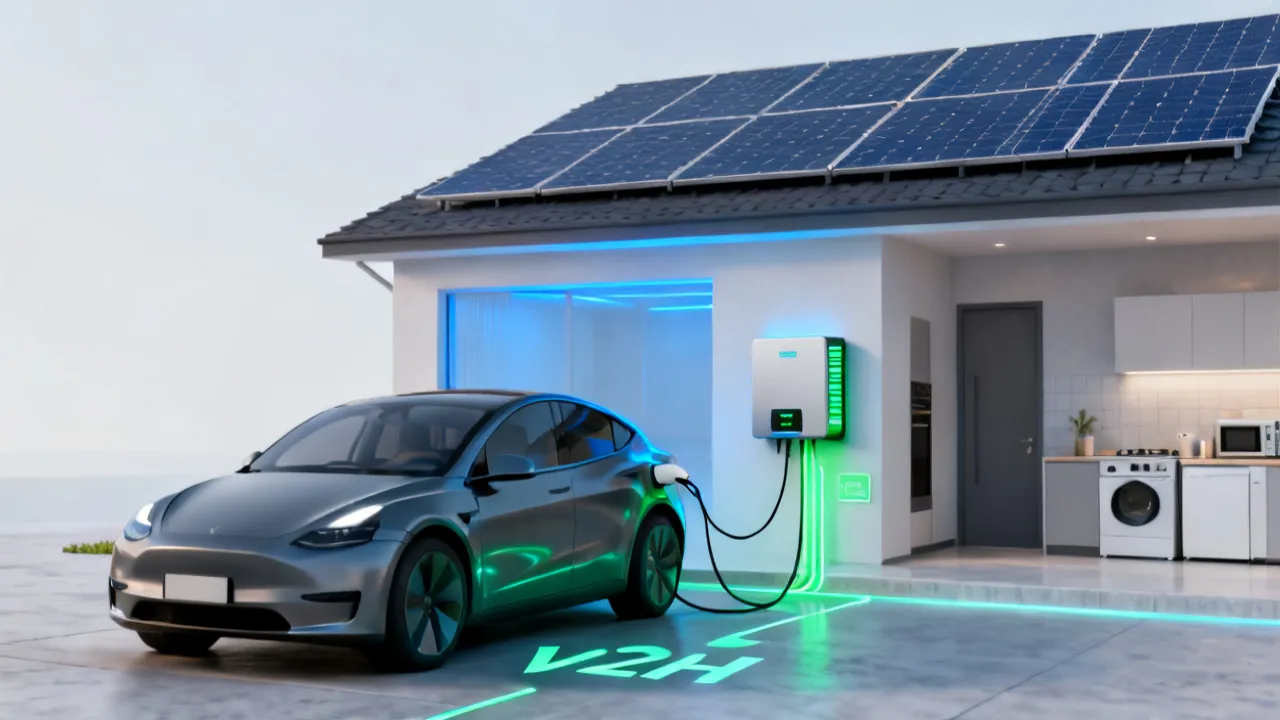
A V2H inverter is the power-conversion equipment that allows an electric vehicle to send electricity to a residence. The term V2H means “vehicle-to-home,” describing a bidirectional energy arrangement rather than a conventional one-way charging system. During normal charging, electricity moves from the utility grid or a solar installation into the vehicle battery. With V2H, electricity can also move in the opposite direction, from the vehicle battery through an inverter and into selected household circuits or, where permitted, the wider home electrical system.
The very important distinction is that an electric vehicle, a bidirectional charger, and a V2H inverter are not automatically the same product. Some systems place the bidirectional power electronics inside a dedicated charging unit. Others use an external inverter connected to a compatible vehicle and a home energy-management system. The exact architecture depends on the vehicle manufacturer, charging interface, local electrical standards, and whether the installation is intended for backup power, energy management, or both.
From an industry perspective, the inverter should be viewed as the control and conversion center of the system. It must transform electricity into the voltage, frequency, waveform, and protection profile required by household equipment. It must also recognize grid conditions and disconnect the home from the utility network when necessary. This anti-islanding function is essential: a home operating from an electric vehicle during a grid outage must not unintentionally energize utility lines being repaired.
A well-designed V2H installation therefore involves more than purchasing a bidirectional charging device. It requires a compatible vehicle, suitable switchgear, an approved installation method, a qualified electrician, and—depending on the jurisdiction—utility approval and inspection. The vehicle battery is another central consideration. Its usable capacity, discharge limits, thermal management, warranty conditions, and manufacturer controls influence how much energy can be delivered and how often the system can operate.
In practical terms, a V2H inverter performs several jobs simultaneously. It converts direct current from the vehicle battery into alternating current for the home, manages the reverse conversion when the vehicle is charging, monitors electrical conditions, coordinates with the vehicle, and determines whether the system should import, export, or hold energy. It may also communicate with a solar inverter, smart meter, home battery, utility platform, or load-control device.
Electric vehicles are commonly parked for many hours each day. That makes their batteries potentially useful as distributed energy resources. When connected to a home through a V2H inverter, an EV may support essential circuits during an outage, reduce grid consumption during selected periods, or absorb solar generation that might otherwise be exported. The value is not simply the size of the battery; it is the combination of storage capacity, power output, control software, and household demand.
For homeowners, backup capability is often the very visible benefit. A vehicle can potentially run refrigerators, lighting, internet equipment, heating controls, medical devices, or selected kitchen appliances, provided that the inverter and electrical panel are correctly sized. In regions affected by storms, wildfire-related shutoffs, winter conditions, or unreliable distribution networks, this capability may complement a conventional home battery or generator.
V2H can also support load management. A home energy-management platform may schedule charging when electricity is less expensive or when solar production is high. It may then discharge the vehicle during an approved period of higher demand. However, the financial case depends on local tariffs, export rules, demand charges, system losses, vehicle usage patterns, and battery warranty terms. A V2H inverter should not be described as an automatic way to reduce every household’s energy bill.
Solar integration is another important application. A solar array produces power according to sunlight, while household demand changes throughout the day. A V2H system can sometimes direct excess solar electricity into the vehicle battery and later return part of that energy to the home. The system must be configured carefully because solar inverters, bidirectional EV equipment, batteries, and backup loads must coordinate during both grid-connected and islanded operation.
V2H can also provide flexibility during periods when the wider power system is under stress. A utility or approved aggregator may ask participating vehicles to reduce charging or discharge limited energy during a peak-demand event. Such programs can help manage local capacity requirements, although participation usually requires special metering, software permissions, customer enrollment, and rules governing how much energy must remain available for the vehicle owner.
The technology is receiving attention partly because an EV battery is often substantially larger than a typical short-duration household battery. A vehicle may contain enough stored energy to support essential household loads for a day or more under moderate conditions. Nevertheless, the larger battery does not eliminate the need for appropriate power electronics, safe transfer equipment, and careful load planning. Energy capacity and usable household output remain separate design questions.
In a basic V2H arrangement, the electricity pathway includes the vehicle, the charging connector, the bidirectional conversion equipment, a transfer or isolation device, the home distribution panel, and the household loads. Communication controls coordinate the flow. Depending on the design, measurement devices may monitor grid import, solar generation, circuit demand, battery state of charge, and vehicle availability.
When the utility grid is available, the system may operate in a grid-interactive mode. In that mode, it can charge the vehicle, export approved energy, or discharge into household circuits according to its software settings. When the grid fails, an automatic transfer or isolation device separates the home from the utility supply. The inverter then establishes a stable local electrical source for the designated backup circuits.
Not every V2H inverter powers the entire house. Whole-home backup requires equipment capable of handling the service rating, starting currents, phase arrangement, and local connection requirements of the residence. Many installations instead use a critical-loads panel. This approach directs power to selected circuits and reduces the risk that a large electric heater, heat pump, water heater, or vehicle charger will exceed the system’s output.
The sequence during an outage is especially important. The system first detects that grid voltage or frequency has fallen outside an approved range. It then opens the isolation device, verifies that the residence is separated from the utility, and establishes a local voltage and frequency reference. Only after those conditions are satisfied should the inverter energize the backup circuits. When utility service returns, the system normally waits for a stable period before reconnecting, helping prevent repeated switching during an unstable restoration.
Some systems can operate in a “pass-through” mode while the grid is available, allowing utility or solar energy to supply household loads while the vehicle remains connected. Other systems use a separate backup gateway or energy-management panel. These differences affect installation cost, transfer time, monitoring, and the types of loads that can be supported.
| Technology | Primary Function | Typical Energy Direction | Important Consideration |
|---|---|---|---|
| Conventional EV charger | Charges an electric vehicle | Grid or solar system to vehicle | Usually does not discharge energy to the home |
| V2H inverter system | Connects an EV battery with household loads | Bidirectional | Requires compatible vehicle, controls, and safe isolation |
| V2G system | Allows an EV to interact with the utility grid | Bidirectional between vehicle and grid | Often subject to utility programs and interconnection rules |
| V2L function | Supplies appliances or tools directly from a vehicle | Vehicle to local devices | May not provide good home backup or panel integration |
| Stationary home battery | Stores electricity for household use | Grid or solar system to battery and home | Does not depend on the vehicle being present |
| Standby generator | Produces electricity from fuel | Fuel source to home | Requires fuel supply, ventilation, maintenance, and approved transfer equipment |
V2L, or vehicle-to-load, is particularly easy to confuse with V2H. A vehicle may have an outlet capable of powering a refrigerator, camping equipment, or tools without being connected to the home’s electrical panel. That can be practical for temporary use, but it is not equivalent to a V2H inverter installation. V2H involves coordinated home circuits, isolation from the grid, and a more formal electrical connection.
V2G, or vehicle-to-grid, extends the concept beyond the residence. It may allow an electric vehicle to provide energy or grid services under a utility-managed program. V2G generally involves additional communications, market rules, metering requirements, and interconnection conditions. A homeowner seeking backup power should not assume that a V2G-capable vehicle or charger will automatically qualify for V2H operation.
A stationary home battery has one practical advantage over an EV: it is always located at the property. That makes it easier to guarantee backup availability. An EV, however, may offer greater total energy capacity and can serve transportation and storage purposes. The better option depends on whether the homeowner values mobility, permanent availability, high output, installation simplicity, or long-duration backup.
The inverter converts direct-current energy from the vehicle battery into alternating-current electricity for the home. During charging, the conversion direction is reversed. Power ratings vary by product and installation, so the nameplate output should be evaluated against actual household demand rather than battery capacity alone. A large battery does not guarantee a high instantaneous output.
Power electronics may use switching devices, filters, control boards, cooling systems, and protective relays to create a clean AC waveform. The quality of the waveform and the inverter’s response to changing loads can affect motors, compressors, sensitive electronics, and other equipment. The inverter must also control reactive power, voltage regulation, and frequency behavior where required by local grid standards.
The vehicle and charging system must communicate. This exchange may identify the vehicle, confirm charging permission, report battery status, negotiate power limits, and coordinate shutdown. Compatibility can depend on both hardware and software. A connector that physically fits does not necessarily establish the communication needed for bidirectional operation.
Communication can also determine whether the car is available for driving. The system may be configured to maintain a minimum state of charge, respond to a scheduled departure time, or stop discharge when the owner unlocks the vehicle. If communication is lost, a fail-safe system should move to a defined state rather than continue operating without reliable information.
Backup systems require a reliable method of separating the residence from the utility grid. This may involve an automatic transfer switch, an energy-management gateway, a backup interface, or an integrated panel. The equipment must be selected for the local electrical configuration and installed according to applicable codes. Improvised backfeeding through a household outlet is unsafe and should never be treated as a substitute for a properly engineered system.
Isolation equipment must be rated for the service voltage, current, number of phases, fault conditions, and switching duty. In some systems, the inverter itself controls the transfer function; in others, a separate gateway performs the switching. The homeowner should be able to identify the isolation device and understand whether it is automatic, manual, or dependent on communications.
The controller manages operating priorities. It may preserve a minimum battery reserve for driving, use solar generation first, limit household output, or stop discharge when the vehicle must depart. More advanced systems can consider electricity tariffs, weather forecasts, predicted household demand, and utility signals. These features are useful only when the system has accurate measurements and clear user settings.
Control priorities should be transparent. For example, a system might first serve immediate household loads with solar power, then charge the vehicle with remaining solar energy, preserve a specified driving reserve, and discharge only during an outage or approved peak-price period. If the homeowner cannot understand why the vehicle is charging or discharging, it becomes difficult to evaluate savings or ensure that transportation needs are protected.
Current transformers, voltage sensors, circuit protection, grounding components, surge protection, and fault detection may form part of the installation. Monitoring helps the system react to overcurrent, abnormal voltage, excessive temperature, insulation faults, or communication loss. Protection design should be reviewed by a qualified professional rather than inferred from marketing descriptions.
Energy meters also support accurate billing and performance evaluation. A system that measures only vehicle output may not show total household demand, solar contribution, conversion losses, or energy imported from the grid. Whole-site monitoring can provide a more useful picture of how the V2H system affects electricity consumption.
Compatibility is the first practical screening point for any V2H project. The vehicle must support bidirectional energy transfer through an approved method, and the charging system must recognize that vehicle. Some manufacturers enable bidirectional use only with specified equipment, regions, software versions, or operating conditions. Others may limit the feature to selected models or require enrollment in a managed program.
Potential buyers should verify five separate questions:
Connector standards also matter. Different markets use different charging systems, and a vehicle may support one connector for ordinary charging while requiring another architecture for bidirectional operation. Standards organizations and industry consortia continue to develop and refine requirements for communication, safety, and interoperability. Buyers should rely on current manufacturer documentation and local certification records, not on a connector’s appearance alone.
Battery chemistry and warranty terms deserve equal attention. Repeated cycling may affect battery aging, although the impact depends on depth of discharge, temperature, charging rate, cell design, and the vehicle’s battery-management strategy. The relevant warranty may define permitted operating conditions or exclude certain applications. A professional assessment should explain whether V2H cycling is recognized by the manufacturer and how the owner can monitor battery health.
Software updates can affect compatibility after installation. A manufacturer may add features, modify discharge limits, change communication requirements, or discontinue a cloud-connected service. Before purchase, ask whether the system can continue basic operation if internet access is interrupted and whether firmware updates are automatic, scheduled, or performed by an installer.
Three measurements are frequently confused: power, energy capacity, and runtime. Power is measured in watts or kilowatts and describes how much electricity can be delivered at a moment. Energy is measured in watt-hours or kilowatt-hours and describes how much electricity is stored. Runtime depends on usable energy, household demand, conversion losses, reserve settings, and environmental conditions.
For example, a household may require only a modest continuous load for lighting, refrigeration, communications, and circulation pumps, yet experience a short high-power surge when a motor starts. The inverter must handle both the continuous rating and relevant surge characteristics. If a home includes electric resistance heating, induction cooking, a heat pump, or a large water heater, the design must account for their demand rather than relying on an average monthly electricity figure.
A simplified planning relationship is:
Approximate runtime = usable vehicle energy × system efficiency ÷ average household load.
This is only a planning approximation. The system may reserve energy for driving, reduce output at low battery levels, disconnect during abnormal conditions, or limit operation because of temperature. Household demand also fluctuates. A qualified installer should model priority circuits and starting loads before selecting equipment.
Battery capacity should not be treated as entirely available to the home. Manufacturers normally protect a portion of the battery to support longevity and safe operation. The inverter, wiring, switchgear, and conversion process also introduce losses. A responsible proposal should show estimated usable energy and expected output under realistic conditions rather than quoting the vehicle’s headline battery capacity as the available backup supply.
Peak loads deserve special attention. A refrigerator compressor, sump pump, well pump, furnace blower, or air-conditioner compressor may draw several times its normal running current for a short period. If the inverter cannot tolerate that surge, the circuit may trip even though the average demand appears modest. Soft-start equipment, staggered controls, or automatic load shedding may solve the problem, but these measures should be included in the design.
Every V2H installation must satisfy the electrical requirements of its jurisdiction. These may include rules for distributed energy resources, transfer equipment, grounding, overcurrent protection, utility interconnection, labeling, inspection, and emergency access. The exact requirements differ between countries, states, provinces, municipalities, and utility service territories.
Common conditions include the following:
Homes with older electrical panels may need upgrades before a V2H system can be installed. A service upgrade is not always necessary, but it should be considered if the proposed equipment adds significant load or if the existing panel lacks space and suitable protection. Underground or detached-garage installations may also require longer cable runs, trenching, weatherproof enclosures, or additional communication equipment.
Local conditions matter. In a coastal environment, corrosion resistance may be important. In a cold climate, battery and inverter temperature limits can affect performance. In a hot region, equipment placement and thermal clearance become more significant. Areas with frequent storms may justify surge protection and careful placement above known flood levels. These factors should appear in the installation design, not as afterthoughts.
The location of the vehicle connection can influence convenience and cost. A garage-mounted charger may provide short cable runs but require ventilation or protection from vehicle impact. An outdoor installation may need a weather-rated enclosure, drainage planning, ultraviolet-resistant cabling, and protection against snow or standing water. The cable should be routed so that it does not create a trip hazard or interfere with vehicle movement.
Backup performance depends on the system’s ability to detect a grid failure, isolate the residence, establish stable voltage and frequency, and supply the selected circuits. The transition may be automatic, but the timing and behavior vary by system. Sensitive equipment such as computers, networking devices, medical equipment, and security systems may require additional power-quality protection or an uninterruptible power supply.
Critical-loads planning is often more practical than attempting to operate every circuit. A dedicated panel may include refrigeration, lighting, communications, garage doors, selected outlets, and essential heating controls. High-demand loads can be excluded or controlled through load-shedding devices. The homeowner should know which circuits remain energized, how to reconnect large appliances, and what happens if the vehicle is unplugged.
Vehicle availability is a major operational condition. If the EV is away from home, disconnected, or needed for travel, the house cannot rely on it as a stationary storage resource. A home that requires continuous backup may therefore benefit from a stationary battery or generator in addition to V2H. Redundancy is especially relevant for medical needs, extended outages, and properties located far from public charging facilities.
Emergency procedures should be documented. Users need clear instructions for manual shutdown, system reset, vehicle departure, fault indications, and contact with the installer. The vehicle should not be moved while the cable remains connected, and charging equipment should be protected from water exposure or physical damage according to manufacturer instructions.
Outage duration should be considered when setting the reserve. Keeping the vehicle at a high state of charge provides more backup energy but may reduce available driving range or increase time spent at a high battery level. A lower reserve may improve daily energy management while leaving less protection for a prolonged outage. Many systems allow different settings for ordinary days, severe-weather preparation, and emergency operation.
A V2H inverter can complement rooftop solar, but the relationship is technically complex. In grid-connected operation, solar power may supply household loads, charge the vehicle, or be exported according to the site’s interconnection arrangement. During an outage, the solar inverter must know whether it is connected to a stable grid reference. Some solar systems shut down when the grid disappears unless they are paired with approved backup-forming equipment.
The V2H system may act as a controlled storage resource, but it is not necessarily a replacement for a dedicated solar battery inverter. Compatibility depends on the solar inverter’s operating mode, the backup interface, phase configuration, and control signals. An installer should verify the complete system architecture, including whether solar production can continue during an outage and how excess generation is managed when the vehicle battery is full.
Energy-management settings should reflect household priorities. One homeowner may preserve a high state of charge for morning travel. Another may prioritize solar absorption during the afternoon. A third may use the vehicle mainly for backup. These preferences can conflict, so the system should provide understandable controls and a clear hierarchy of settings.
Solar production during an outage can create a control problem if household demand is low and the vehicle battery is already full. Without an approved method to curtail generation, the local system may experience unstable voltage or frequency. Some systems regulate solar output, while others disconnect the solar array under defined conditions. This behavior should be explained in the design documents so the homeowner knows what to expect on sunny outage days.
Energy is lost during charging, discharging, inversion, wiring, and control. Round-trip efficiency varies by equipment, power level, temperature, battery condition, and operating mode. Lower-power operation may not produce the same result as operation near the equipment’s optimal range, while standby consumption can matter during long periods of inactivity.
Battery aging is also influenced by the operating profile. Deep cycling, high temperatures, prolonged high state of charge, and high charging or discharging rates can affect battery degradation, although the effect differs among battery designs. The appropriate question is not simply whether V2H uses the battery, but how the proposed control strategy manages temperature, reserve levels, current, and cycling frequency.
Owners should request transparent information about:
Independent efficiency figures should be compared carefully. Test methods may differ, and a laboratory value may not represent a complete household installation. An expert evaluation should distinguish inverter efficiency from full-system round-trip efficiency and should explain the conditions behind each number.
Battery-use policies should also account for seasonal changes. In cold weather, the vehicle may spend energy warming the battery before charging or discharging. In hot weather, cooling systems may reduce net energy delivered to the home. A vehicle parked outdoors may have different performance from one kept in a temperature-controlled garage. These effects do not necessarily make V2H impractical, but they should be included in realistic expectations.
The financial case for a V2H inverter includes more than equipment cost. Expenses may involve the bidirectional charger or inverter, transfer equipment, wiring, panel modifications, permits, labor, communications hardware, software subscriptions, inspections, and possible service upgrades. The vehicle itself is a separate cost and should not be assigned entirely to the energy system unless the buyer is specifically comparing vehicle-based storage alternatives.
Potential value streams may include backup capability, greater use of onsite solar generation, reduced grid purchases, participation in an approved demand-response program, and avoidance of some peak charges. These benefits depend on local tariffs and program rules. If electricity prices are relatively uniform, the energy-arbitrage value may be limited. If the vehicle is frequently driven during the hours when discharge would otherwise occur, the practical benefit may also decline.
Financial analysis should use a conservative scenario. It should include efficiency losses, maintenance, possible communications costs, battery warranty conditions, installation work, and the opportunity cost of reserving energy for driving. Incentives may be available in some jurisdictions, but eligibility can change and often depends on certified equipment, installer qualifications, income criteria, or participation in a utility program. Prospective buyers should confirm current terms with official authorities and the relevant utility.
Backup value is difficult to express only in currency. A homeowner may place significant value on refrigeration, communications, accessibility equipment, or maintaining heating controls during an outage. That resilience benefit can be legitimate, but it should be stated separately from projected bill savings. Combining uncertain savings and resilience value into one exaggerated payback estimate can make comparisons misleading.
Maintenance and replacement costs should be included as well. Filters, cooling fans, communication gateways, transfer equipment, and software services may have different service lives. If the V2H inverter fails while the vehicle remains operational, ordinary EV charging may or may not remain available depending on the system architecture. A proposal should explain whether a failure in one component disables the entire charging installation.
Safety is the primary design requirement. A V2H inverter handles substantial electrical energy and must be installed as a good energy system, not improvised from portable adapters. Incorrect wiring can cause shock, fire, equipment damage, or dangerous backfeed into the utility network.
Important safety principles include:
Relevant technical requirements may be influenced by national electrical codes, product safety standards, grid-interconnection standards, and charging communication specifications. Because requirements change and vary by location, readers should consult the authority having jurisdiction, the utility, and current manufacturer documentation. General online descriptions cannot replace an engineered site assessment.
Battery incidents are uncommon in properly managed systems but can be serious. Equipment should not be installed in unsuitable spaces or modified without authorization. If a vehicle or charging unit shows overheating, unusual odor, smoke, physical damage, or repeated fault messages, the system should be isolated according to the manufacturer’s emergency instructions and inspected by qualified personnel.
Cybersecurity is an additional safety and reliability consideration. A connected inverter may communicate through a mobile application, cloud service, home network, or utility platform. Strong account passwords, multifactor authentication where available, current firmware, and restricted network access can reduce risk. Owners should understand what data is collected, whether remote control is enabled, and how the system behaves if the cloud service is unavailable.
The following step-by-step process helps a homeowner move from interest to a technically sound decision.
It is useful to compare a V2H proposal with alternatives rather than evaluating it in isolation. A stationary battery may have a higher initial cost but guarantee availability. A portable or standby generator may provide longer operation if fuel is available. Efficiency improvements, insulation, smart thermostats, and circuit-level load controls may reduce backup requirements. Looking at the entire resilience plan helps prevent over-sizing the vehicle-based system.
A strong installer should welcome detailed questions. Ask which vehicles have been tested with the proposed V2H inverter and whether the approval applies to the exact model, market, and software version. Request a single-line electrical diagram showing the vehicle connection, inverter, transfer equipment, main panel, critical-loads panel, solar system, and utility interface.
Ask how the installation will respond to a grid outage and how long the transition is expected to take. Confirm whether the system supports whole-home or selected-circuit backup. Ask what happens if a high-demand appliance starts, whether load shedding is included, and how the owner can preserve energy for driving.
Warranty questions should be specific. Determine which company covers the inverter, charger, transfer equipment, labor, communications hardware, and software. Ask whether a vehicle manufacturer’s warranty recognizes V2H cycling and whether a change in software or cloud service could alter functionality. Also ask who responds if the vehicle, charger, or home equipment reports a fault.
Other useful questions include whether the system can operate locally without internet access, how often it requires maintenance, how replacement parts are obtained, and whether the installer will assist with utility applications. Ask for expected sound levels if the equipment includes cooling fans, as a garage or exterior wall installation may place the unit near living spaces or neighboring properties.
Assuming every EV is bidirectional: Many electric vehicles support charging, but that does not mean they can send energy to a home. Confirm the exact capability.
Using battery capacity as the only selection criterion: Energy capacity does not indicate maximum output, surge capability, or runtime under real household conditions.
Ignoring the electrical panel: Existing service equipment may limit the design or require modifications. A panel review should come before a final quotation.
Confusing V2L with V2H: An appliance outlet may not provide code-compliant home backup. Panel integration requires dedicated protection and isolation.
Overlooking vehicle availability: A car that is away for work, school, or travel cannot provide backup to the residence.
Accepting unclear savings claims: Financial projections should show assumptions about tariffs, efficiency, cycling, maintenance, and battery reserves.
Neglecting software dependence: Bidirectional operation may rely on firmware, communications, authentication, or manufacturer support. These conditions should be documented.
Installing without a backup-load plan: Essential circuits should be identified and tested. Otherwise, the system may trip when a large appliance operates unexpectedly.
Forgetting the departure schedule: A system that aggressively discharges the battery overnight may leave the vehicle with insufficient range for an early trip. Departure times and minimum reserves should be part of the control strategy.
Once installed, the system should be treated as an energy asset requiring routine attention. Keep the vehicle and charger free from physical obstructions. Inspect visible cables and connectors for damage without opening energized equipment. Monitor fault messages, unusual heat, and unexpected changes in charge or discharge behavior. Maintain the vehicle according to the manufacturer’s schedule, including battery, cooling, and software service requirements.
Review backup settings before severe weather or a planned utility maintenance event. Confirm that the vehicle is present, sufficiently charged, and connected correctly. Test the system only according to the installer’s instructions; an intentional outage test may require coordination with the utility or a professional. Do not repeatedly force discharge cycles merely to observe operation.
Household members should understand the difference between ordinary charging and backup operation. They should know which circuits are supported, where the emergency disconnect is located, and what warning signs require isolation. Written instructions are particularly important for guests, tenants, caregivers, and anyone who may operate the system during an outage.
Keep records of installation documents, equipment serial numbers, warranty terms, firmware versions, inspection reports, and service visits. These records can simplify troubleshooting and may be needed if the property is sold or the vehicle is replaced. A future EV may not be compatible with the original V2H equipment, so the system’s interoperability limitations should be recorded clearly.
V2H technology is developing alongside electric vehicles, charging infrastructure, distributed solar, and smart-grid programs. The direction of the market will depend on interoperability, manufacturer support, utility participation, software reliability, and clear rules for customer-owned energy resources. Technical progress alone is not enough; systems must also be understandable, serviceable, and compatible with the electrical infrastructure already installed in homes.
Standardization is important because a homeowner may keep a vehicle for many years while charging equipment and energy programs change. Interoperable communication can reduce dependence on a single component, although certification and manufacturer approval remain necessary. Regulators and utilities also need reliable methods for managing export, voltage quality, cybersecurity, and emergency disconnection.
From an expert standpoint, the strongest V2H projects will be those designed around a clear household use case. A system selected solely because it has a large battery may underperform if the vehicle is rarely present, the home has substantial peak loads, or local tariffs provide little value for energy shifting. Conversely, a carefully sized system with a critical-loads panel, sensible reserve settings, and reliable support can provide meaningful resilience and better coordination with solar generation.
Future systems may use more advanced forecasting and automation. They could estimate household demand, predict solar production, identify likely utility interruptions, and adapt the vehicle reserve accordingly. They may also coordinate several energy resources, such as rooftop solar, a stationary battery, a heat pump, and flexible water heating. These developments could improve system value, but they will increase the importance of transparent controls and dependable cybersecurity.
A V2H inverter is equipment that enables bidirectional electricity flow between a compatible electric vehicle and a home. It converts vehicle battery electricity into a form suitable for household circuits and helps manage charging, discharge, protection, and grid isolation.
No. The vehicle must support bidirectional operation through a compatible charging interface and communication protocol. Manufacturer approval, software version, regional availability, and warranty conditions may also apply.
Not necessarily. Many systems supply a dedicated critical-loads panel. Whole-home backup requires appropriate inverter output, service equipment, phase compatibility, transfer protection, and load management. The installation design determines the result.
Runtime depends on usable battery energy, household demand, inverter efficiency, reserve settings, temperature, and the vehicle’s need for transportation. Essential low-power circuits may operate considerably longer than a home with electric heating or other large loads.
It can, but compatibility must be verified. The solar inverter, V2H inverter, transfer equipment, and energy-management controls must coordinate during both grid-connected and outage conditions. Some solar systems require additional backup-forming equipment.
No. Plugging an appliance into a vehicle is generally associated with V2L. V2H connects the vehicle to household electrical infrastructure through approved equipment, includes grid isolation, and supports coordinated home backup or energy management.
Additional cycling can contribute to battery aging, but the effect depends on depth of discharge, temperature, current, chemistry, and control strategy. The vehicle warranty and manufacturer’s approved operating conditions should be reviewed before installation.
It can be safe when correctly designed, certified, installed, and commissioned. The system must isolate the home from the utility grid before supplying backup power. Improvised connections and backfeeding through ordinary outlets are unsafe.
Requirements vary. A grid-connected or export-capable system may require utility interconnection approval, inspection, or participation in a specific program. The homeowner should confirm the process before equipment is purchased.
A complete quotation should identify the inverter or bidirectional charger, transfer equipment, wiring, protection devices, monitoring, permits, labor, commissioning, warranty coverage, supported vehicle models, backup circuits, and any assumptions about panel upgrades or communications.
The cable must be disconnected according to the manufacturer’s procedure before the vehicle is moved. Some systems can stop discharge and release the connection remotely, but the owner should follow the approved operating instructions.
No. Savings depend on tariffs, solar production, energy losses, equipment costs, battery cycling, and vehicle availability. A financial assessment should use local electricity rates and conservative assumptions rather than generalized claims.
The result depends on the system. Some equipment can continue local charging or backup operation, while other features may require cloud authentication. Buyers should ask whether essential functions remain available without internet service and what safety state the inverter enters after a communication failure.
It may be possible, but only with approved equipment and a carefully coordinated control design. The generator and V2H inverter must not energize the same isolated circuits in an uncontrolled manner. A qualified installer must determine the correct transfer sequence, synchronization requirements, and protection settings.
A V2H inverter can turn a compatible electric vehicle into a flexible household energy resource, but its performance depends on the complete system rather than the inverter alone. Vehicle compatibility, bidirectional communication, power ratings, transfer protection, battery reserves, solar coordination, installation quality, and local rules all matter.
The very reliable decision begins with a defined objective: backup for essential circuits, improved solar use, tariff management, or participation in an approved energy program. From there, homeowners should verify vehicle support, obtain a professional electrical assessment, compare complete system designs, and examine warranty and operating conditions in writing. With that disciplined approach, V2H can be evaluated as a practical energy technology rather than a headline feature.
Striking the Perfect Balance: Navigating Premiums and Out-of-Pocket Expenses in Senior Insurance Plans

Explore the Tranquil Bliss of Idyllic Rural Retreats

How to Make Lasting Memories at Disneyland Attractions

Affordable Phones and Plans for Seniors

Affordable Full Mouth Dental Implants Near You

Unlock the Top Kept Secrets to Finding Your Ideal Dentist for Flawless Dental Implant Results!

Discovering Springdale Estates

Unveiling RS Sul Telecom Services

The Guide to Car Trading


Understanding Proportional Valves
Proportional valves are hydraulic components vital for controlling fluid flow and pressure with high precision in various industrial applications. Their importance in automation and manufacturing settings stems from their ability to offer variable output in response to input signals, greatly enhancing system efficiency and performance.
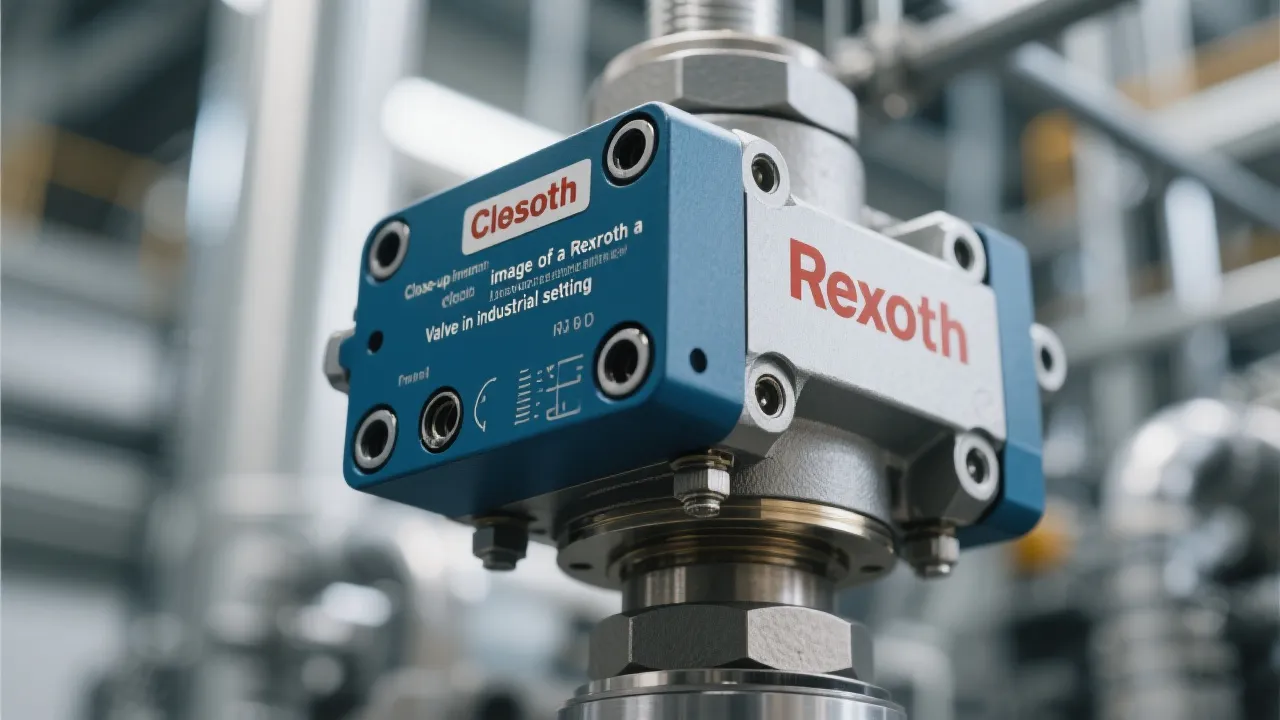
Understanding Rexroth Valve Systems
Rexroth Valves are quintessential components in various industrial applications, known for their precision and reliability. These hydraulic, pneumatic, and electrohydraulic valves regulate fluid flow in machinery, ensuring optimal performance and safety. Understanding their functionality and benefits is crucial for industries seeking efficiency and sustainability in their operations.

Unveiling Thermo Fisher Chromatography
This article explores the pivotal role of Thermo Fisher Chromatography in modern analytical science. Chromatography is crucial for separating compounds within mixtures, making it indispensable in industries such as pharmaceuticals and environmental testing. Thermo Fisher Scientific stands out in this field for its innovative solutions, leading to improved accuracy and efficiency in research and development.

Understanding Corrosion Inhibitor Manufacturers
In today's industrial landscape, corrosion inhibitor manufacturers play a crucial role in safeguarding equipment and infrastructure against corrosive damage. These manufacturers provide specialized chemicals that prevent corrosion in various environments, including industries such as oil and gas, marine, and construction. Understanding their operations and offerings is essential for selecting the right supplier and maintaining asset longevity.
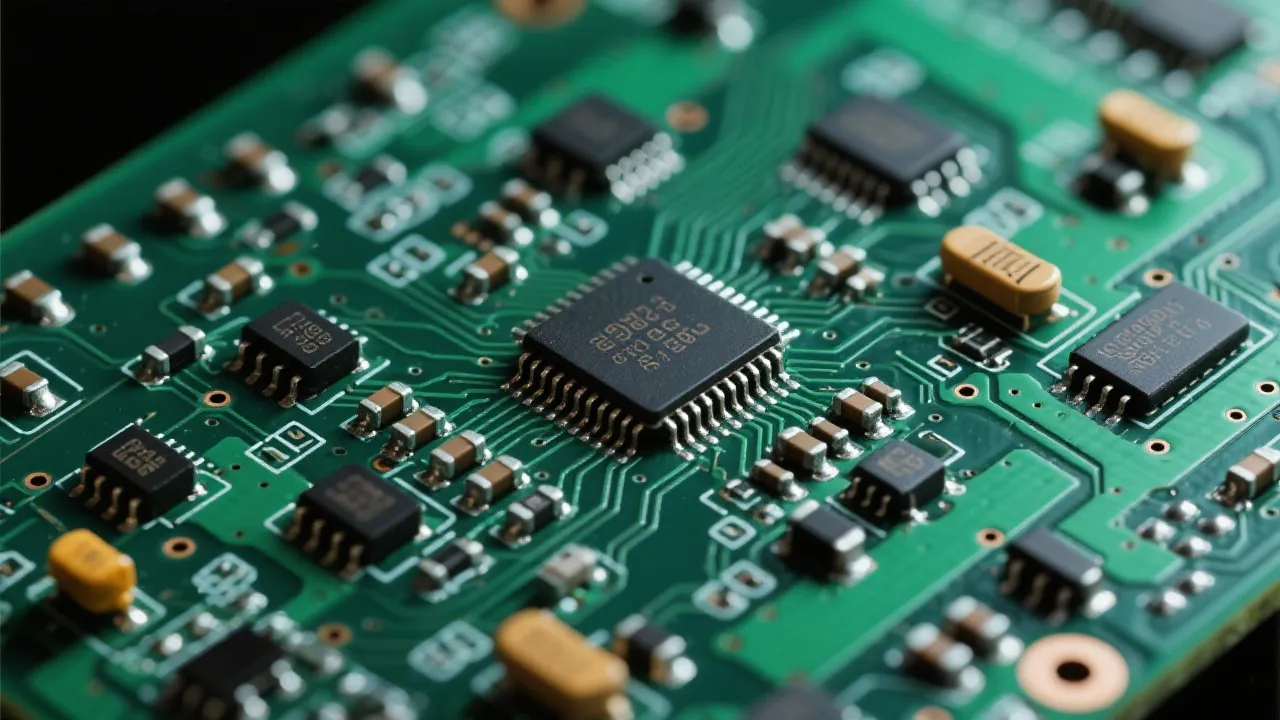
Analyzing Lm66100 Digikey Components
This article offers an in-depth analysis of the Lm66100 component available through Digikey, a renowned distributor of electronic components. The Lm66100, a load switch, is integral in industry applications, providing efficient power management. This piece explores its features, applications, and availability through Digikey, while offering a comprehensive guide for industry professionals seeking to optimize their electronic designs.

Leading Corrosion Inhibitor Suppliers
Corrosion inhibitor manufacturers play a crucial role in protecting materials from degradation. These companies specialize in creating chemical compounds that slow down or prevent the corrosive effects on various surfaces, especially metals. Understanding their production processes and solutions offered is vital for industries reliant on metal infrastructure.