This guide explains how a V2H inverter enables an electric vehicle to supply electricity to a home during suitable operating conditions. It examines system architecture, bidirectional charging, compatibility, installation, safety, economics, solar integration, maintenance, and regulatory considerations. A V2H inverter is a power-conversion device that manages electricity between an EV battery, the utility grid, renewable generation, and selected household circuits while maintaining electrical protection and operational control.
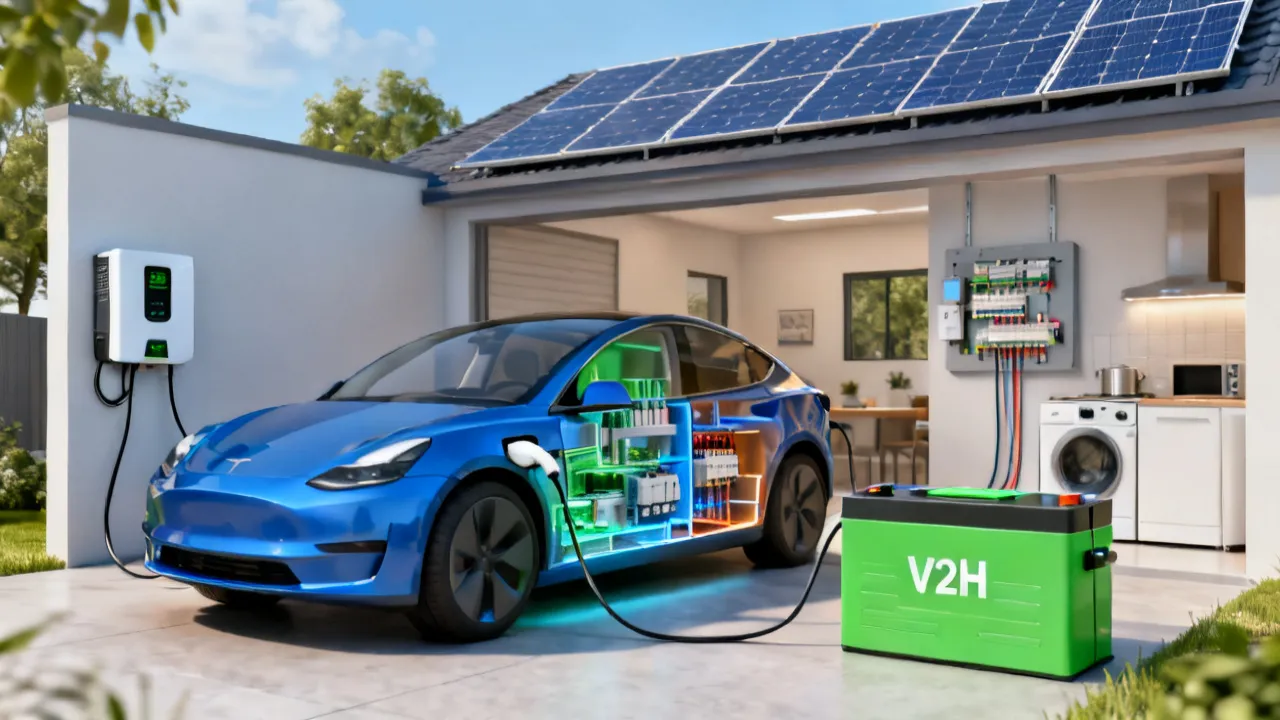
A V2H inverter, or vehicle-to-home inverter, allows a compatible electric vehicle to function as a temporary energy resource for a residence. Instead of using the vehicle solely as a transportation battery, the system can transfer stored direct-current energy from the EV battery into household alternating-current loads. The inverter manages this conversion, coordinates with the vehicle and charging equipment, and helps ensure that electricity is delivered within the limits established by the home’s electrical system.
The very important point for prospective buyers is that a V2H inverter is not simply a larger home charger. A conventional EV charger generally sends electricity in one direction: from the grid or another energy source to the vehicle. A V2H arrangement requires bidirectional power flow, communications between multiple devices, switching equipment, protection functions, and a clear operating strategy for both grid-connected and backup conditions.
In practical terms, the system may support a home in several ways. It can supply selected circuits during a grid outage, reduce reliance on grid electricity during expensive periods, absorb surplus solar generation, or provide a controlled reserve for essential loads. The actual capability depends on the vehicle, the V2H inverter, the charging unit, local electrical rules, utility policies, and the battery’s permitted operating range.
The inverter may also serve as the central point where different energy sources are coordinated. Depending on the architecture, it can monitor utility power, rooftop solar generation, household consumption, and vehicle battery status. It may direct the vehicle to charge when electricity is inexpensive, pause charging when the home demand is high, or discharge only when a reserve level has been preserved.
Because the vehicle remains a mobile asset, the control system must also account for human behavior. A homeowner may need the vehicle for an unexpected trip, may forget to plug it in, or may disconnect it before an anticipated storm. A well-designed V2H installation therefore does more than move electricity; it communicates system status clearly and gives priority to transportation requirements when necessary.
Electric vehicles spend much of their time parked. A V2H inverter can make use of that parked battery without eliminating the vehicle’s primary transportation function. When properly configured, the system can maintain a minimum state of charge for planned travel while allowing the remaining battery capacity to support the home.
From an energy-management perspective, the technology connects four traditionally separate assets:
These components must operate as one engineered system. A mismatch in any part can prevent backup operation even when the vehicle has a large battery. For this reason, an industry professional would assess the complete installation rather than choosing an inverter based only on its power rating or advertised features.
V2H technology can be especially useful in locations where outages are frequent, electricity prices vary by time of day, or solar generation is available during daylight hours but household consumption occurs mostly in the evening. It may also reduce the need to purchase a separate battery for certain applications. However, that benefit should be weighed against the fact that the vehicle may be unavailable when it is away from home.
An EV battery stores electricity as direct current, while most household appliances use alternating current. The V2H inverter performs the necessary conversion and regulates voltage, frequency, current, and power quality. It also monitors electrical conditions so that the system can respond to abnormal events.
During ordinary grid-connected operation, the home may receive electricity from the utility, rooftop solar, the EV, or a combination of these sources. A central energy-management system can prioritize those sources according to user settings. For example, solar energy might first serve household loads, with surplus production directed to the EV. At a later time, the vehicle could supply selected loads when solar output falls or when the utility price is higher.
The system must continuously decide whether energy should flow into or out of the vehicle. This decision can be based on several inputs, including the battery’s state of charge, electricity prices, forecast solar production, expected driving requirements, home demand, and the likelihood of a grid interruption. Some systems rely mainly on user-selected schedules, while more advanced systems use automatic optimization.
During a grid interruption, the operating sequence becomes more demanding. The home must be isolated from the utility before the EV can supply local circuits. This process, known as islanding protection or intentional islanding control, prevents electricity from being sent onto utility lines while line workers may be present. A properly designed system uses approved transfer equipment and control logic to separate the home from the grid.
Once isolation is confirmed, the inverter establishes or supports the voltage and frequency required by the connected loads. Some systems can energize a backup panel, while others may support a broader portion of the home if the inverter, service equipment, and vehicle provide sufficient capacity. The arrangement should be documented clearly so that occupants understand which appliances remain operational during an outage.
After utility power is restored, the system normally waits until the grid is stable before reconnecting. It may then return to grid-connected operation, resume charging, or preserve the remaining battery reserve. The restoration process should be tested during commissioning because an apparently simple reconnection involves timing, synchronization, and protection requirements.
V2H systems commonly operate in several broad modes:
| Operating mode | Primary function | Key technical consideration |
|---|---|---|
| Grid-connected support | Coordinate the EV, home loads, solar generation, and utility supply. | Energy-management settings, utility rules, metering, and battery reserve limits. |
| Backup operation | Supply designated household circuits after the grid is disconnected. | Transfer equipment, anti-islanding protection, load capacity, and system certification. |
| Solar surplus management | Direct suitable excess solar production into the vehicle battery. | Solar inverter compatibility and coordinated control of generation and charging. |
| Load shifting | Charge at one period and discharge during another period according to an approved schedule. | Tariff structure, utility permissions, battery limits, and user travel requirements. |
| Demand management | Reduce brief peaks in household consumption by using the vehicle battery. | Accurate measurement, inverter capacity, and utility billing structure. |
Not every product supports every mode. Some devices are designed primarily for backup service, while others emphasize energy optimization. Product documentation should identify whether the system can operate while connected to the grid, whether it can form a local electrical network during an outage, and whether it can restart automatically after power is restored.
Backup mode can also be divided into different levels of service. A basic system may power only a few dedicated circuits. A more advanced system may manage the entire distribution panel by disconnecting large loads when necessary. Whole-home backup does not necessarily mean that every appliance can run simultaneously; it may mean that the system can connect to the whole panel while controlling demand to remain within its output rating.
The terminology surrounding EV energy systems can be confusing. V2H is one member of a wider group of vehicle-to-grid applications, and the distinctions matter when evaluating equipment.
A standard AC EV charger supplies power to the vehicle but does not send power back to the home. It may be suitable for scheduled charging, solar-aware charging, or time-based charging, but it cannot serve as a home energy source. A V2H inverter requires bidirectional functionality on both the power and communication sides.
Some products use the term “smart charger” to describe scheduling, load balancing, or solar coordination. Those functions can be useful, but they do not automatically indicate vehicle-to-home capability. Buyers should look for explicit language confirming bidirectional discharge and approved home integration.
Vehicle-to-grid, commonly called V2G, describes the export of electricity from an EV to the wider utility network under an approved program. V2H generally focuses on the customer’s premises. A V2H installation may remain electrically isolated from the grid during backup operation, whereas a V2G installation can require market participation, utility control, metering, and additional interconnection approval.
A system can potentially support both V2H and V2G, but the permissions and control requirements may differ. A homeowner should not assume that a system approved for backup operation is automatically authorized to export energy to the utility network.
Vehicle-to-load, or V2L, usually supplies appliances through a vehicle outlet or a portable adapter. It can be useful for small equipment or temporary outdoor loads, but it is not automatically a substitute for a properly installed V2H system. V2L may not provide whole-home transfer protection, central load management, or connection to a residential distribution panel.
V2L is often convenient for camping, tools, temporary refrigeration, or emergency charging of small devices. A V2H system is more suitable when the objective is to integrate the vehicle with the home’s permanent electrical infrastructure.
A stationary battery is dedicated to the property and is usually designed to remain in place. An EV battery, by contrast, travels with the vehicle. That mobility introduces a practical limitation: backup capacity is unavailable when the vehicle is away, disconnected, or reserved for a journey. A household that requires continuous backup may prefer stationary storage, or it may use both technologies as complementary resources.
Stationary storage can provide a predictable reserve, while the EV can add substantial temporary capacity when parked. Using both may also allow the smaller stationary battery to handle short interruptions and normal daily cycling while the EV is preserved for longer outages or specific high-value periods.
A reliable system normally includes more than the inverter itself. The precise architecture varies by manufacturer and jurisdiction, but the following components are common.
The inverter controls the conversion between battery-side direct current and home-side alternating current. In some systems, the bidirectional converter is integrated into the charging unit. In others, the EV charger and a separate inverter work together. The equipment rating should be examined in relation to continuous output, short-duration surge capability, charging input, thermal limits, and the voltage of the property’s electrical service.
Efficiency is also important. Every conversion step produces some energy loss as heat. The published efficiency figure may apply only under particular operating conditions, so owners should ask about typical efficiency at low, medium, and high loads. Standby consumption, cooling requirements, and whether the unit remains energized continuously can influence long-term performance.
Vehicle compatibility is essential. An EV must support an approved bidirectional charging protocol and must permit the intended operating mode. Compatibility can vary by model, model year, software version, market, and charging connector. A vehicle that accepts high-power charging is not necessarily capable of discharging energy to a home.
The vehicle may also impose limits on the minimum and maximum state of charge, maximum discharge power, connection time, or ambient temperature. Some models require a specific charging cable or manufacturer-approved inverter. These conditions should be verified before installation rather than discovered during commissioning.
Transfer equipment separates the residence from the utility during an outage when required by the system design. It may be incorporated into a smart electrical panel, an automatic transfer switch, or other listed equipment. Its role is not merely convenience; it is central to electrical safety and anti-islanding protection.
The transfer device may switch the entire service or only selected circuits. It may operate automatically or require a manual step, depending on the system. The owner should understand whether sensitive electronics experience a brief interruption and whether appliances with compressors or motors need to restart after transfer.
Many installations use a backup panel containing selected circuits. Refrigerators, lighting, communications equipment, medical devices, heating controls, and garage doors may be prioritized. Large electric resistance heaters, central air-conditioning units, ovens, and instantaneous water heaters can draw substantial power and may need separate consideration.
Load selection is not only about the largest appliance. Several ordinary devices can create a high combined demand. For instance, a refrigerator, sump pump, microwave, heat pump, and electric kettle may operate at the same time. A load-management controller can help by temporarily disconnecting nonessential circuits or delaying certain appliances.
The controller tracks battery state of charge, household demand, solar production, grid status, vehicle availability, and user preferences. It may apply a minimum travel reserve, a backup reserve, or a schedule based on electricity tariffs. It should also provide clear alerts if the vehicle is disconnected, the system has entered a protective state, or the available power is limited.
Control priorities should be configurable. A homeowner may prefer to preserve energy for driving, maximize solar self-consumption, or ensure that a particular reserve remains available for emergencies. Some systems can change priorities automatically based on weather forecasts or outage warnings, but the owner should be able to override those settings.
Accurate measurement helps the system make suitable decisions. Depending on the design, sensors may measure power at the utility service entrance, solar inverter output, backup circuits, or the EV connection. Communications can use wired or wireless methods, but reliability is especially important if the system is expected to respond during an outage or follow a scheduled operating plan.
Loss of internet access should not necessarily prevent local backup operation. Buyers should ask whether the inverter can continue essential functions without cloud connectivity. Remote monitoring is useful, but the core safety and power-control functions should not depend entirely on a consumer’s internet service.
The first stage in a V2H project should be a compatibility assessment, not an equipment order. An installer or qualified electrical professional should review the vehicle, property, electrical service, local rules, and intended use.
This process reduces the risk of purchasing equipment that cannot legally or technically perform the desired function. A professional assessment should produce a written scope of work, a single-line diagram or equivalent electrical plan, equipment specifications, and a clear description of expected operating behavior.
It is also useful to distinguish between compatibility and capacity. A vehicle may be compatible with the inverter but still provide less discharge power than the home requires. Conversely, an inverter may have adequate output but be unusable because the vehicle does not support the required communication protocol. Both questions must be answered.
Two measurements are particularly important: power and energy. Power, expressed in kilowatts, indicates how much electricity the inverter can deliver at a given time. Energy, expressed in kilowatt-hours, indicates how much electricity the battery can provide over a period. A vehicle may have substantial stored energy but still be unable to run high-demand appliances if the inverter’s output is limited.
For example, a home may use modest power overnight but experience short peaks when a pump, compressor, or heating system starts. The inverter must be assessed for both continuous power and surge behavior. The electrical design should also account for motor-starting currents and the possibility that several appliances operate simultaneously.
Battery capacity is not identical to usable backup capacity. A control system may reserve energy for driving, protect the battery from extreme operating conditions, or retain a minimum level for system stability. Temperature, battery age, vehicle settings, and manufacturer policies can also influence the amount of energy available.
| Question | Why it matters |
|---|---|
| What is the continuous inverter output? | It determines the sustained load the V2H system can support. |
| What is the surge output? | It indicates whether the system can handle short starting demands from motors and compressors. |
| How much battery energy is usable? | It affects the duration of backup or scheduled home support. |
| What reserve must remain in the vehicle? | It protects travel plans and may be required by vehicle software or warranty terms. |
| Which loads are connected? | It determines whether a selected-circuit or broader whole-home design is appropriate. |
| What is the conversion efficiency? | It affects the amount of battery energy actually delivered to household loads. |
As a basic illustration, if a vehicle makes 50 kilowatt-hours available and the connected household loads average 2 kilowatts, the theoretical operating time is 25 hours. Real-world operation will be shorter because of conversion losses, reserve settings, changing demand, temperature, and the fact that loads rarely remain constant. If the average demand rises to 5 kilowatts, the same usable energy would last approximately 10 hours before accounting for those limitations.
A V2H installation should be treated as an engineered electrical project. The following sequence provides a general framework, although local codes and manufacturer instructions take precedence.
Clarify whether the objective is outage backup, solar utilization, tariff-based load shifting, demand management, or a combination. The intended use affects system sizing and control settings. A household seeking emergency backup may prioritize rapid transfer and selected circuits. A household seeking solar optimization may place greater emphasis on scheduling, monitoring, and coordination with the photovoltaic system.
Review the home’s electrical usage and identify critical appliances. Nameplate ratings provide a starting point, but measured load data is more useful where available. Special attention should be given to pumps, refrigeration compressors, heat pumps, elevators, workshop tools, and other equipment with high starting currents.
Seasonal demand should also be considered. A backup design that works well in mild weather may struggle during a winter heating event or a summer heat wave. Heating and cooling equipment can dominate household demand, especially when powered by electricity. The installer may recommend automatic load shedding, a separate backup circuit, or an alternate heating plan.
The installer should examine the service panel, meter arrangement, grounding and bonding, cable routes, equipment location, ventilation, weather exposure, and physical protection. Outdoor equipment may require a suitable enclosure and mounting method. Indoor equipment should be installed in a location that meets manufacturer requirements for temperature, access, and fire safety.
Older homes may require upgrades before a V2H installation can proceed. Possible work includes replacing an outdated panel, improving grounding, adding space for dedicated protection devices, relocating equipment, or upgrading the electrical service. These costs should be identified early because they can materially change the project budget.
All major components should be checked as a system. This includes the EV, bidirectional charger, inverter, transfer equipment, solar inverter, communications gateway, and monitoring platform. Manufacturer compatibility lists are useful, but the installer should also verify the applicable electrical ratings and certification documents.
The electrical design should identify the source of supply, disconnecting means, protection devices, transfer method, backup circuits, grounding arrangements, and control interfaces. Permit applications may require equipment specifications, a site plan, load calculations, and a wiring diagram. Requirements vary by location, so assumptions based on another property or country can lead to delays.
After installation, the system should be tested under normal grid-connected conditions and simulated outage conditions. Testing may include transfer timing, anti-islanding behavior, charging and discharging commands, emergency shutdown, communications loss, overload response, solar interaction, and restoration when utility power returns.
Commissioning should include a review of actual operating values, not only a demonstration that the mobile application displays an energy flow. The installer should verify that breakers are correctly labeled, backup circuits correspond to the design, and protective functions respond as intended. A record of test results is valuable for future service and warranty claims.
The owner should receive operating instructions, maintenance information, warranty documents, emergency procedures, and a record of which circuits are backed up. Household members should know how to stop the system, what alerts mean, and how vehicle departure affects backup availability.
Training should cover ordinary operation as well as unusual situations. The owner should know what to do if the EV cannot be detected, if a grid outage occurs while the battery is nearly empty, or if the inverter reports an overload. Instructions should be stored in a location that remains accessible during a power outage.
Electrical safety is the foundation of V2H deployment. The system must prevent unintended energization of utility conductors, control current within equipment limits, and respond correctly to faults. Installation should be performed by qualified professionals familiar with bidirectional charging and the relevant electrical standards.
Key areas of review include:
Applicable standards differ by jurisdiction. In the United States, installers may refer to the National Electrical Code, product certification requirements, utility interconnection rules, and local permitting procedures. In other markets, national wiring regulations, grid codes, and product conformity requirements apply. The relevant authority or licensed installer should confirm the current requirements before work begins.
Insurance requirements deserve attention as well. Some insurers may request evidence of professional installation, inspection, listed equipment, or compliance with local codes. Keeping permits, invoices, test reports, and equipment manuals can help demonstrate that the system was installed and maintained appropriately.
Solar generation can improve the usefulness of a V2H inverter, but solar integration is not automatic. A grid-tied solar inverter may shut down during an outage because it is designed to stop producing when the utility reference disappears. To continue supplying solar energy in backup mode, the V2H system may need to establish a stable local electrical reference and coordinate solar output.
When the sun is producing more energy than the home consumes, the system may direct suitable surplus power into the vehicle. This can reduce the amount of solar energy exported to the grid, depending on local rules and the household’s objectives. However, the vehicle must be connected, willing to charge, and within the operating conditions defined by its manufacturer.
During an outage, the relationship becomes more complex. If household demand is low and solar production is high, the battery may approach its upper limit. The system must then reduce solar output or disconnect generation to protect voltage and frequency. A robust design therefore requires coordinated control rather than a simple connection between the solar inverter and the home panel.
Solar production also varies with weather, season, shading, and panel orientation. A homeowner should not size the V2H system based solely on the solar array’s peak rating. The important questions are how much energy is normally available, when it is produced, and whether the EV is present during those periods.
Using an EV for home support involves additional battery cycling. The effect on battery life depends on chemistry, temperature, depth of discharge, charging rate, calendar age, and the vehicle manufacturer’s control strategy. It is not responsible to assume that every discharge cycle has the same impact or that V2H operation is universally beneficial or harmful.
Owners should review the vehicle warranty and battery-use policy before enabling bidirectional operation. The warranty may define approved equipment, operating limits, or software requirements. The system should also provide a practical reserve so that the vehicle remains useful for transportation.
A sensible operating strategy may include:
The highest reserve setting is not necessarily the one that maximizes battery throughput. The best setting balances resilience, transport needs, energy costs, equipment limits, and good ownership priorities. A household that drives early every morning may need a higher overnight reserve than a household whose vehicle remains parked most weekdays.
The financial case for a V2H inverter depends on the complete installed system rather than the inverter’s purchase price alone. Relevant costs can include bidirectional charging equipment, transfer hardware, panel upgrades, wiring, permits, labor, software services, monitoring, and possible changes to the home’s electrical infrastructure.
Potential value may come from several sources:
These benefits should be compared with energy losses during conversion, possible battery degradation, equipment maintenance, changes in electricity tariffs, and the inconvenience of keeping the EV connected. A financial assessment should use the household’s actual tariff and driving schedule rather than generic assumptions.
For time-of-use pricing, the system may charge during lower-cost periods and discharge during higher-cost periods. The potential savings depend on the price difference, the amount of energy shifted, and the efficiency of the complete cycle. If the price difference is small, cycling the vehicle may provide little financial benefit after losses and battery wear are considered.
Resilience also has value that may not appear directly on an electricity bill. A household dependent on refrigeration, communications, heating controls, or medical equipment may evaluate backup capability differently from a household primarily seeking lower energy costs. The decision should therefore distinguish between economic return, convenience, and emergency preparedness.
A good V2H inverter system should make its status understandable. The owner should be able to see whether the vehicle is charging, discharging, reserved for travel, disconnected, or unable to provide power. Energy-flow displays can help users understand the relationship among solar generation, household demand, grid supply, and vehicle energy.
However, monitoring data should not be mistaken for a guarantee of performance. Software estimates may differ from utility-meter readings, and displayed battery percentages may be subject to the vehicle’s own management system. Critical decisions should rely on documented system specifications and tested operating behavior.
Daily operation often involves simple habits. The vehicle may need to remain connected during a forecast outage. The owner may set a minimum state of charge before leaving home. Seasonal changes may require adjustments because heating and cooling loads can alter the expected backup duration. Periodic checks should confirm that the charging connector, cable, enclosure, and visible electrical components show no signs of damage.
Users should also understand that the vehicle may not discharge immediately when a large appliance is switched on. Some systems use a short delay to measure the load, confirm operating conditions, or communicate with the vehicle. This behavior is normal in certain designs but should be explained during training.
V2H equipment generally benefits from routine inspection rather than frequent user intervention. Maintenance requirements vary by product, but owners should follow the manufacturer’s schedule and retain records of service visits.
| Symptom | Possible explanation | Recommended response |
|---|---|---|
| The vehicle charges but does not discharge | Bidirectional mode may be unsupported, disabled, outside permitted conditions, or awaiting a software command. | Check compatibility and system status; contact the installer or manufacturer if the condition persists. |
| Backup circuits do not energize during an outage | The transfer system may not have completed, the battery reserve may be insufficient, or a protective fault may be active. | Follow the documented emergency procedure and avoid opening equipment covers. |
| Output stops under high load | The connected demand may exceed continuous or surge capacity. | Reduce loads and ask a qualified professional to review sizing. |
| Solar production falls during backup operation | The solar inverter may not support islanded operation or may be curtailed by the energy-management system. | Review the system design and manufacturer documentation. |
| The mobile application shows outdated information | Communications may be interrupted even though the power equipment is functioning. | Check the network connection and local indicators; do not rely solely on the application during an emergency. |
| The vehicle repeatedly disconnects | The connector, cable, communication link, vehicle software, or protective system may be reporting a fault. | Stop repeated attempts and arrange a professional inspection if basic documented checks do not resolve the issue. |
Users should not bypass protective devices, modify wiring, or attempt internal repairs. Any unusual odor, heat, smoke, repeated fault, physical damage, or water exposure warrants immediate attention from a qualified professional and, where appropriate, emergency services.
Connector cleanliness and mechanical condition should be checked periodically. The cable should not be pinched, sharply bent, driven over, or exposed to conditions outside its rating. If the vehicle is parked outdoors, the charging equipment should be protected according to its environmental specifications.
The following conditions should normally be satisfied before a V2H inverter is commissioned:
These requirements are not interchangeable. A compliant charger cannot compensate for an undersized service panel, and a suitable EV cannot guarantee backup if the transfer equipment is absent. System-level verification is the central requirement.
Consumers should compare products using functional and technical criteria rather than marketing language alone. The following table summarizes the main evaluation points without listing external links.
| Evaluation category | Questions to ask | Why it matters |
|---|---|---|
| Vehicle compatibility | Which exact vehicles, model years, software versions, and connectors are supported? | Compatibility is the foundation of bidirectional operation. |
| Power capability | What are the continuous, peak, and surge ratings? | These values determine which household loads can operate. |
| Backup architecture | Does the product support selected circuits, whole-home operation, or both? | The architecture affects installation complexity and resilience. |
| Transfer performance | How does the system detect an outage and isolate the property? | Safe and predictable transfer is essential. |
| Solar coordination | Can the inverter coordinate with existing or planned solar equipment? | Uncoordinated systems may curtail solar or behave unexpectedly during outages. |
| Controls and monitoring | Can users set travel reserves, backup reserves, and schedules? | Flexible control helps balance mobility and home energy use. |
| Certification and approvals | Does the equipment meet the applicable product and installation requirements? | Approval supports legal installation, safety, and insurance considerations. |
| Warranty and service | What are the coverage periods, service channels, and replacement procedures? | Specialized equipment benefits from dependable technical support. |
| Environmental rating | Is the equipment suitable for its proposed indoor or outdoor location? | Temperature, moisture, and dust can affect reliability. |
| Operating independence | Can essential functions continue if internet or cloud services are unavailable? | Local control is valuable during storms and communications outages. |
Before signing a contract, ask the installer to explain the complete operating sequence in plain language. A professional should be able to answer the following:
Request a written answer when the issue affects safety, performance, or cost. Clear documentation is particularly important where several manufacturers are involved. The quotation should distinguish equipment supplied by the installer from equipment supplied by the vehicle manufacturer or utility.
A V2H inverter can improve the utilization of existing energy assets, but its environmental value depends on how electricity is generated, how often the battery cycles, and whether the vehicle is available when energy support is needed. Charging from lower-carbon electricity may reduce the operational emissions associated with household consumption, while repeated conversion introduces some energy loss.
The responsible assessment considers the full operating pattern. A household that uses surplus solar energy to charge the vehicle and later supports essential loads may achieve a different result from a household that charges from the grid and frequently discharges during only modest price differences. Environmental conclusions should therefore be based on measured energy flows and recognized lifecycle methods rather than broad claims.
Energy efficiency in the home remains important. Better insulation, efficient lighting, appliance upgrades, and smart load scheduling can extend backup duration more effectively than simply adding more battery capacity. Reducing demand also lowers the inverter’s required power rating and may make a selected-circuit system more practical.
V2H systems are developing alongside EV charging standards, residential energy-management platforms, distributed-energy policies, and utility programs. Future products may offer more integrated controls, improved diagnostics, broader vehicle compatibility, and closer coordination with solar and stationary batteries. At the same time, interoperability remains an important issue because vehicles, chargers, inverters, and utilities may use different communication requirements.
Consumers should be cautious about purchasing solely for promised future functionality. A product should meet the household’s current requirements using documented capabilities. Upgrade paths can be valuable, but they should be described in writing, including any hardware, software, subscription, or utility conditions that may apply.
Software updates may improve performance, but they can also alter menus, schedules, or supported operating modes. Owners should keep records of system settings and review update notices. Where a V2H system is essential for emergency preparedness, the household should maintain a separate plan in case a software, communications, or equipment fault makes the vehicle temporarily unavailable.
From an industry perspective, a V2H inverter is very compelling where three conditions overlap: the household owns a compatible EV, the property can support the necessary electrical equipment, and the owner values either backup capability or active energy management. The system is less suitable when the vehicle is rarely parked at home, the electrical service requires extensive upgrades, or the household expects uninterrupted whole-home operation without load management.
The technology should be viewed as part of a broader energy strategy. It can complement solar panels, efficient appliances, demand management, and stationary storage. It should not be presented as a universal replacement for a generator or dedicated battery. Each option has different fuel, maintenance, noise, transfer, emissions, and operating characteristics.
The strongest projects begin with a clearly defined household objective and finish with measured commissioning results. A technically sophisticated inverter cannot overcome unclear priorities or poor load planning. By contrast, a correctly sized system with transparent controls can provide meaningful flexibility while preserving the vehicle’s transportation role.
A V2H inverter is a bidirectional power-conversion device used in a vehicle-to-home system. It manages electricity flowing between a compatible electric vehicle and a residence, converting battery direct current into household alternating current when the vehicle supplies the home. It may also coordinate grid electricity, solar generation, transfer equipment, and backup circuits.
No. The vehicle must support bidirectional charging through an approved protocol, and the manufacturer may limit compatibility to specific equipment, software versions, or markets. Always verify the exact vehicle model and model year with the vehicle manufacturer and the inverter supplier.
Some systems can support a broad range of household circuits, but whole-home operation depends on inverter output, service equipment, load diversity, transfer design, and the vehicle’s available power. High-demand appliances may need to be excluded or managed. A load assessment is necessary before making a whole-home claim.
No. If the vehicle is not connected and available, it cannot supply the residence. The home may continue operating from the grid, solar equipment, or stationary storage if those resources are present, but the V2H function itself depends on the connected EV.
It can, if the system is designed and approved for backup operation. The property must be isolated from the utility, and the inverter must be able to support the required local electrical conditions. Some products support only grid-connected energy management and do not provide outage backup.
Many systems can coordinate with solar, but the exact behavior depends on the solar inverter, control platform, electrical architecture, and operating mode. During a grid outage, solar generation may require special coordination to remain active. Compatibility should be confirmed during design.
Bidirectional operation adds battery cycling, but the effect depends on battery chemistry, temperature, depth of discharge, charging rates, and manufacturer controls. The vehicle warranty and approved operating limits should be reviewed. A reserve strategy can help balance home support with transport needs.
Duration depends on usable battery energy and household demand. Essential loads such as refrigeration, lighting, internet equipment, and selected heating controls may operate considerably longer than a home running large heating, cooling, cooking, or water-heating appliances. The correct estimate requires actual load information and system specifications.
No. A conventional EV charger normally transfers energy to the vehicle only. A V2H inverter or bidirectional charger must support controlled power flow from the vehicle to the residence, together with communication, protection, and transfer functions suitable for the intended application.
A properly designed system should limit output, disconnect selected loads, or enter a protective state when demand exceeds its rating. The exact response depends on the equipment. Owners should avoid connecting loads beyond the documented capacity and should have the system inspected if repeated overload events occur.
Electrical and building permits may be required, and utility approval may apply in certain configurations. Requirements vary by jurisdiction and system type. The installer should identify the relevant authorities and include the required approvals in the project plan.
Some systems can coordinate charging and discharging, while others use one direction at a time. The answer depends on the inverter architecture, vehicle controls, solar input, and manufacturer settings. Product documentation should describe the available operating modes.
A detailed quotation should identify the inverter or bidirectional charger, transfer equipment, protection devices, wiring, labor, permits, commissioning, monitoring, warranty coverage, and any panel or service upgrades. It should also state which circuits are backed up and the expected power rating.
It may support selected medical equipment if the system has appropriate power quality, reliability, transfer characteristics, and backup duration. However, medical loads require a professional assessment and a contingency plan. The V2H system should not be treated as the sole safeguard without confirming the equipment manufacturer’s requirements.
Confirm that the EV is connected, set the required travel and backup reserves, reduce unnecessary household loads, and review system alerts. The household should know which circuits are supported and how to contact the installer if the system reports a fault.
It can provide an alternative form of backup for some households, but the two technologies operate differently. An EV depends on stored battery energy and the vehicle being present, while a generator depends on fuel and may run for extended periods if fuel is available. The best option depends on outage duration, noise tolerance, fuel access, maintenance preferences, and the loads that must be supported.
A V2H inverter transforms an electric vehicle from a transportation asset into a controlled component of the home energy system. Its value lies in coordinated bidirectional power flow, not in the inverter’s hardware alone. Vehicle compatibility, electrical design, transfer protection, load sizing, solar coordination, software control, and local approval all determine whether the project performs as intended.
Prospective owners should begin with a documented objective, obtain a professional site assessment, and compare complete system specifications. They should distinguish usable battery energy from total battery capacity, continuous output from short-term surge output, and basic bidirectional charging from certified backup operation.
When installed by qualified personnel and operated within manufacturer and regulatory limits, a V2H system can provide a practical combination of household resilience, solar utilization, and energy-management flexibility. The most successful installation is not necessarily the largest or most feature-rich system; it is the one that matches the vehicle, home, electrical infrastructure, budget, and everyday needs of the household.
Striking the Perfect Balance: Navigating Premiums and Out-of-Pocket Expenses in Senior Insurance Plans

Explore the Tranquil Bliss of Idyllic Rural Retreats

How to Make Lasting Memories at Disneyland Attractions

Affordable Phones and Plans for Seniors

Affordable Full Mouth Dental Implants Near You

Unlock the Top Kept Secrets to Finding Your Ideal Dentist for Flawless Dental Implant Results!

Discovering Springdale Estates

Unveiling RS Sul Telecom Services

The Guide to Car Trading
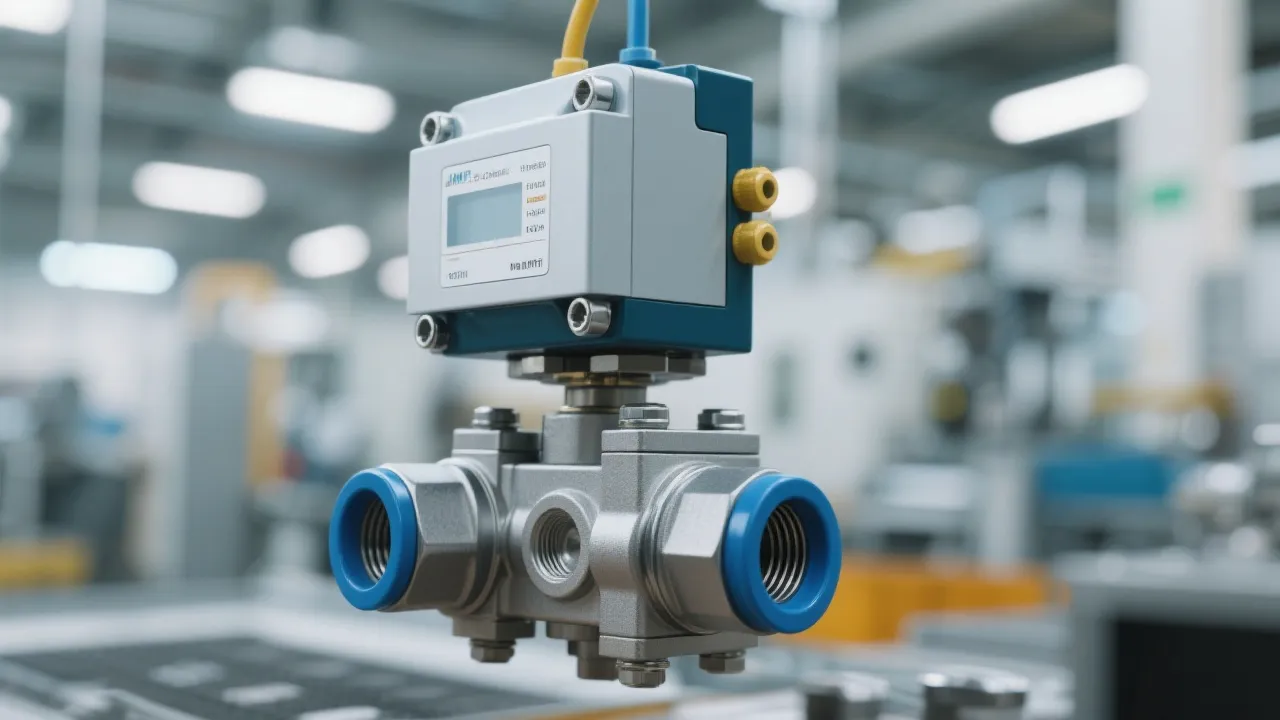
Understanding Proportional Valves
Proportional valves are hydraulic components vital for controlling fluid flow and pressure with high precision in various industrial applications. Their importance in automation and manufacturing settings stems from their ability to offer variable output in response to input signals, greatly enhancing system efficiency and performance.
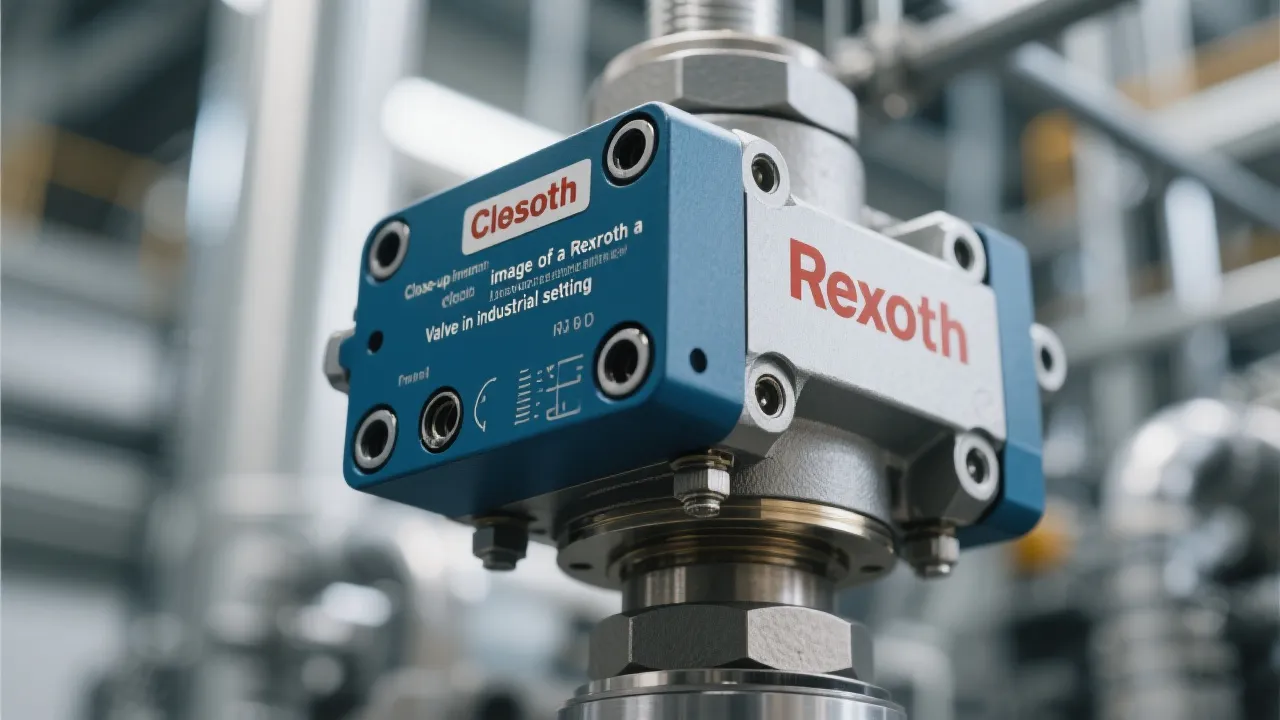
Understanding Rexroth Valve Systems
Rexroth Valves are quintessential components in various industrial applications, known for their precision and reliability. These hydraulic, pneumatic, and electrohydraulic valves regulate fluid flow in machinery, ensuring optimal performance and safety. Understanding their functionality and benefits is crucial for industries seeking efficiency and sustainability in their operations.

Unveiling Thermo Fisher Chromatography
This article explores the pivotal role of Thermo Fisher Chromatography in modern analytical science. Chromatography is crucial for separating compounds within mixtures, making it indispensable in industries such as pharmaceuticals and environmental testing. Thermo Fisher Scientific stands out in this field for its innovative solutions, leading to improved accuracy and efficiency in research and development.

Understanding Corrosion Inhibitor Manufacturers
In today's industrial landscape, corrosion inhibitor manufacturers play a crucial role in safeguarding equipment and infrastructure against corrosive damage. These manufacturers provide specialized chemicals that prevent corrosion in various environments, including industries such as oil and gas, marine, and construction. Understanding their operations and offerings is essential for selecting the right supplier and maintaining asset longevity.
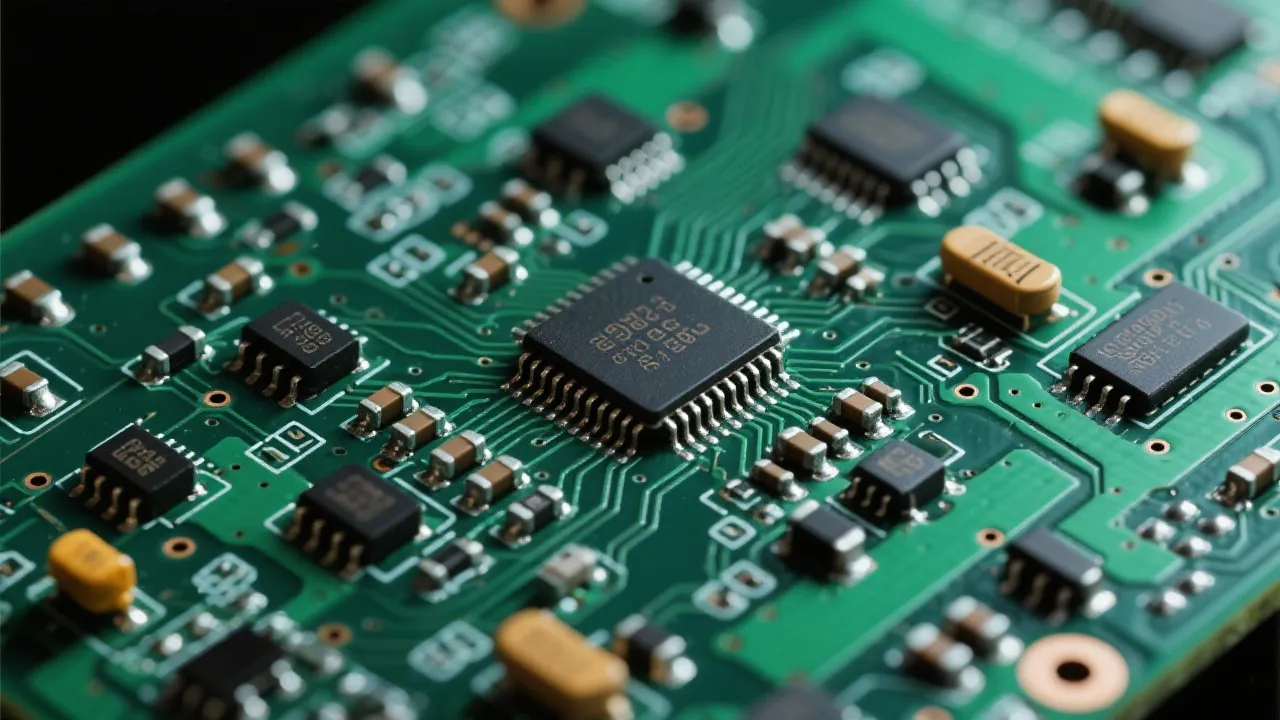
Analyzing Lm66100 Digikey Components
This article offers an in-depth analysis of the Lm66100 component available through Digikey, a renowned distributor of electronic components. The Lm66100, a load switch, is integral in industry applications, providing efficient power management. This piece explores its features, applications, and availability through Digikey, while offering a comprehensive guide for industry professionals seeking to optimize their electronic designs.

Leading Corrosion Inhibitor Suppliers
Corrosion inhibitor manufacturers play a crucial role in protecting materials from degradation. These companies specialize in creating chemical compounds that slow down or prevent the corrosive effects on various surfaces, especially metals. Understanding their production processes and solutions offered is vital for industries reliant on metal infrastructure.
