This guide explains how to evaluate Rentpayment Reddit discussions, verify rent-payment claims, and protect personal and financial information. Reddit is a user-generated discussion platform where tenants, landlords, and property professionals exchange experiences about payment portals, processing delays, fees, receipts, disputes, and account security. Its posts can provide useful context, but official lease documents, property managers, banks, regulators, and consumer-protection agencies remain more reliable sources for decisions.
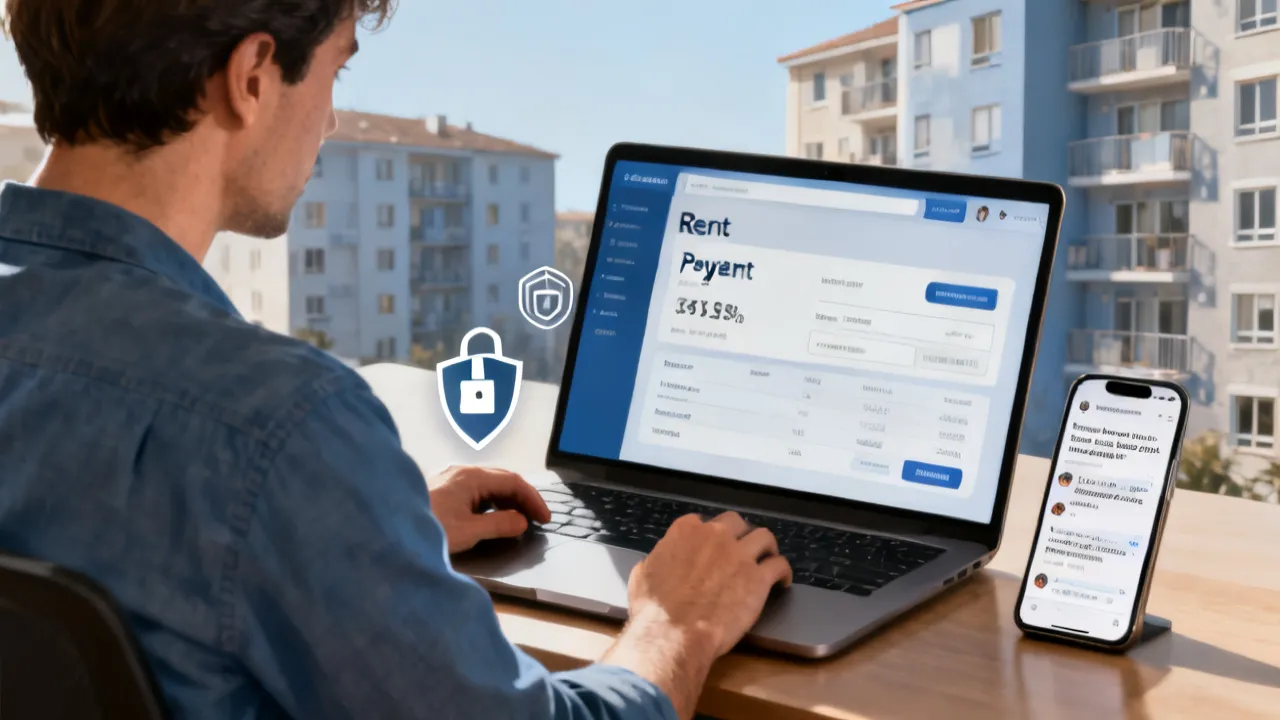
People searching for “Rentpayment Reddit” are usually trying to solve a practical problem: identifying a payment service, understanding an unexpected charge, checking whether a transaction has posted, or deciding how to respond when a landlord says rent was not received. Reddit discussions can reveal recurring questions and personal experiences, but they should be treated as informal commentary rather than definitive financial, legal, or housing advice.
The very important principle is simple: verify every material claim through an authoritative source before sending money, changing payment instructions, or disputing a transaction. The lease, written instructions from the property manager, the payment provider’s official support channel, bank records, and applicable housing regulations should carry more weight than an anonymous comment.
From an industry perspective, online forums are useful for identifying patterns. They are much less reliable for establishing whether a specific payment was properly made, whether a fee is permitted, or whether a particular platform is responsible for a delay. A discussion may describe a real event while omitting important facts such as the lease terms, cutoff time, payment method, account verification status, or the sender’s jurisdiction.
It is also important to distinguish between a company name, a payment feature, and a general search phrase. “Rent payment” may refer to a landlord’s private portal, a third-party service, a bank bill-pay product, a card-processing page, or an online listing that uses similar language. A Reddit post that mentions one of these may not relate to the service a reader is using. Before relying on a comment, confirm the exact website, application, company, and payment method involved.
Rent payment issues are often time-sensitive. A tenant may have initiated a transfer but not yet received a confirmation. Another person may be comparing payment portals after moving into a new apartment. Someone else may have noticed a convenience charge, a rejected bank transfer, or a request to use a newly supplied payment account.
These situations lead people to search Reddit because forum posts can be easier to find than formal documentation. Users often describe the exact wording of an error message, explain how long a transaction appeared to take, or compare experiences with similar rental arrangements. That practical detail can help a reader formulate better questions for a landlord, property manager, bank, or payment provider.
However, search results can create a false sense of certainty. A highly visible comment may reflect one unusual incident rather than the normal operation of a service. A post may also be outdated, especially when payment platforms change their policies, interfaces, processing partners, or security procedures. The safest approach is to use Reddit as a starting point for investigation, not as the final source of truth.
Search engines may also display snippets without the surrounding context. A headline such as “payment never arrived” does not explain whether the sender used the correct account, whether the transaction was returned, or whether the recipient’s ledger was simply updated late. Read the complete discussion, note the date, and look for follow-up comments before treating an anecdote as a useful comparison.
Although services differ, digital rent payments generally involve several stages:
A payment can therefore show different statuses at different points in the process. “Submitted,” “authorized,” “processing,” “posted,” and “settled” do not necessarily mean the same thing. A tenant who sees a confirmation screen may still need to wait for the recipient’s ledger to update. Conversely, a bank statement showing a debit does not always prove that the landlord’s account has received and credited the funds.
Industry professionals generally recommend retaining evidence for each stage. Useful records include the date and time of authorization, amount, transaction reference, confirmation email, bank statement, portal receipt, and any written communication with the property manager. These records can help distinguish a technical delay from a failed transaction or a disagreement about lease compliance.
Processing can involve more than one calendar. The portal may operate continuously, while the bank only settles certain transactions on business days. A payment submitted late on a Friday may not move through the same stages until Monday or the next banking day. A holiday may affect settlement even if the tenant receives an immediate electronic confirmation. The displayed “payment date” may therefore differ from the date shown on a bank statement or property ledger.
When reviewing Rentpayment Reddit discussions, readers should assess the information in layers. First, identify what the poster directly experienced. Second, separate that experience from the poster’s interpretation. Third, determine whether the circumstances match your own lease, location, payment method, and account status.
For example, a post may state that a transfer “disappeared.” That phrase could refer to several different events:
Reddit comments may help identify questions to ask, but they cannot resolve which explanation applies to a particular account. That determination requires transaction records and direct confirmation from the responsible institutions.
A useful reading habit is to label each statement mentally as either an observation, an opinion, or a conclusion. “My bank shows a debit dated May 1” is an observation. “The portal is slow” is an interpretation. “The landlord violated the law” is a legal conclusion. The first may be supported by a bank record, the second requires technical investigation, and the third may require jurisdiction-specific legal analysis.
Not all posts provide the same evidentiary value. A careful reader can look for several indicators of reliability without assuming that any one indicator proves accuracy.
| Indicator | What It May Suggest | Why Caution Is Still Needed |
|---|---|---|
| Detailed timeline | The writer may have documented the sequence of events carefully. | Details can still be incomplete or interpreted incorrectly. |
| Redacted screenshots | The post may show a transaction status or error message. | Images can be edited and may omit important account context. |
| Multiple independent reports | A recurring issue may deserve further investigation. | Users may be repeating the same unverified claim. |
| References to official correspondence | The writer may have contacted a provider or property manager. | Readers should verify the information through the official channel. |
| Confident legal conclusions | The post may attempt to interpret housing or payment rules. | Legal requirements vary by jurisdiction and individual facts. |
Account age and post popularity are weak indicators by themselves. A newer account may describe a genuine issue, while a long-established account may still be mistaken. Similarly, a large number of upvotes reflects reader reaction, not professional verification.
Look for updates. A post made on the date of a problem may present only the tenant’s initial assumption, while a later edit may explain that the payment was ultimately returned or credited. Comments can contain corrections, but they may also introduce additional speculation. The most useful discussions often include a documented outcome and a clear explanation of what the user learned from the provider or property manager.
Readers should also be alert to commercial promotion. Some comments may recommend a service because the writer genuinely likes it; others may be affiliate marketing, reputation management, or unsupported advertising. A recommendation is more useful when it discloses relevant limitations, costs, and circumstances rather than presenting the platform as universally reliable.
Processing time is one of the very frequent subjects in rent-payment discussions. The expected timeline may depend on the payment rail, the day and time of submission, weekends, public holidays, bank review procedures, and the platform’s internal reconciliation schedule.
A tenant should distinguish between the date a payment was initiated and the date it was received or credited. If a lease requires payment by a particular date, the relevant standard may be defined in the agreement or local law. Some arrangements focus on the date the tenant authorizes payment; others focus on when the landlord receives the funds. Because the legal and contractual rules differ, a Reddit answer cannot replace a review of the lease and applicable regulations.
If a payment is delayed, the tenant should preserve the confirmation, contact the property manager in writing, and ask the payment provider for the transaction status. Clear, factual wording is preferable: state the amount, date, reference number, and current status without speculating about blame.
It is also wise to ask whether the delay is ordinary or exceptional. A provider may publish estimated delivery times, but those estimates are not always guarantees. If a deadline is approaching, notify the property manager before the deadline rather than waiting until after a late notice is issued. Early written communication can demonstrate that the tenant acted responsibly, even though it does not automatically eliminate a contractual or legal consequence.
Forum users often ask whether a payment fee is legitimate. The answer may depend on the lease, consumer-protection rules, payment method, and the identity of the party imposing the charge. A platform convenience charge, a returned-payment charge, a late fee, and a bank fee are different categories that should not be treated interchangeably.
Before authorizing a payment, examine the displayed amount and any separate charge. Save the terms shown at checkout, particularly if the amount differs from the rent stated in the lease. If a charge appears unexpectedly, request an itemized explanation from the property manager or provider.
Regulatory standards may vary considerably. In the United States, consumers can consult agencies such as the Consumer Financial Protection Bureau and the Federal Trade Commission for general information about payment practices and fraud prevention. State and local housing agencies may publish separate rules concerning rent collection and tenant notices. These sources provide broader guidance, while the lease and transaction documents determine the facts of an individual case.
When comparing methods, calculate the total cost over a full year rather than focusing only on one transaction. A small monthly convenience charge may become significant over twelve months. At the same time, the least expensive option may not be suitable if it has long processing times, limited records, or a high risk of rejection. Ask whether the fee is mandatory, whether an alternative fee-free method is available, and whether the charge appears before authorization.
A landlord or management company may change software providers, banking arrangements, or account instructions. Such changes require careful verification because payment redirection is a known fraud risk. A message that suddenly instructs a tenant to send rent to a new account should not be acted upon solely because it appears to come from a familiar email address.
Confirm changes through a trusted channel already established in the lease or prior correspondence. For example, call the property manager using a number from the lease or the official management website rather than a number contained only in the new message. Ask the representative to confirm the new recipient, effective date, payment method, and whether prior instructions have been withdrawn.
When possible, use a second form of verification. A tenant could call the management office and then request that the new instructions also appear in the authenticated resident portal. The goal is not to create unnecessary delay but to prevent a single compromised email account from controlling a high-value transfer.
A payment may be rejected because of incorrect bank information, insufficient account balance, an expired card, a security review, a transaction limit, or a platform configuration problem. A reversal may occur after an initial authorization if the transaction cannot be completed or is later disputed.
Do not immediately submit repeated payments without determining what happened to the first attempt. Duplicate payments can create additional reconciliation problems. Instead, document the original transaction and ask both the payment provider and the recipient whether the funds are pending, returned, or settled.
Ask for the reason code or plain-language explanation if one is available. “Failed” may not explain whether the problem was a technical outage, account information error, insufficient funds, or a compliance review. The reason can determine the appropriate next step and may reveal whether the tenant needs to update payment credentials before trying again.
A receipt is valuable, but its meaning depends on the status it records. Some receipts confirm that a request was submitted; others confirm that funds were successfully collected. The wording matters.
Strong documentation usually includes:
Keep documents in a secure location. Publicly posting a full receipt, bank statement, account number, barcode, or confirmation code can expose sensitive information. If a screenshot is necessary for a private support request, redact credentials and unrelated transactions.
For paper payments, proof may include a copy of the check or money order, the purchase receipt, a delivery confirmation, and a receipt signed or issued by the property manager. A photograph of a money order alone may show that the instrument was purchased, but not necessarily that it was delivered, deposited, or credited to the correct account.
Rent-related posts can contain information that criminals use for social engineering. A public discussion may reveal a property name, building address, management company, payment schedule, email format, or partial financial details. Even seemingly minor clues can make a targeted message appear credible.
Readers should never share passwords, one-time authentication codes, full bank account numbers, card numbers, government identification numbers, or security answers in a forum. A legitimate payment provider should not require a user to publish such information in a discussion thread.
Use a unique password for the payment account and enable multifactor authentication when available. Keep the operating system, browser, and security software updated. Access the payment portal by typing a known address or using an established bookmark rather than clicking an unexpected message.
Be particularly cautious of messages that create urgency. Statements such as “send the payment within the next hour or lose the apartment” should be verified independently. Urgency is not proof of fraud, but it is a reason to slow down and confirm the request.
Security also includes protecting the devices used to make payments. Avoid entering financial information on a public computer or an unsecured wireless network. Review browser extensions and app permissions, and log out of shared devices. If an account behaves unusually, such as showing changed contact information or unfamiliar login activity, secure the account before attempting another payment.
Fraud can occur through email, text message, social media, online listings, or compromised accounts. The following warning signs deserve additional verification:
These signs do not automatically establish fraud, but they justify independent confirmation. Tenants who suspect a scam should contact the real property manager, bank, payment provider, and relevant consumer-protection authority. If money has already been sent, prompt contact with the bank or payment institution may improve the chance of tracing or stopping the transaction, although no outcome can be guaranteed.
Do not confront a suspected scammer by disclosing what security information you possess or by sending a test payment. Preserve the original message, including its headers or technical details when available, and report it through the appropriate platform. If the scam involves a rental listing, report the listing to the website where it appeared. If personal information was exposed, consider additional identity-protection steps.
Locate the sections addressing rent amount, due date, grace periods, acceptable payment methods, processing charges, late charges, returned payments, and notice requirements. Also review written payment instructions that were provided during move-in or later confirmed through a trusted channel.
Write down the amount, submission date, time, method, confirmation number, recipient, and current status. Avoid relying only on memory or a temporary portal display. Download or save the relevant confirmation where the system permits.
Determine whether the transaction is pending, completed, reversed, or absent. A pending debit may not represent final settlement. An account balance change may also include a separate authorization hold or charge.
Use the provider’s official support process. Ask specific questions: Has the transaction been accepted? Is it awaiting settlement? Was it rejected or returned? Has the recipient been credited? Is any action required from the sender?
Provide the transaction reference and a concise timeline. Request confirmation of whether the property ledger has been updated. Written communication creates a clear record and reduces the risk of misunderstandings caused by telephone conversations alone.
Do not submit another payment simply because the portal is slow to update. If a second payment is necessary to avoid a contractual problem, obtain written guidance on how the original transaction will be handled if it later settles.
If the provider or property manager does not resolve the issue, consider contacting a tenant-support organization, housing agency, bank complaint department, or qualified legal professional. The appropriate avenue depends on the location, amount involved, urgency, and nature of the dispute.
When communicating, avoid making unsupported accusations. A message such as “My records show that I authorized $1,500 on June 1 under confirmation number ABC123. The portal still shows processing, and my bank shows a pending debit. Please confirm whether the payment has been received and advise whether any further action is required” is more effective than a message that simply says “You lost my rent.” Factual communication makes it easier for the recipient to investigate.
Tenants sometimes use Rentpayment Reddit discussions to compare bank transfers, debit cards, credit cards, checks, money orders, and property-management portals. No single method is ideal for every household. The decision should consider documented acceptance by the landlord, processing time, cost, dispute procedures, security, and proof of payment.
| Payment Method | Potential Advantages | Points to Verify |
|---|---|---|
| Property-management portal | May connect the payment to the tenant ledger and generate an electronic record. | Processing times, service charges, account security, and whether the portal is required by the lease. |
| Bank transfer | Can move funds directly between financial accounts and may support recurring arrangements. | Recipient details, cutoff times, return procedures, and the level of payment protection. |
| Debit or credit card | May provide a familiar interface and rapid authorization. | Service charges, transaction limits, authorization versus settlement, and dispute rules. |
| Check | Creates a physical payment instrument and may be accepted under traditional lease arrangements. | Delivery time, deposit timing, returned-check provisions, and the need for a receipt. |
| Money order | Can provide a paper record without exposing a personal check account number to the recipient. | Purchase receipt, delivery confirmation, replacement process, and acceptance requirements. |
The safest method is normally the one authorized by the lease and supported by a clear, verifiable record. A payment method that appears convenient may create problems if it is not accepted by the landlord or if the transaction cannot be traced easily.
Payment protection also differs by method. Card transactions may have a dispute process, but disputing a legitimate rent payment can create complications if the tenant’s account is then treated as unpaid. Bank transfers may be difficult to reverse once completed. Checks can be stopped under some circumstances, but stopping a valid rent payment may itself create contractual issues. Understand the consequences before using a dispute or reversal feature.
Automatic payments can reduce the likelihood of forgetting a due date, but they also require regular monitoring. Before activating recurring payments, confirm the amount, schedule, end date, account used, and procedure for cancellation. A rent increase, lease renewal, utility adjustment, or one-time charge can make an old recurring instruction inaccurate.
Review the account after each scheduled payment, especially during the first few cycles. Check that the correct amount was withdrawn and that the property ledger reflects the payment. Keep a record of cancellation requests and obtain confirmation when the instruction has been removed.
Autopay should not be viewed as a substitute for reviewing the lease. It also does not necessarily eliminate late-payment risk if the payment is rejected, delayed, or submitted after the relevant cutoff. The tenant remains responsible for understanding the contractual requirements.
Before using autopay, check whether the system processes the payment on the selected date or merely initiates it on that date. Some platforms allow a scheduled date but warn that settlement may require additional business days. A tenant who needs funds to arrive by a particular deadline should understand that distinction and schedule accordingly.
Payment problems do not always originate with tenants. Property managers should provide consistent instructions, identify authorized payment methods, explain applicable charges, and maintain accurate ledgers. When systems change, residents should receive clear notice through a channel that can be authenticated.
From an operational standpoint, property managers should reconcile payment records regularly and distinguish between submitted, pending, returned, and settled transactions. They should avoid treating an unverified portal status as proof of nonpayment without examining the transaction history.
Tenants can reasonably request a ledger or written explanation when the account does not match their records. The response should identify the relevant date, amount, charge category, and correction process. If a dispute remains unresolved, both parties benefit from preserving a complete chronology rather than relying on informal forum commentary.
A property manager should also explain how partial payments, overpayments, roommate payments, and payments made by third parties are credited. A transaction may have settled successfully but been assigned to the wrong unit or account because the tenant used an incorrect reference number. Asking about these procedures before a problem occurs can prevent confusion later.
Housing law is highly dependent on jurisdiction and facts. Rules concerning due dates, grace periods, late charges, payment methods, notices, security deposits, electronic transactions, and eviction procedures may differ between countries, states, provinces, and municipalities.
A Reddit user may accurately describe the rule in one area while giving an incorrect answer for another. Even within the same jurisdiction, the lease type and property status may affect the result. Readers should therefore consult official government housing resources, consumer-protection agencies, legal-aid organizations, or licensed attorneys when the issue involves a substantial amount, a notice to vacate, an eviction filing, discrimination, retaliation, or a threatened loss of housing.
Official sources are also preferable when a question concerns electronic fund transfers, unauthorized transactions, or data security. In the United States, federal agencies such as the Consumer Financial Protection Bureau and Federal Trade Commission publish consumer guidance, while state agencies may provide location-specific housing information. Readers in other countries should consult the relevant financial regulator and housing authority.
Do not assume that a forum comment saying “the landlord cannot do that” is enough to ignore a written notice. If a notice has been served, read it carefully, preserve the envelope or delivery record, and seek timely advice. Deadlines for responding, paying, requesting repairs, or appearing in court can be short. Online discussion may be useful for finding a local resource, but it should not delay obtaining qualified assistance.
If a tenant chooses to seek general perspectives on Reddit, a well-structured question is more likely to produce useful responses. The post should describe the issue without exposing private information.
Helpful details may include:
Do not publish personal names, account numbers, confirmation codes, full receipts, login details, or identifiable images of other residents. Replace sensitive information with neutral labels such as “[property manager]” or “[transaction reference removed].”
Readers should also state what kind of help they need. A question asking for technical troubleshooting is different from one asking for legal interpretation. Clear wording discourages speculation and helps other users identify the limits of their own experience.
For a technical question, include the device type, browser or application, general error message, and whether the problem affects one payment or every attempt. For a payment dispute, provide a timeline instead of a long emotional narrative. For a legal question, identify the jurisdiction and quote the relevant lease language without sharing identifying information. These practices make responses more precise while protecting privacy.
A useful professional framework is to classify the issue before choosing a response.
The portal will not load, the password reset fails, or the payment status does not display correctly. The payment provider’s support team is usually the first contact, while screenshots and browser details may assist troubleshooting.
The tenant and landlord disagree about the due date, accepted method, fee, or proof required. The lease and written notices become central, and local housing rules may need to be reviewed.
The account was charged incorrectly, a transaction was duplicated, funds were withdrawn without authorization, or a payment was redirected. The bank, card issuer, or payment provider should be contacted promptly, with all transaction evidence preserved.
Many disputes involve more than one category. A technical error can create a contractual deadline issue, while a payment redirection scam can create both a financial and housing problem. Identifying the categories helps the tenant contact the right institutions in the correct order.
There may also be a communication problem. The tenant may believe the payment was received because an automated email was sent, while the property manager may be looking at a ledger that has not yet reconciled. Asking both sides to identify the exact status and source of their information often reveals that the disagreement concerns terminology rather than the existence of the payment itself.
Good records are often more useful than a long online discussion. Create a chronological file containing the lease, payment instructions, confirmations, bank records, portal notices, emails, text messages, and notes of telephone calls. For each call, record the date, department, representative name if provided, and summary of the conversation.
Use original files when possible rather than relying on cropped screenshots. Keep copies in a secure location, and protect documents containing sensitive data. If a dispute escalates, an organized timeline can help a bank investigator, housing counselor, mediator, or attorney understand the matter efficiently.
Do not alter records in a way that could obscure their original context. If you redact information for privacy, preserve an unaltered copy securely and explain what was removed in any formal submission.
For digital records, save the complete email rather than only the visible text when possible. Email headers may help establish the sender, route, and date, although they do not by themselves prove that an account was not compromised. For portal records, record the web address, date accessed, and status displayed. Keep records until the payment has been reconciled and any applicable dispute or notice period has ended.
If a tenant believes a payment was unauthorized, prompt action is important. Contact the bank, card issuer, or payment provider through an official channel and ask about reporting, cancellation, investigation, and account-protection procedures. Change compromised credentials and enable additional account safeguards.
Notify the property manager if the transaction was intended to pay rent. Explain that the payment is under investigation and provide the relevant reference number without sharing sensitive authentication information. Ask how the property account will be handled while the investigation proceeds.
Whether the tenant remains responsible for rent during a payment dispute depends on the facts, lease, and applicable law. A forum response cannot determine that outcome. Obtain guidance from an appropriate housing or legal resource if the dispute creates a risk of late charges, a formal notice, or loss of housing.
Keep copies of every fraud report and ask for a case number. If the issue involves identity theft, review other accounts for suspicious activity and consider whether credit monitoring or a fraud alert is appropriate in the relevant jurisdiction. Do not assume that opening a bank investigation automatically informs the landlord; communication with the property manager may still be necessary.
Online commentary can reveal practical frustrations, but a balanced assessment should include primary documentation. Before using a platform, review its official terms, privacy policy, support procedures, payment timing disclosures, cancellation rules, and charge explanations. Confirm that the service is actually authorized by the property manager or landlord.
Important questions include:
These questions are more informative than relying on a single rating or anecdote. A responsible evaluation considers both the platform’s stated policies and the tenant’s actual lease obligations.
Examine whether support is available during the times payments are most likely to require attention, such as weekends or the end of a month. Check whether the service provides a transaction identifier that can be shared with the property manager. A platform may be technically functional but still difficult to use if its records do not clearly identify the property account or payment status.
Payment systems should also be evaluated from the perspective of accessibility and household circumstances. A tenant may not have reliable internet access, may use assistive technology, may share financial responsibility with a roommate, or may need to pay from an account that is not in the tenant’s name. These circumstances can affect whether a portal is practical and whether a payment is correctly credited.
Ask the property manager how the system handles authorized representatives, multiple occupants, third-party assistance, and alternative payment methods. If a digital process is inaccessible or unavailable, document the problem and request a workable alternative through a written channel. Local law may impose additional requirements, but those requirements should be confirmed through an appropriate authority rather than assumed from a forum comment.
Roommates should agree in advance about who submits the payment, how confirmation is shared, and how service charges are divided. When each roommate pays separately, the property manager may need specific instructions to apply the amounts correctly. A private agreement among roommates does not necessarily change the landlord’s view of whether the full rent was received.
This checklist is deliberately straightforward. Very payment disputes become more difficult when tenants cannot establish what they authorized, when they authorized it, or where the funds were directed.
Before sending a large payment, especially after an account change, consider performing verification during normal business hours. If the property manager cannot confirm the instructions, waiting briefly may be safer than sending funds to an unverified destination. If a contractual deadline makes waiting impossible, document the attempted verification and seek immediate advice from the bank and an appropriate housing resource.
If a second payment is made, label the communication clearly so the property manager understands that the first transaction may still be pending. Request written confirmation about refunds, credits, or adjustments. Compare both transaction references with the final ledger to ensure that the account was not charged twice.
Generally, a Reddit discussion is not an official customer-support channel unless a verified representative clearly identifies the organization and directs users to an authenticated support process. Even then, private account matters should be handled through the provider’s official system, not in public comments.
No. A post may describe a genuine experience, but it does not establish the provider’s ownership, authorization, security practices, or suitability for a particular lease. Verify the service through the property manager, official company information, regulatory resources, and written terms.
Check the provider’s definition of “pending,” review your bank or card account, and contact official support. Notify the property manager with the transaction reference. Avoid submitting a duplicate payment until you understand whether the original transaction may still settle.
Not necessarily. Some confirmations show that a payment request was submitted or authorized, while others confirm settlement. Read the language carefully and ask the provider or property manager whether the tenant ledger has been credited.
The answer depends on the lease and applicable law. Review the written agreement and local housing rules. If the required platform imposes a charge or creates an accessibility problem, ask the landlord for clarification and consult a housing authority or qualified adviser where necessary.
Verify the change through a trusted, previously established contact method. Do not rely solely on the message that announced the change. Confirm the recipient, effective date, and payment procedure before sending funds.
Posting a complete receipt is risky because it may expose transaction references, account details, names, property information, or other sensitive data. If a screenshot is needed for general discussion, remove identifying information and avoid publishing any credential or authentication code.
They may offer general perspectives, but legality depends on the jurisdiction, lease, notice history, payment timing, and other facts. Consult the written agreement and an official housing or consumer-protection source before drawing a conclusion.
Contact the bank or payment provider immediately and ask whether the transaction can be recalled, traced, or disputed. Notify the intended property manager and preserve the payment instructions that led to the error. The available remedies depend on the payment method and timing.
Be cautious when a message creates unusual urgency, changes bank details, requests sensitive credentials, uses an unfamiliar domain, or proposes a payment method inconsistent with the lease. Confirm the request independently before taking action.
Recurring payments can be convenient, but they require monitoring. Confirm the schedule, amount, account, cancellation process, and treatment of lease changes. Review each payment and keep evidence of any modifications or cancellation requests.
The lease, official payment-provider documentation, bank records, written communication from the property manager, government housing agencies, financial regulators, consumer-protection authorities, and qualified legal professionals are generally more authoritative for decisions affecting money or housing.
Keep records for at least as long as reasonably necessary under the lease, applicable dispute periods, tax or benefit requirements, and any unresolved housing matter. If a dispute, notice, or investigation exists, retain all related records until it has been fully resolved.
Send the property manager the settlement confirmation, transaction reference, amount, and date, and request a written ledger correction. Contact the payment provider if the recipient information appears incorrect. Do not assume that a settled transaction was applied to the correct unit without checking the ledger.
Rentpayment Reddit searches can be valuable when used to discover terminology, compare general experiences, and identify questions that deserve investigation. They are not a substitute for transaction records, lease review, official support, or jurisdiction-specific advice.
The strongest approach combines online research with disciplined verification: authenticate payment instructions, understand transaction statuses, preserve receipts, protect personal information, and communicate in writing when a payment problem occurs. Tenants who follow those steps are better positioned to distinguish a routine processing delay from a duplicate charge, an account error, a contractual dispute, or a potential scam.
For any matter involving significant financial loss, unauthorized transfers, eviction risk, discrimination, retaliation, or unclear legal obligations, seek help from the appropriate bank, housing agency, consumer-protection authority, tenant-support organization, or licensed professional. A forum can start the inquiry, but accountable institutions should guide the final decision.
Striking the Perfect Balance: Navigating Premiums and Out-of-Pocket Expenses in Senior Insurance Plans

Explore the Tranquil Bliss of Idyllic Rural Retreats

How to Make Lasting Memories at Disneyland Attractions

Affordable Phones and Plans for Seniors

Affordable Full Mouth Dental Implants Near You

Unlock the Top Kept Secrets to Finding Your Ideal Dentist for Flawless Dental Implant Results!

Discovering Springdale Estates

Unveiling RS Sul Telecom Services
The Guide to Car Trading

Discovering Springdale Estates
Springdale Estates, a charming neighborhood nestled in the dynamic city of Austin, TX, is a locale famed for its picturesque residential environment and vibrant community. The area is known for its appealing blend of modern living and natural surroundings, offering a quality lifestyle to its residents. This article explores the essential aspects of Springdale Estates Austin Tx, providing insights into its real estate market and community life.

Discover Garland Estates' Luxury Living
Garland Estates represents the epitome of luxurious residential living, offering modern amenities and stylish architecture in a serene setting. Known for its sophisticated design and top-notch facilities, Garland Estates provides an exceptional living experience that caters to individuals who appreciate elegance and comfort. This article explores the various attributes that define Garland Estates as a premier living destination.

Discover Westminster Plaza Orlando
Westminster Plaza Orlando is a premier accommodation choice in the vibrant city of Orlando, offering visitors an exceptional blend of luxury and convenience. Known for its proximity to key attractions and superior amenities, this hotel provides an ideal base for tourists and business travelers alike, contributing significantly to Orlando's hospitality sector.

Navigating Cultural Heritage with Nic Map
This guide explores the role of Nic Map in identifying and analyzing locations of historical and cultural significance. Designed for enthusiasts and experts alike, Nic Map serves as a navigational tool, offering detailed insights into cultural sites, thereby fostering deeper appreciation and research into our global heritage.

Discover Terrace Apartments Nearby
Terrace Apartments offer unique living experiences with stunning views and comfortable amenities, often situated in picturesque and convenient locations. These distinctive residential options are increasingly popular among urban dwellers seeking a harmonious blend of nature and modern living, reflecting the vibrant culture and dynamic lifestyle.

Discovering 55places in Florida
Explore 55places in Florida, a leading resource for active adult communities. Florida, known for its warm climate and vibrant lifestyle, is a popular destination for retirees seeking a community that offers a balance of leisure and social activities. With numerous listings and detailed community reviews, 55places provides invaluable insights for those considering relocation to this attractive state.