This guide explains how to complete Bank Account Opening efficiently, what documents you typically need, and how fees and account features compare. It provides objective background on why KYC checks, account type selection, and access channels matter, then offers a step-by-step framework, clear conditions, and FAQs to support confident decision-making.

Bank Account Opening is the process of establishing a new deposit account with a regulated financial institution so you can receive funds, manage payments, store money safely, and access banking services such as debit cards, online transfers, bill pay, and direct deposits. Although the activity can feel simple—fill out a form, show an ID, sign a few documents—what actually happens behind the scenes is a structured onboarding workflow designed to protect both you and the bank.
For most people, the earliest stage of this workflow is where the most important decisions are made. Selecting the right account type, understanding the terms that control fees and access, preparing compliant identification for KYC/AML screening, and recognizing minimum balance rules all influence whether the account becomes “effortless banking” or “unexpected friction.” In other words, your experience doesn’t begin when you receive your debit card; it begins when you decide what to open, how to apply, and what you’re willing to maintain each month.
From an industry-expert perspective, the safest and most efficient approach is to treat Bank Account Opening as a checklist-driven workflow rather than a single conversation at a counter. The quality of your documents, the accuracy of your personal details, and your awareness of account terms largely determine how smoothly the application proceeds. Banks may be friendly and helpful, but they still must follow verification procedures, record-keeping requirements, and risk checks—so the quality of your preparation often translates directly into approval speed.
Financial institutions must follow KYC (Know Your Customer) and AML (Anti–Money Laundering) requirements. These controls help verify identity, reduce fraud risk, and comply with regulations that govern how banks prevent illicit activity. Even when you’re opening an account for everyday use—salary deposits, bill payments, receiving remittances, or saving for a short-term goal—banks still perform structured verification checks.
Practically, this means your application may be reviewed not only for document validity, but also for consistency across forms, address history, and the source of funds information you provide when relevant. If anything is unclear—such as an ID that is expired, an address that doesn’t match supporting documents, or a name mismatch due to spelling or order—banks may request clarification or additional documentation to complete due diligence.
Understanding this helps you avoid frustration. Many applicants assume delays indicate incompetence or “slow processing.” In reality, delays often reflect the bank performing additional compliance steps. Some banks can complete verification quickly when documents are clear and data is consistent. Others must pause the process when a risk trigger occurs (for example, an unusual combination of information, an unreadable scan, or limited proof of address). If you know this up front, you can respond faster and provide better information the first time.
It’s also important to recognize that KYC/AML is not only about identity; it also supports the bank’s obligation to keep your account operational and safe. Strong compliance practices reduce the risk of account takeover, identity fraud, and money laundering attempts that could otherwise compromise customer funds and the bank’s regulatory standing.
Bank Account Opening is not one-size-fits-all. Different account types are designed for different needs, and choosing the wrong one can create unnecessary fees or functional limitations that only become obvious after you start using the account.
Before you even shortlist banks, think about your “daily banking behavior.” Are you primarily using the account for receiving salary or benefits? Paying bills and managing recurring payments? Sending money to others using transfers? Taking cash out at ATMs? Keeping a small balance as a buffer? Planning to save and accumulate interest? The account type you choose should align with the way you actually live financially.
Common account types include:
Industry practitioners typically recommend mapping your “must-haves” first—direct deposit, card access, online banking, international transfers (if needed), bill pay, cash withdrawal availability—and then comparing accounts that match those requirements. Instead of choosing the “cheapest” account based on a single fee, compare the account’s full feature set and the conditions attached to each feature.
For example, an account might advertise low monthly fees, but require a minimum balance to avoid charges. If your paycheck varies or you often dip below the threshold, that “low fee” may not be realistic. Conversely, a slightly higher-fee account might provide more convenient cash access, lower ATM surcharges, or free transfers—creating a better net outcome over time.
When people ask about pricing, they often imagine a single “account fee.” In reality, Bank Account Opening decisions usually depend on the total cost of ownership over time: recurring fees, transaction charges, card costs, and conditions tied to balance thresholds and usage patterns.
Because fees and pricing can vary by institution and account class, you should verify current terms directly with the bank you’re considering. As a general framework, compare at least the following pricing elements:
Expert guidance: compute an “expected monthly usage profile” (e.g., number of outgoing transfers, expected incoming deposits, typical balance range, ATM frequency). That profile often provides a clearer comparison than looking at a fee headline alone.
To make this more concrete, consider two hypothetical accounts:
If you get paid monthly into Account A and make few outgoing transfers, Account A can be cheaper. If you receive smaller or irregular payments and make many transfers, Account B may become cheaper. Pricing comparisons are rarely about averages; they’re about your actual usage pattern.
Many Bank Account Opening journeys share a predictable set of document categories, though exact requirements vary by jurisdiction and bank policy. Prepare documents that support identity and address verification to reduce delays and reduce the likelihood of manual review.
Common documentation categories include:
To reduce delays, ensure your details match exactly across forms and documents—names, dates, addresses, and document numbers. Inconsistent formatting can trigger manual review. For example, if your ID lists your name with a middle initial but your form spells out your middle name (or vice versa), the system may treat it as a mismatch and require human validation.
Legibility matters too. If you are uploading documents, ensure you capture the whole document, avoid glare, and keep the image in focus. Many compliance checks require machine readability; poor-quality uploads can lead to re-submission. A simple best practice is to take photos in bright, indirect light and avoid cropping too tightly.
Also, be aware that banks may verify addresses through multiple signals. If you recently moved, you may need to provide documents showing both your previous and current address, or explain the transition. Planning ahead can prevent “address verification” from becoming the bottleneck.
From a compliance standpoint, Bank Account Opening commonly follows a multi-step flow: pre-screening, identity verification, risk-based review, account setup, and then access provisioning (online banking credentials, debit card issuance, and transfer capabilities).
While the exact sequence depends on whether you open online or in-branch, expect the bank to confirm:
If you’re opening an account to receive salary or benefits, having your employer or payer details ready can speed up the setup of direct deposit or payment arrangements. For business accounts, the process may also include gathering information about business type, expected turnover, and how the business will transact.
In addition, many banks perform real-time or near-real-time checks against internal and external databases. These checks can sometimes produce false positives, especially if your personal data is common (similar names, similar addresses). If the bank contacts you to clarify information, respond quickly and provide accurate details.
Within financial services, “supplier” is often understood as the bank (and its operational structure) plus the channel you use—branch, online, or agent-assisted services. Different channels may change the friction level, but they do not change the compliance expectations. KYC/AML obligations remain regardless of channel.
Some customers prefer in-branch onboarding because they want direct support, immediate answers, and a guided review of documents. Others favor online opening for speed and convenience. Either way, the key is to confirm that the bank’s offered account features match your daily workflow and that the channel you choose can realistically meet your expectations for timelines and follow-up.
Below is a practical comparison of what many customers experience during Bank Account Opening:
| Factor | Branch Channel | Online/Remote Channel | What to Check |
|---|---|---|---|
| Speed | Often fast for identity checks; may still require backend verification | Can be fast, but may require follow-up verification if documents need re-check | Whether the bank issues provisional access immediately and what remains pending |
| Document Review | Usually verified in person; staff may confirm legibility on the spot | May involve uploads and automated checks | Whether your documents meet the required format and are captured clearly |
| Complex Cases | Often better for clarifying eligibility in real time | May escalate to manual review or request additional documents | Enhanced due diligence timelines and communication method (email, SMS, call) |
| Access Setup | May receive guidance on first steps; card delivery might still take days | Credentials may be provided digitally; card delivery may follow | How online banking login and card delivery are handled, and whether limits apply initially |
| Service Experience | Better for face-to-face problem solving | May rely on chat or phone support; responses vary | How to contact the bank if verification is delayed |
The workflow below is designed to be practical rather than theoretical. It reflects how banks typically manage onboarding while keeping the customer’s responsibilities clear. Use it like a pre-flight checklist so you don’t miss small details that can cause large delays.
While requirements differ by location and institution, these are common conditions that customers should be prepared for during Bank Account Opening:
One of the biggest practical surprises for new customers is staged activation. For example, you may be able to open the account and receive a debit card, but transfer limits might remain low until verification fully completes. Knowing this in advance helps you schedule important payments with buffer time.
In many regions, people treat Bank Account Opening as a straightforward administrative step. In practice, however, the “real” experience often depends on local expectations around paperwork, bank communication style, and customer support responsiveness.
If you’re walking into a branch, bring documents in a neat folder and be ready to answer short questions about your intended account use—salary payments, bill payments, regular transfers, and any special transactions you plan. A polite, prepared approach typically reduces back-and-forth. It also helps the staff process you faster because they don’t need to pause for clarifications.
Customers who prefer remote opening should also plan for potential follow-up checks. Even when the form is completed in minutes, verification may take additional time if uploaded documents require re-scanning or if automated checks can’t fully confirm them. If you know your documents could be borderline (for example, a proof-of-address file with small text), you can preempt delays by submitting a clearer alternative statement.
Another everyday practical tip: double-check that your phone number and email address are accessible. Many verification flows depend on receiving one-time passcodes or confirming contact details. If you’re opening the account while traveling or switching phone numbers, consider whether you can reliably receive those messages.
It’s also smart to ask about what happens if you change your address later. Some banks require a new proof-of-address document each time. Knowing the process early prevents compliance interruptions in the future.
Even though every bank and country is different, delays often come from a handful of predictable issues. If you want the smoothest path, focus on the most common “failure points” in the onboarding flow.
If you apply remotely and receive a request for additional information, respond quickly and with clear, complete documents. When you respond late, the bank may time out the request, forcing a re-submission and additional manual checks.
When customers think about Bank Account Opening, they often focus only on fees. While fees matter, the day-to-day experience is shaped by features that support your routines. Before you choose, consider a “lifestyle checklist” so your account fits your money movement patterns.
Key features to evaluate include:
When you align these features with your needs, you reduce the chance that your account becomes inconvenient later. This is particularly important if you expect frequent transactions, travel, or regular bill payments.
Bank Account Opening can become more complex when you open a joint account or a business account, or when your personal situation differs from the “standard” profile used in default onboarding flows.
Joint accounts are often helpful for couples, families, or shared expenses. However, joint account opening typically requires documentation and consent from all parties. You should be ready for:
Before applying, discuss expectations between holders. Joint accounts can reduce friction for households, but they also require aligned spending habits and clear communication about transactions.
Business accounts typically involve additional questions about revenue sources, expected transaction patterns, and purpose of funds. The bank may ask for:
If you run a side business, you might still benefit from a business account—especially if you want to separate personal and business transactions for clarity and tax organization. However, you must ensure that the account’s terms are compatible with your actual operations, such as accepting card payments or receiving invoiced payments.
Some banks offer student or newcomer accounts designed to reduce friction and simplify eligibility. Even in those cases, KYC/AML checks remain, but the account structure may reduce monthly costs and provide easier onboarding steps.
First-time customers often benefit from asking a direct question in the opening process: “What conditions must I meet to avoid monthly fees?” This single question can prevent confusion later. Similarly, if you’re a student, ask when the student account converts to an adult product and what documents or verification are required.
It’s easy to focus on monthly maintenance fees, but the effective cost of a bank account is often shaped by the “surprise fees” that occur when certain actions take place.
Common fee categories beyond monthly charges include:
If you want to minimize surprises, ask the bank for a fee schedule summary or request that they explain “how you get charged in real life.” A helpful approach is to share a realistic scenario: “If I withdraw cash once or twice a week and make three transfers a month, what are the typical charges?” This turns abstract fee schedules into a predictable cost model.
Even if most payments are digital, cash access still matters for emergencies, transportation, markets, and situations where cash is preferred. During Bank Account Opening, check:
A bank may offer a great online experience but still be inconvenient if cash withdrawal fees are high. If you anticipate frequent ATM usage, prioritize cash access in your comparison.
For many customers, the real milestone of Bank Account Opening is not just account approval—it’s the first time money moves reliably into and out of the account.
To prepare for “first payment” readiness, consider:
When you treat onboarding as a readiness process, you reduce stress. You’ll know your account can receive deposits and send payments when you need them.
Security is part of the account lifecycle. During Bank Account Opening, banks often require authentication setup, identity checks, and sometimes device verification. After activation, you can further protect yourself with basic security practices.
Key steps include:
If the bank offers card controls—such as temporarily blocking/unblocking transactions—you can use them to protect against unauthorized activity while traveling or during emergencies.
Sometimes Bank Account Opening does not conclude immediately. Delays may happen due to verification steps, document issues, or risk-based review. In some cases, an application may be rejected or require additional steps before approval.
If your application is delayed, treat it as a “verification completion” problem rather than a personal failure. Respond to requests quickly, provide clear documentation, and ask the bank what specifically is needed to complete approval.
If an application is denied, ask for the reason in terms you can act on. While banks may not disclose all internal compliance logic, they typically can identify whether the issue is related to documentation, address verification, eligibility, or information mismatch. If the denial is due to a correctable issue—like an address document mismatch—you can often reapply with corrected information.
It may also help to consider alternatives such as a different account type. For example, you might be eligible for a student account or a simplified product, depending on your situation. Still, remember that KYC/AML requirements remain and you must provide accurate information.
Finally, be careful with “fast account opening” offers that bypass verification. Legitimate banks will not skip KYC/AML for regulated customer onboarding. If a service claims to open an account without documentation, it is a red flag.
Very banks require proof of identity (often a government-issued ID) and proof of address (such as a utility bill, lease agreement, or official statement). Some cases may require extra information depending on account type (student, joint, business) and eligibility rules. If the bank asks for source-of-funds details, be ready to provide a clear explanation consistent with your profile.
Many institutions offer remote opening. However, verification requirements vary. If you have complex circumstances, document issues, or you want faster clarification, an in-branch review can simplify the process. Remote opening is often efficient when your documents are clear and your information is consistent.
Timelines depend on verification completion and risk-based checks. If all documents are clear and information matches, approvals are often quicker. If enhanced due diligence is triggered—such as additional documentation requests or manual review—the process can take longer. In practice, you should schedule important transactions with extra time buffer until all features are fully activated.
Some accounts may have monthly maintenance fees or transaction-based charges. Review the fee schedule and any minimum balance or activity conditions before activation to understand what costs may apply. Also ask when fees start applying—immediately at account opening, at statement cycle start, or after initial promotional periods.
Respond promptly to verification requests and ensure your details match your documents exactly. If you need to resubmit, use high-resolution, well-lit scans or photos and avoid cropping critical information. If the bank provides a deadline, meet it so your request doesn’t expire.
Many accounts have transfer or withdrawal rules that can vary by account type, verification level, and security setup. Limits may also change over time as your account verification status strengthens. Check the account terms and ask how limits differ for domestic vs international transfers.
Often, yes. Banks may allow upgrades or product changes, but the process can involve new terms, updated eligibility, or re-verification. Confirm whether conversion affects fees, interest rates (if savings-based), ATM rules, or transfer capabilities.
Banks use risk-based compliance frameworks. Factors can include document quality, inconsistencies, unusual transaction patterns, or other indicators relevant to regulatory obligations. Even if you believe your risk is low, automated systems can sometimes require additional verification to be certain.
Regulatory and compliance practices referenced in this guide align with broadly adopted KYC/AML frameworks used by supervised financial institutions. For further reading, consider official or widely recognized sources such as:
Because rules and enforcement structures differ by country, always consult the specific guidance provided by your local regulator or the bank’s product documentation.
Bank Account Opening is best approached with preparation and clarity: select the right account type for your intended use, verify all documents before submission, compare the complete fee structure rather than a single headline number, and set up security and access features correctly.
When you treat the process like a structured checklist—identity readiness, terms review, access setup, and early transaction testing—you reduce delays and create an account that supports your financial routine from day one. The smoother the onboarding process, the faster your account becomes a reliable tool for receiving payments, paying bills, and managing your money with confidence.
Striking the Perfect Balance: Navigating Premiums and Out-of-Pocket Expenses in Senior Insurance Plans

Explore the Tranquil Bliss of Idyllic Rural Retreats

How to Make Lasting Memories at Disneyland Attractions

4rkojvsx Technology: Industry Insights and Buying Guide

Affordable Phones and Plans for Seniors

Affordable Full Mouth Dental Implants Near You

Unlock the Top Kept Secrets to Finding Your Ideal Dentist for Flawless Dental Implant Results!

Discovering Springdale Estates

Unveiling RS Sul Telecom Services

How to Open a Bank Account: A Practical Guide
This guide explains how to complete Bank Account Opening efficiently, what documents you typically need, and how fees and account features compare. It provides objective background on why KYC checks, account type selection, and access channels matter, then offers a step-by-step framework, clear conditions, and FAQs to support confident decision-making.
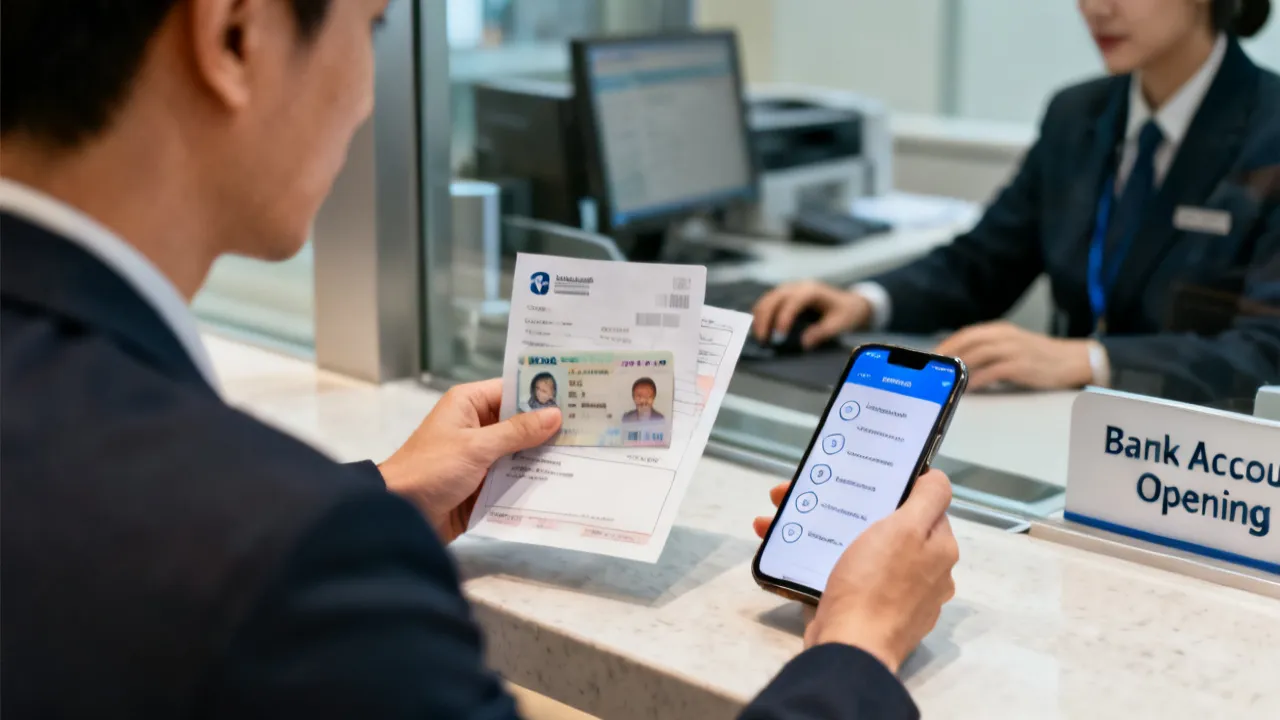
A Practical Guide to Bank Account Opening
This guide explains how to handle bank account opening with a focus on eligibility checks, document readiness, and the practical choices that affect account suitability. Background sections outline what banks assess, how account types differ, and why compliance steps matter. Readers can compare requirements, follow a clear process, and review FAQs to reduce delays during onboarding.
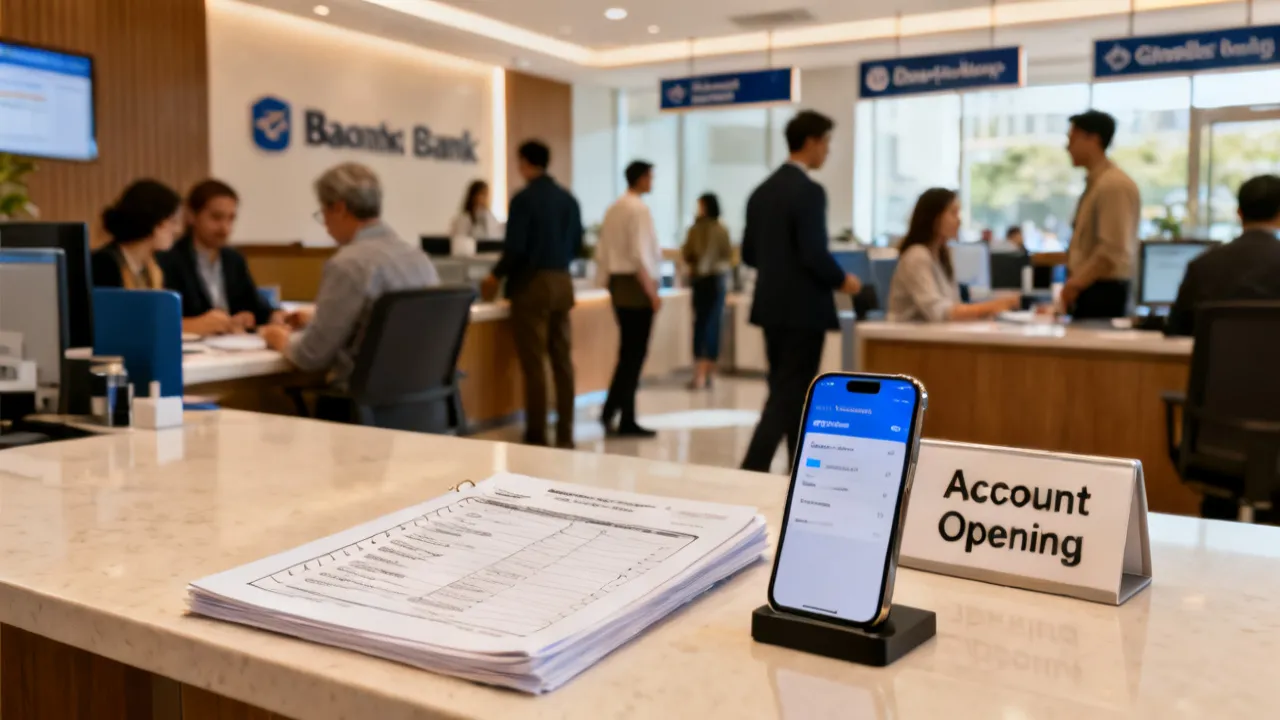
How to Approach Bank Account Opening
This guide explains how to plan bank account opening with clear, objective considerations before you apply. It outlines what banks typically assess, how fees and account features affect choices, and what documents are commonly required. Then it provides a comparison-style supplement and step-by-step guidance focused on responsible decision-making.

How to Complete Bank Account Opening Efficiently
This guide explains how to complete bank account opening efficiently, from preparing documents to choosing the right account type and understanding fees. Background information covers what “Bank Account Opening” typically involves across regulated financial institutions, the role of identity verification, and common compliance steps used to protect customers and reduce fraud risk.

Comprehensive Guide to Bank Account Opening
This guide explains the practical process of Bank Account Opening, from eligibility and documentation to account types and approval timelines. It also outlines key risk checks, fees to verify, and how suppliers and institutions typically structure onboarding. Background information is provided objectively to help you compare options and prepare correctly before you apply.

How to Prepare for Bank Account Opening
This guide explains how to plan a smooth Bank Account Opening, from choosing the right account type to preparing documents, understanding fees, and completing identity checks. It presents objective background on how banks assess risk and onboarding requirements, including common compliance steps, verification timelines, and factors that affect acceptance and usability.
