This guide explains how to handle Bank Account Opening from eligibility to account setup and first deposit. It provides objective background on account types and compliance expectations, then offers expert considerations for choosing a provider, preparing documents, and avoiding common delays—especially when opening online versus in-branch.

Bank Account Opening is a structured process that determines how you verify your identity, choose the right account type, and complete the initial setup without unnecessary delays. Before you submit anything, focus on three critical points: (1) whether your situation matches the bank’s eligibility rules, (2) what documentation is required for verification, and (3) the practical terms you will live with—fees, access channels, and deposit/withdrawal limits. From an industry perspective, getting these right early prevents rework and supports smoother onboarding.
In most markets, “opening an account” is not simply a transaction—it is a compliance workflow. That workflow starts before you even submit your application and continues until the bank finishes internal checks and you can reliably use the account for the purpose you intended. When people experience repeated delays, it is usually because one of the foundational decisions was made too late: selecting the wrong account type, preparing documents that don’t match the bank’s required format, or overlooking fees and restrictions that become obvious only after activation.
When people say “I’m opening an account,” they often picture signing forms. In practice, banks treat account onboarding as a risk-managed compliance workflow. That includes identity verification, basic customer due diligence (CDD), and transaction-risk screening consistent with regulations designed to prevent fraud, money laundering, and identity misuse. For customers, the result is that the account-opening journey is both administrative and operational: it sets how you will access funds, how quickly transactions work, and what you can do on day one.
Even when the front end feels like a simple application, the back end is evaluating multiple signals: the consistency of your personal data, whether your identity documents appear genuine and readable, whether your address history makes sense within the bank’s record-keeping system, and whether the account purpose aligns with expected usage. Some banks also apply enhanced checks in cases where verification is not straightforward or where additional risk indicators exist.
That is why careful preparation matters. If you treat the process like “just paperwork,” you may underestimate the importance of exact spelling, document quality, address format, and account terms. If you treat it like “setup for the way you will manage money,” you make decisions in a healthier order and reduce the chance of having to redo steps.
A common mistake is starting Bank Account Opening with the expectation that “any account will do.” In reality, the top fit depends on how you plan to use the account. For example:
From an expert viewpoint, the “right” account is less about marketing and more about alignment between your usage pattern and the bank’s operational design. In other words: you want the account’s features and limits to match your day-to-day reality.
For instance, if you primarily use cash deposits, an account with strong digital onboarding but poor cash-in support may create friction later—extra steps, limited locations, or higher fees. If you travel or send money abroad, an account that performs well for domestic transfers might still charge heavily for international routes, exchange conversions, or correspondent bank fees. Choosing early prevents these mismatches from becoming ongoing cost problems.
Very delays during Bank Account Opening happen because submitted information is incomplete, inconsistent, or hard to validate. Banks usually require proof of identity and proof of address (or a functional alternative depending on local requirements and the bank’s policy). Even when an online flow looks quick, the back-end verification still depends on document legibility and matching details.
Before you begin, consider this practical checklist:
Document verification is often more strict than customers expect. A bank can accept “a photo,” but still reject it if it appears blurry, has glare, or lacks contrast. Some systems also reject images if they are compressed too heavily or if the file format is unusual for the bank’s upload system. Preparing with the verification workflow in mind reduces the chance of getting stuck at the “please resubmit” stage.
It also helps to think about data normalization. Many banks store and compare fields in standardized formats. If your legal name uses accents or special characters, you may want to replicate them exactly as they appear on the identity document. If your address uses abbreviations (e.g., “St.” vs “Street”), check how it appears on the address proof document and how you will enter it in the application. Small discrepancies can trigger manual review—even if the information is otherwise correct.
“Price” in banking is rarely a single figure. It is often a package of account charges, optional service fees, and variable costs tied to transactions. Since you did not provide a specific price for a particular provider, the safest objective approach is to interpret pricing as a set of categories you should confirm with your chosen institution:
Industry top practice is to review the bank’s fee schedule before proceeding. If the institution provides a pricing guide for account onboarding, read it as carefully as the account features—fees can influence your good value far more than initial convenience.
Also, don’t evaluate price only by what the bank charges. Consider how your usage triggers those charges. For example:
Many customers focus on “account opening cost,” but the bigger picture is your monthly cost and transaction-based cost over time. A slightly higher monthly maintenance fee may be cheaper than frequent per-transaction charges. Conversely, a low-maintenance account may become expensive if you use services that have add-on fees.
In the context of Bank Account Opening, the “supplier” is the financial institution, and sometimes the supply chain includes digital onboarding platforms, payment processors, and card-issuing partners. While customers rarely interact with all components, the performance you experience—speed of verification, reliability of transfers, and quality of customer support—depends on these integrated systems.
As an expert lens, evaluate the provider’s onboarding maturity:
This approach is particularly important when opening online, where the interface feels fast but the underlying verification and controls may still require time. A bank may show a “submitted” status quickly, but if it lacks a responsive support process, you can end up waiting without clarity. Maturity is not just speed—it is also communication quality.
When evaluating suppliers, consider practical questions like: How will you contact the bank if onboarding stalls? Do they provide a case reference number? Is there an estimated completion window? Are you able to download or save confirmation messages? These “small operational features” often matter as much as account benefits.
Both channels can be valid, but the workflow differs:
From a risk-management perspective, banks apply the same core compliance logic in either channel, but the friction point shifts: online relies on document capture quality, while in-branch relies on your readiness with physical documents and correct forms.
In-branch onboarding can also help if you have a complex scenario such as frequent address changes, name variations, or non-standard address formats. A staff member may know which alternative documents the bank accepts, and they can guide you to the correct route before you submit. However, the trade-off is time—travel, queueing, and appointment scheduling can delay the process.
Online onboarding can be faster, but it demands careful preparation. It’s also easier to make subtle mistakes—entering an address with an extra space, using an outdated email, uploading a slightly blurry document, or failing to notice that the upload system has strict file size limitations. Online also means you rely more on the system’s automated messaging. If those messages are unclear, you may not know what to correct.
Below is a practical, vendor-agnostic roadmap that reflects how many banks structure onboarding. Your specific steps can vary by institution, but the logic remains consistent.
Decide what the account will be used for—salary payments, everyday card spending, bill payments, saving, or transfers. This helps you select an account type with appropriate access channels and fee alignment.
As you define purpose, also clarify your “transaction intensity.” Are you moving money daily or monthly? Are you making small transfers or large payments? Do you plan to use cash frequently? Your intensity affects how you evaluate fees and practical limits. Many accounts appear inexpensive on paper but become expensive if your actual usage doesn’t match the assumptions built into the fee model.
Check the bank’s published requirements for identity proof and address proof. Prepare documents that match the information you will enter in the application. If you are unsure which document is acceptable, confirm before submitting.
Eligibility often depends on factors like residency status, age, country-specific requirements, or whether the account is personal vs business. Some banks also impose restrictions related to prior account closures or negative records (varies by jurisdiction). While you may not know these details without applying, you can at least check broad eligibility requirements published by the bank.
For document readiness, consider the practical scenario: you may not have your address evidence in digital format. If you need to upload a scan, you might need to request an electronic bill or take a photo. Plan this ahead so the application does not stall at the “upload step.”
Enter your details carefully. Common problems include typos, mismatched spellings, and outdated addresses. Banks may interpret inconsistencies as a risk signal, which can extend review times.
A useful mindset is to treat the application form like a legal record. Many systems automatically validate fields. If your bank account opening is online, it may also cross-check your identity number format or validate date ranges. Even if the system lets you proceed, manual review later may still reject inconsistencies.
Pay attention to:
If you recently changed your legal name, some banks may require you to provide name-change documentation or to ensure your identity document reflects the updated legal name. If you ignore this and submit inconsistent data, you may face avoidable delays.
During verification, banks typically validate your identity data and ensure documents meet quality standards (readability, completeness, and validity). If verification fails, you may be asked to resubmit or provide alternative documentation.
To improve your chances of a first-pass approval, aim for documents that are “audit-friendly.” That means:
Also, ensure that the photos you upload are taken with the correct orientation. Some document capture systems are sensitive to rotated images. If your system supports multiple angles, capture enough clarity to show all fields.
Before activating access tools (debit card, online banking credentials, payment limits), review the terms: fees, transaction limits, and any account maintenance conditions. This is where you protect yourself from surprises later.
When reviewing terms, it’s helpful to look beyond the first page. Focus on:
Many “surprise problems” come from misunderstanding limits rather than misunderstanding fees. For example, an account may allow unlimited payments but restrict international transfers until additional verification is completed. Reading the terms helps you plan your first usage without failing transactions.
Some account types require an initial deposit to activate full functionality, while others activate immediately. If there is a funding requirement, confirm timing and availability of funds. Then test basic capabilities: log in, check balances, and attempt a small transfer or payment.
Testing on day one is not just convenient—it is risk reducing. If something is misconfigured, you want to catch it while the impact is small. Consider testing:
If your account supports beneficiary verification, test it. Some systems require a beneficiary to be confirmed before large transfers can be made. A small test transaction reveals whether that confirmation process is needed.
Enable multi-factor authentication where available, review notifications, and set appropriate limits for card usage or online transfers. Security setup is not just “top practice”—it is a practical defense against account-takeover attempts.
Beyond enabling MFA, consider additional controls that some banks offer:
Security is also operational. Make sure that your contact phone number and email are correct and accessible to you. If you lose access to your phone or email, you might struggle to regain access to your account later. Consider updating contact information as soon as the account is opened, following the bank’s verification procedures.
While exact requirements vary, Bank Account Opening commonly depends on:
If you have complex circumstances (for example, recent address changes or document renewals), allow additional time and be prepared to provide clearer evidence. Complexity can also come from name differences across documents, such as married names, transliteration variations, or missing middle names where your ID includes them.
Another frequent practical requirement is the need to verify your identity data against external or internal systems. That can include screening databases and checking document attributes. While customers cannot control these checks directly, you can control what you provide: accuracy, readability, and matching information.
| Opening approach | Typical strengths | Common friction points | Top fit for |
|---|---|---|---|
| Online onboarding | Fast initial application; convenient from home | Document photo quality; verification delays if details are unclear | Users comfortable submitting digital evidence and tracking review status |
| In-branch onboarding | Staff-assisted document checks; clearer guidance | Time spent traveling; appointment availability | Users who prefer face-to-face assistance or have complex document situations |
| Assisted onboarding via customer support | Clarifies requirements before submission | Depends on responsiveness; may still require resubmission if documents fail checks | Users who need confirmation on acceptable documents and fields |
Note that “assisted onboarding” can mean different things. Some banks provide a dedicated onboarding team; others provide general support that may not fully understand onboarding nuances. If you plan to rely on assistance, it can help to ask very specific questions such as “What exact document types do you accept for proof of address?” and “Is a digital utility statement accepted, and in what format?”
It can also help to prepare a “submission pack” before you start. That could include a folder on your device with all document files, plus a checklist of your application fields. People often stop and start applications and then later forget which version of a document they uploaded or which address format they used. A submission pack reduces that confusion.
Very modern financial institutions operate under a regulatory framework that requires customer due diligence. This typically includes identifying customers, understanding beneficial ownership in relevant cases, and monitoring for suspicious activity. For objective background, the core principles align with guidance from bodies such as the Financial Action Task Force (FATF) and with national regulators’ anti–money laundering (AML) expectations.
Source references for compliance principles can be found through:
Because requirements are jurisdiction-dependent, readers should treat the above as a conceptual basis rather than a guarantee of exact document lists or timelines for every country.
In practice, customer due diligence is not designed to be an obstacle. It is designed to ensure that the bank can understand who they are serving and what risks might be associated with that service. However, the customer experience depends on how effectively the bank converts compliance requirements into a clear process. Banks that do this well provide straightforward checklists and helpful feedback when verification fails.
For customers, understanding this context helps reduce frustration. If verification fails, it may not be because the bank “doesn’t trust you” personally, but because the system cannot verify the quality or consistency of the evidence. Treat verification failure as a procedural issue first: correct the document quality, match the fields, and resubmit.
While the focus is often on document requirements and fees, security and privacy are equally critical during onboarding. You are providing sensitive information—identity numbers, address data, and sometimes images of documents. Your job is to ensure you submit through official channels and protect your accounts after onboarding.
Practical security steps include:
Privacy is also about data handling after submission. Keep copies of what you uploaded and store them securely. If you are asked to resubmit, having your original files can help you quickly correct issues without recreating everything from scratch. Also, once you receive confirmation that the account is active, consider whether you need to securely delete copies stored on devices or cloud drives depending on your own privacy preferences and the sensitivity level of the documents.
Even with correct intent, delays can happen. Here are frequent causes and the most practical prevention approaches.
1) Blurry or low-quality document uploads
If a photo is blurry, has glare, or does not show all required fields, the bank’s verification system may reject it. Prevent this by using good lighting, stable framing, and taking multiple shots if necessary. Use high-resolution scans where available.
2) Mismatched personal details
Common mismatch errors include spelling differences, an outdated address, or incorrect document number entry. Prevent this by copy-checking data entry against your documents. Be careful with capitalization and special characters.
3) Address proof doesn’t match required criteria
Some address proofs must be recent, must show your name, and must clearly show your current address with postal code. Prevent this by using documents that meet the bank’s described format. If you have a utility bill, ensure it displays your name and address as required.
4) Incomplete answers to compliance questions
AML and due diligence forms often require consistent, complete responses. If you skip a field or answer inconsistently (for example, income source differs between forms), the bank may route your case into enhanced review. Prevent this by reading each question carefully and answering with consistency across the entire application.
5) Timing and system errors
Sometimes uploads fail due to file size limits, network disruptions, or system downtime. Prevent this by using a stable connection, compressing files only if allowed, and retrying with an alternative format if the bank’s system shows errors.
6) Status notifications not received
If verification requires additional steps, you may need to receive notifications via email or SMS. If your contact information is wrong, you might not receive updates. Prevent this by confirming your phone number and email during the application and ensuring you can access them.
Account opening is not complete when you submit the form. It’s complete when you can actually use the account reliably. Therefore, it’s worth evaluating the access channels and the onboarding timing of each.
Ask yourself:
Some banks issue digital access immediately but restrict certain transfer types until verification is fully completed. Others may allow transfers but restrict cash withdrawals until the card arrives. Understanding this helps you plan your first payments.
If you need to receive money soon after opening—such as salary payments—verify whether your account provides the necessary account details (account number/routing details) immediately after activation. Some banks provide details quickly, while others take time. Plan early so you don’t miss critical payment deadlines.
Every account comes with certain operational limits. These are not always obvious in marketing materials, so you should actively check them during onboarding.
Key areas to review include:
If you plan a large purchase or need to send money abroad, you should verify whether your intended transaction exceeds any limit. If it does, you may need to request limit increases after onboarding, complete additional verification steps, or wait for limits to be raised automatically over time.
Banks may advertise that an account has “no monthly fee,” but that does not mean it is always “cheap.” Costs often move into transaction-based fees or through higher charges for certain services.
Common scenarios:
To interpret fee structure correctly, estimate your likely monthly usage. For example, calculate what your account will cost if you withdraw cash twice a week and make a few transfers each month. This approach turns abstract fee lists into a practical model that you can use to select the best account type.
Many applicants focus only on “how to open an account,” not on “which category of account should I open.” The personal vs business decision is important because it affects documentation requirements, how incoming payments are handled, and what the bank expects in terms of usage patterns.
Personal accounts are generally intended for individual consumption, salary deposits, and general household payments. Business accounts may require additional documentation such as business registration details, tax identifiers, and information about beneficial owners.
If you are a contractor, freelancer, or small business owner, it might be tempting to use a personal account for convenience. However, it can create administrative overhead later: you may need to provide additional proof of income sources, or the bank may restrict transactions that appear inconsistent with personal account patterns. Conversely, if you open a business account but use it like a personal account, you may encounter higher fees or more complex reporting features than necessary.
Choose the category that matches the nature of your income and transactions. This reduces compliance risk and reduces the chance that your bank will require extra evidence soon after onboarding.
Some customers have situations that require extra care. The best strategy is not to avoid the process, but to anticipate what the bank will ask.
Name changes
If your name changed due to marriage, legal change, or other reasons, your identity document might reflect one name while other documents reflect another. To avoid verification failure, ensure your identity document is consistent and provide name-change evidence if required. When entering your application, use the name exactly as shown on your identity document, unless the bank instructs otherwise.
Recent address changes
If you recently moved, the address evidence you have may be new enough, or it may not. Banks often require recent documents. If your address proof is older than the bank’s acceptable range, you may need a different document type (for example, a more recent statement). Plan ahead and check the acceptable time window.
Documentation gaps
Sometimes you may not have traditional address proof documents (for example, you receive mail electronically or you live in a situation where standard documents are not issued). Banks often accept alternatives, but the list depends on the bank and jurisdiction. The “best” move is to ask in advance and confirm the acceptable alternatives. This is where assisted onboarding can be valuable.
Multiple identities or transliteration
In some regions, identity data may exist in multiple scripts. If your documents include transliteration variants, you must decide how to enter your data so it matches the bank’s systems. Providing consistent transliteration across all fields reduces ambiguity. When in doubt, replicate the spelling used on your identity document, and ask the bank support for guidance if the form offers multiple options.
Once you submit your application, the bank may send updates. How you handle these updates matters. A slow response can prolong delays, while a fast and accurate response can shorten them.
Practical tips:
Also, don’t assume you must resubmit everything. Many delays occur because applicants resubmit the wrong document type, or they resubmit without addressing the exact problem stated by the bank. If the bank’s message indicates an issue—such as “address proof missing your name” or “document expired”—address that exact issue in the resubmission.
While you have not specified a particular city or country, many applicants open accounts while commuting between work, local transit hubs, and nearby service centers. In such day-to-day contexts, the very important “nearby” planning is operational: schedule time to complete document scanning or plan a visit when staff availability is predictable. If you are using digital onboarding while living a busy routine, set aside a focused window to upload documents in good lighting and ensure your contact details are accurate.
“Nearby” also includes travel and time-to-access. For example, if you plan to use cash frequently, check how close your nearest partner ATM or branch is. If you expect to withdraw cash soon after opening, you want to know whether you can withdraw without unnecessary fees right away. If the nearest ATM is far, you may delay withdrawals or end up paying surcharge fees.
In-branch onboarding is especially sensitive to “nearby” planning. Appointment availability can vary throughout the week. Choose a time when you can bring documents and wait if needed. If you know your address proof or identity document might require clarification, bring additional supportive documents so the staff can help you on the first visit. This reduces the need for repeated travel.
After approval, many customers think the work is done. But the first week after Bank Account Opening is critical for stability, security, and operational readiness. You want to make sure your setup is correct before large transactions begin.
Consider performing these actions:
These steps reduce operational risk. For example, a missed notification configuration might mean you don’t see suspicious activity quickly. An incorrect beneficiary setup might cause transfer failures later, when you need the transfer urgently.
Sometimes, after opening, you realize the account does not match your needs. The key is to act promptly and follow the bank’s process rather than simply attempting to “work around” limitations.
Common issues after opening:
Depending on the bank, you may be able to switch account types, upgrade to a different tier, or request feature activation. Many banks have procedures for account changes, and some require additional verification. Acting early can prevent months of paying unnecessary fees.
If your usage plan changes—for example, you start doing international payments—you may also need enhanced verification. Banks may adjust limits or permissions over time, especially if your account activity is consistent and documented.
Timelines vary based on verification complexity and whether documentation is clean and consistent. Online flows can be faster in straightforward cases, while additional review may be required if identity or address evidence needs clarification. The very objective strategy is to check the bank’s published onboarding timeline and prepare documents in advance.
In some cases, initial approval can happen quickly but certain features may unlock later. For example, card issuance might take longer than account activation, and international transfer permissions might require additional verification. If you rely on the account for an urgent payment, ask the bank how quickly each feature becomes available.
Very banks require proof of identity and proof of address. In some cases, they may accept alternative evidence types depending on your situation. If you want the smoothest review, ensure names and key identifiers match exactly across documents.
Identity documents can include national ID cards, passports, or other government-issued IDs. Address evidence often includes utility bills, lease agreements, bank statements, or official tax documents depending on local policy. If your address proof is not in your name, you may need additional supporting documentation.
Often, no. Many jurisdictions and banks require separate proof of identity and proof of address. However, some banks may have specific provisions for certain customer categories or verification methods. Confirm with your chosen institution before applying.
In some locations, the bank may accept alternative verification methods such as electronically verified address records or other digital checks. But these options are bank- and jurisdiction-dependent.
Some accounts have no account-opening fee but may have maintenance fees, card-related fees, or transaction charges. Because fee structures differ widely, review the bank’s fee schedule and account terms during onboarding rather than relying on assumptions.
Also consider whether there are fees for add-ons such as premium debit cards, expedited card delivery, paper statements, or international transfer initiation. The best way to avoid surprises is to read the fee schedule and estimate costs based on your usage.
Banks generally use secure onboarding systems and apply encryption and access controls. Still, customers should follow good security practices: avoid sharing credentials, verify official communications, and use strong passwords and multi-factor authentication when available.
If you receive messages asking for sensitive information, verify their authenticity before responding. Banks typically use official channels and may not request sensitive credentials through email or chat.
Common causes include blurry or incomplete documents, mismatched personal details, outdated information, and failure to meet quality requirements for uploads. Another factor can be address evidence that doesn’t clearly show the customer’s name and current address.
Verification can also fail due to file format issues (for example, unsupported file types), document expiry dates, or submission errors like uploading the wrong side of an ID. Checking the upload confirmation and keeping a copy of the submitted file can help you identify what might have failed.
Very banks allow updates through customer support or digital settings, but policies can require additional verification depending on what is changing. If you recently moved or changed legal names, handle the update promptly to avoid service disruptions.
If you update information incorrectly—such as changing your address without uploading acceptable proof—you may experience restrictions on account operations until verification is completed.
There is no universal top option. Online can be convenient and efficient if your documents are clear and you are comfortable with digital verification. In-branch can reduce uncertainty if you prefer staff guidance or if your case requires more explanation.
If you have documents that are difficult to scan (for example, unusual formats or poor physical condition), in-branch support might be more efficient. If you have straightforward documents and can capture high-quality images, online can be faster.
You can choose an account that matches your expected usage—but price-friendliness depends on how often you transact and how you access services (ATM usage, card payments, international transfers, and maintenance terms). Review total cost, not just headline fees.
Before finalizing, do a quick personal cost estimate: count expected ATM withdrawals, estimated number of transfers, and any anticipated international activity. This will typically reveal which account is actually cheaper for your pattern.
Log in to online or mobile banking, confirm your balance display works, verify that transfers are functioning as expected, and attempt one small test transaction. This helps you catch access or routing issues before larger payments.
If you plan bill payments, test bill pay setup and verify the payee details. If you plan to receive payments, verify the account details formatting and confirm that incoming transactions appear correctly in the transaction history.
From an industry expert perspective, the top results come from disciplined preparation rather than trying to “speedrun” the process. Use a calm, check-first approach:
These actions are especially valuable when verification requires enhanced checks, which can happen due to document inconsistencies rather than “customer fault.” It is important to treat resubmission as part of the onboarding process, not as a personal failure.
Additionally, consider building “proof readiness.” If you anticipate future banking needs (for example, opening another account, applying for a loan, or requesting additional services), it can help to keep your documents organized. Having recent address evidence, clear identity files, and updated contact information can reduce the time you spend re-preparing paperwork later.
Bank Account Opening is top approached as a structured compliance-and-operations process rather than a one-time formality. By selecting the correct account type, preparing verification-ready documents, reviewing fees and terms, and testing access after activation, you reduce delays and improve good usability. If you treat the process carefully from the start, the resulting account setup is not only faster—it is also more aligned with your day-to-day financial needs.
Ultimately, the “very important decisions first” approach works because it respects how banks evaluate risk and how customers experience friction. When you decide purpose, check eligibility, ensure document quality, and verify practical terms before submission, you avoid the most common onboarding traps. Your account becomes a functional tool on day one rather than an ongoing source of administrative inconvenience.
Striking the Perfect Balance: Navigating Premiums and Out-of-Pocket Expenses in Senior Insurance Plans

Explore the Tranquil Bliss of Idyllic Rural Retreats

How to Make Lasting Memories at Disneyland Attractions

4rkojvsx Technology: Industry Insights and Buying Guide

Affordable Phones and Plans for Seniors

Affordable Full Mouth Dental Implants Near You

Unlock the Top Kept Secrets to Finding Your Ideal Dentist for Flawless Dental Implant Results!

Discovering Springdale Estates

Unveiling RS Sul Telecom Services


How to Open a Bank Account: A Practical Guide
This guide explains how to complete Bank Account Opening efficiently, what documents you typically need, and how fees and account features compare. It provides objective background on why KYC checks, account type selection, and access channels matter, then offers a step-by-step framework, clear conditions, and FAQs to support confident decision-making.
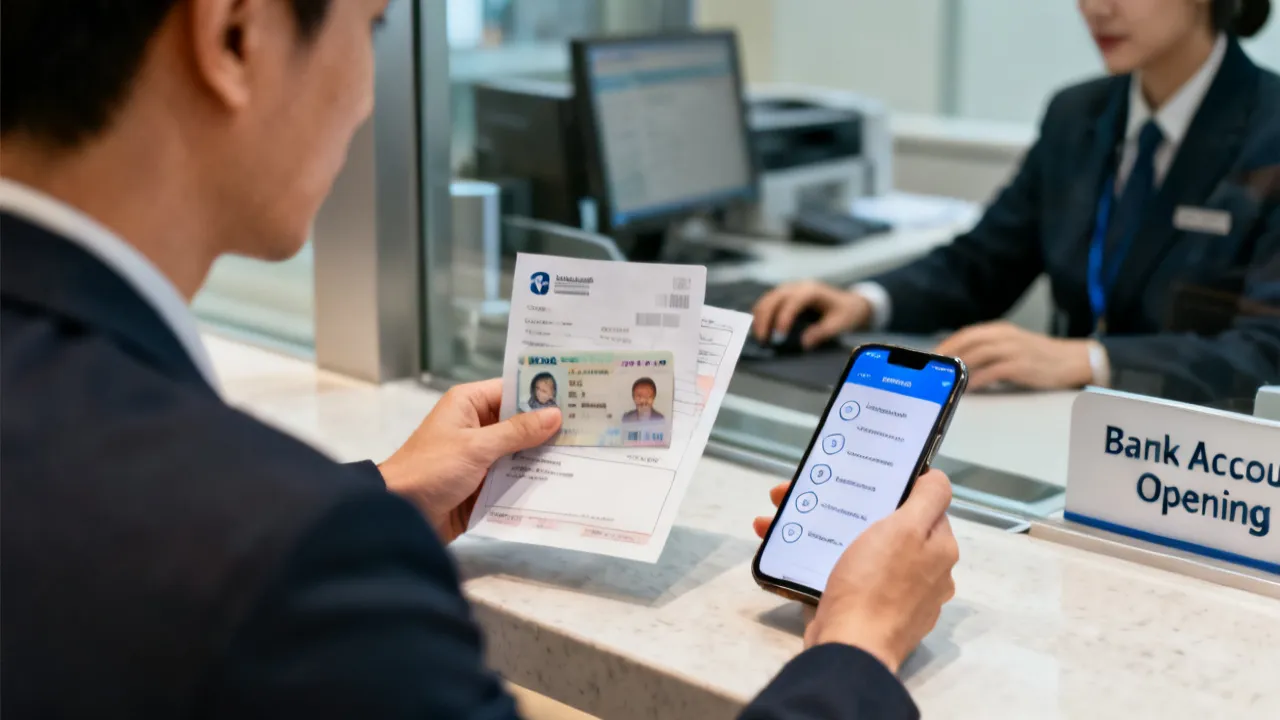
A Practical Guide to Bank Account Opening
This guide explains how to handle bank account opening with a focus on eligibility checks, document readiness, and the practical choices that affect account suitability. Background sections outline what banks assess, how account types differ, and why compliance steps matter. Readers can compare requirements, follow a clear process, and review FAQs to reduce delays during onboarding.
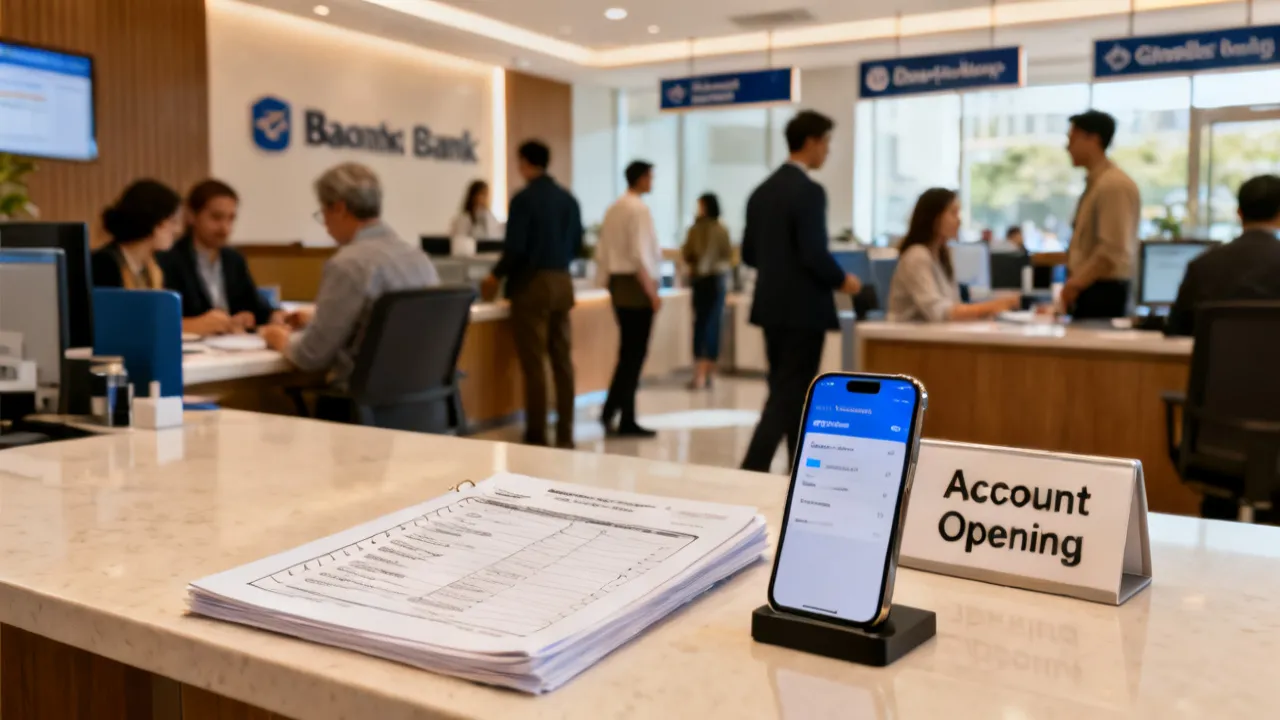
How to Approach Bank Account Opening
This guide explains how to plan bank account opening with clear, objective considerations before you apply. It outlines what banks typically assess, how fees and account features affect choices, and what documents are commonly required. Then it provides a comparison-style supplement and step-by-step guidance focused on responsible decision-making.

How to Complete Bank Account Opening Efficiently
This guide explains how to complete bank account opening efficiently, from preparing documents to choosing the right account type and understanding fees. Background information covers what “Bank Account Opening” typically involves across regulated financial institutions, the role of identity verification, and common compliance steps used to protect customers and reduce fraud risk.

Comprehensive Guide to Bank Account Opening
This guide explains the practical process of Bank Account Opening, from eligibility and documentation to account types and approval timelines. It also outlines key risk checks, fees to verify, and how suppliers and institutions typically structure onboarding. Background information is provided objectively to help you compare options and prepare correctly before you apply.

How to Prepare for Bank Account Opening
This guide explains how to plan a smooth Bank Account Opening, from choosing the right account type to preparing documents, understanding fees, and completing identity checks. It presents objective background on how banks assess risk and onboarding requirements, including common compliance steps, verification timelines, and factors that affect acceptance and usability.
